Wadi El Hitan
Wadi El Hitan (Valley of the Whales) is a protected fossil valley in Fayoum, where ancient whale skeletons, desert trails, and dramatic sandstone scenery reveal Egypt’s prehistoric past.


Plan your visit
- Opening hours
- Wadi El Hitan generally operates during daytime hours, with access controlled through the protected area. Exact opening times and last-entry rules can change by season or local management decisions. Check before departure, and avoid planning a late arrival because the site is remote and desert driving after dark is not recommended.
- Best time
- The best time to visit Wadi El Hitan is during the cooler months, especially from autumn to spring. Early morning and late afternoon are the most comfortable times for walking and photography, with softer light on the desert formations. Summer visits can be harsh because shade is limited and the ground reflects heat strongly.
- Visit duration
- Allow 2 to 3 hours on site for the visitor area, fossil trails, and photography. From Cairo, the overall outing usually takes most of the day once driving time, stops, and protected-area access are included. An overnight in Fayoum gives a calmer pace and better light.
- Category
- Nature & Outdoor Adventures
- Location
About
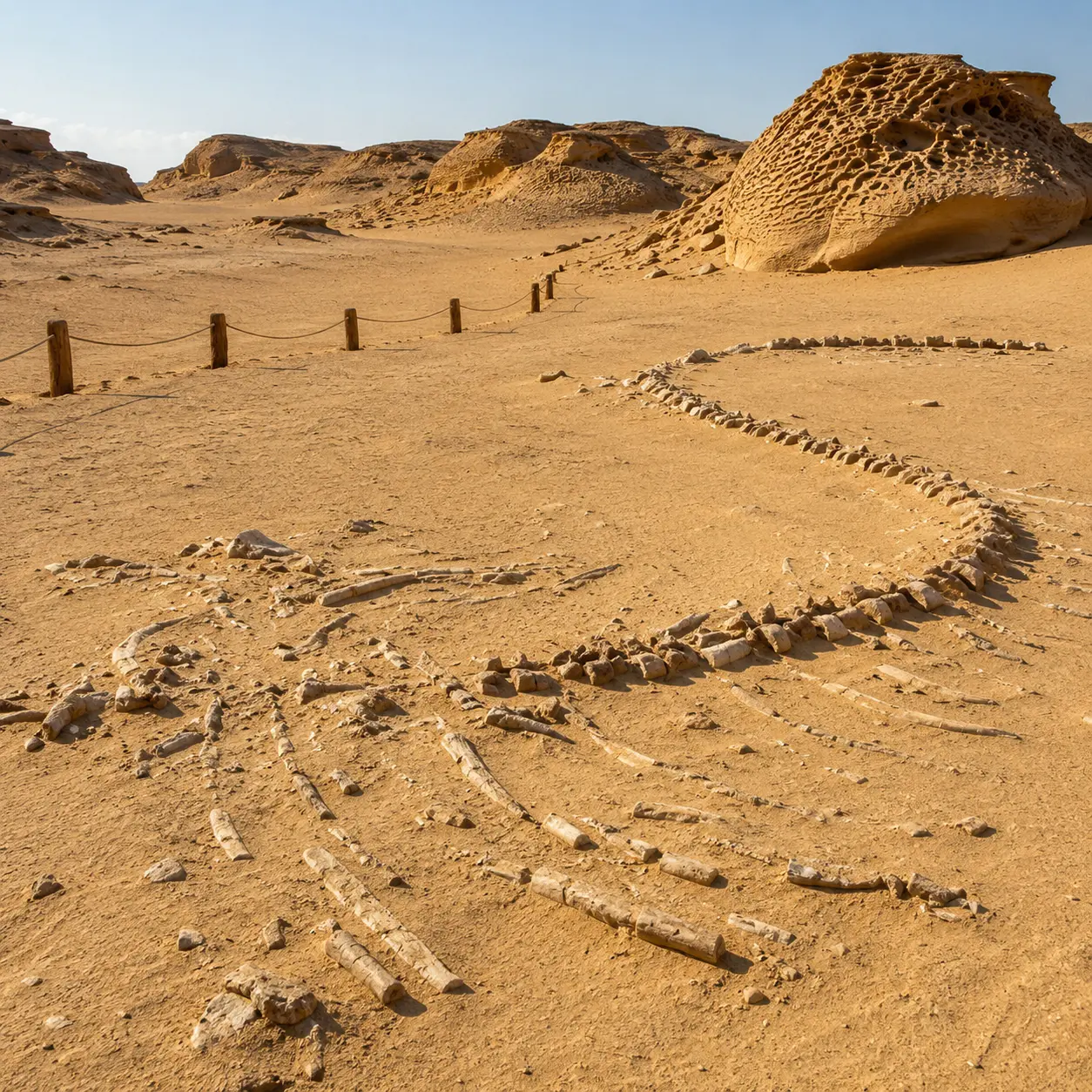
Wadi El Hitan, known in English as the Valley of the Whales, is one of Egypt’s most unusual desert landscapes: a protected fossil site in Fayoum where whale skeletons lie exposed among wind-cut sandstone, pale ridges, and open silence. It is a place where natural history feels visible under your feet, not locked behind glass.
The valley is famous for fossil remains of ancient whales that lived when this part of Egypt was covered by sea. Some skeletons show forms that help explain how whales evolved from land-adapted mammals into fully marine animals. You do not need to be a geology specialist to appreciate it. The marked walking trails, interpretive signs, and small visitor displays make the story clear enough for curious travellers, families, and photographers.
The experience is half science, half desert. Expect a wide, dry basin with sculpted rocks, shell fragments, fossil beds, and a horizon that changes colour as the sun drops. The quiet is part of the appeal. There are no city sounds, no dense crowds on most days, and very little shade once you step away from the visitor area.
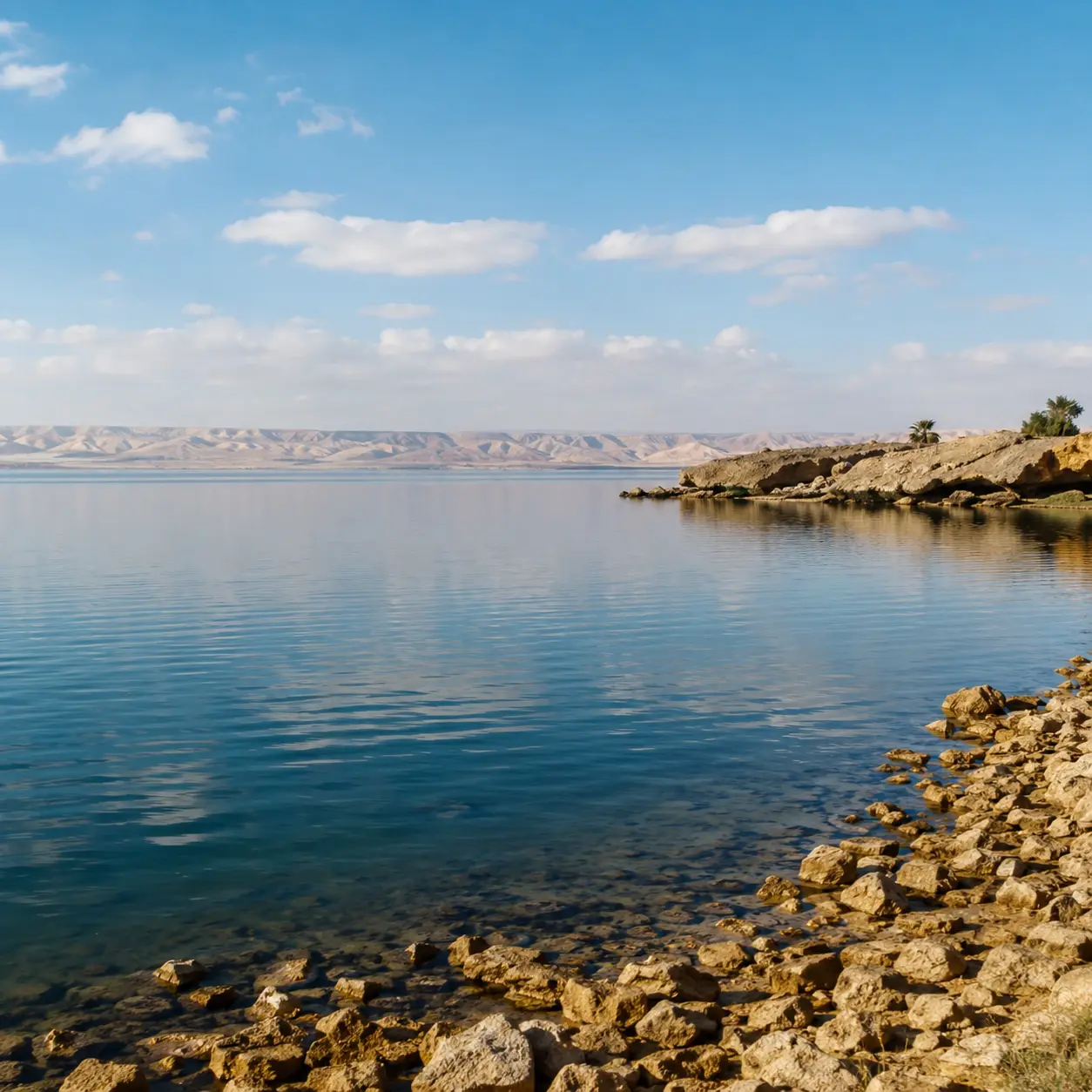
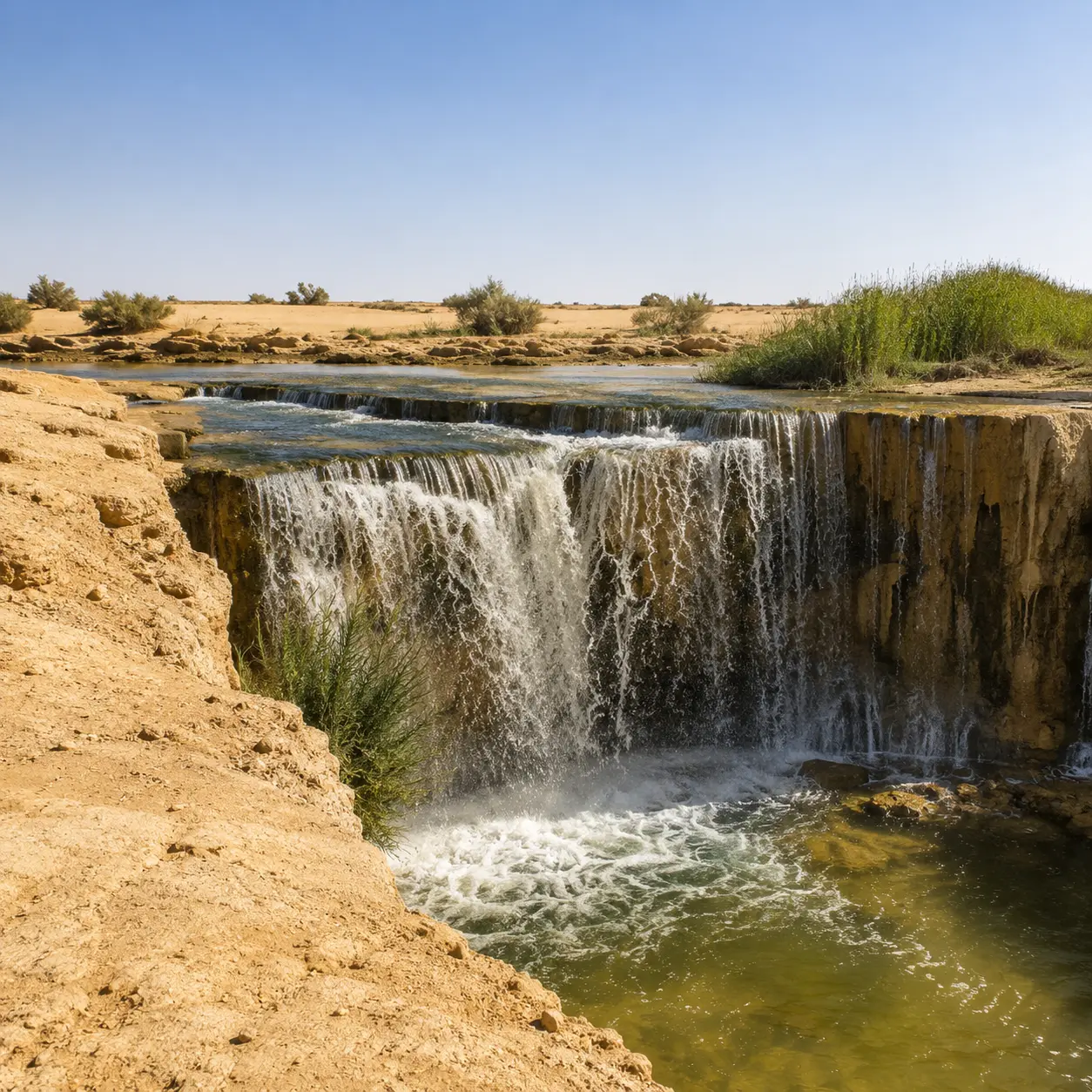
Most travellers visit Wadi El Hitan as part of a Fayoum day trip or overnight desert route. It pairs naturally with the nearby desert lakes and waterfalls, where the scenery shifts from fossils and sand to water, reeds, and birdlife. If you want a broader route through the region, browse Ozes trips for Fayoum Oasis travel or combine it with a wider Egypt desert adventure.
Getting there usually involves desert roads and protected-area rules, so a driver who knows the route is strongly recommended. Mobile signal can be weak, facilities are limited, and the last stretch may be affected by weather or sand conditions. Bring water, sun protection, and a patient mindset. This is not a quick roadside stop; it is a slow, open-air site best enjoyed when you have time to walk, read, and look closely.
For travellers who have already seen temples, tombs, and pyramids, Wadi El Hitan offers a different side of Egypt: deep time, open desert, and a rare glimpse of life long before human history began.
Wadi El Hitan is one of Fayoum's most-visited nature & outdoor adventures spots. Plan around The best time to visit Wadi El Hitan is during the cooler months, especially from autumn to spring. Early morning and late afternoon are the most comfortable times for walking and photography, with softer light on the desert formations. Summer visits can be harsh because shade is limited and the ground reflects heat strongly. for the best conditions, and budget roughly Allow 2 to 3 hours on site for the visitor area, fossil trails, and photography. From Cairo, the overall outing usually takes most of the day once driving time, stops, and protected-area access are included. An overnight in Fayoum gives a calmer pace and better light. on-site. Visit early to avoid crowds and heat.

Why travelers visit
Visit Wadi El Hitan to see one of Egypt’s most powerful natural-history sites: ancient whale fossils preserved in a stark desert valley. It is ideal for travellers who want more than monuments, with space, silence, science, and scenery in one remote Fayoum experience.
Highlights
 Open-air fossil trails with ancient whale remains in their desert setting
- A rare natural-history site that explains whale evolution in clear, visual ways
- Sandstone formations, wide horizons, and excellent late-afternoon photography
- A quiet alternative to Egypt’s crowded archaeological sites
- Easy pairing with Wadi El Rayan and wider Fayoum Oasis routes
- Strong choice for travellers interested in geology, wildlife history, and desert scenery
Photos
1 photos
Know before you go
Practical tips to make the most of your visit.

What to wear
Wear lightweight breathable clothing, a wide-brimmed hat, sunglasses, and sturdy closed shoes with grip. The ground can be sandy, rocky, and hot underfoot. In cooler months, bring a light layer for early morning or sunset, when desert temperatures can drop quickly.

Is a guide recommended?
A good guide makes Wadi El Hitan much more meaningful. Without context, the fossils can look like pale shapes in the sand; with explanation, you start to see vertebrae, skull forms, ancient seabeds, and the scale of the evolutionary story. Ask your guide to pace the visit around the light and heat, not just the driving schedule.

Common mistakes to avoid
- Arriving without enough water; facilities are limited and the desert air can dehydrate you quickly.
- Treating it like a quick photo stop; the site is best when you allow time for the trails and displays.
- Touching, climbing on, or removing fossil material; the area is protected and fragile.
- Wearing open sandals on hot sand and uneven rock instead of sturdy closed shoes.
- Visiting in midday heat without a hat, sunglasses, and sun protection.
- Assuming any car can handle the route; road and sand conditions can change, so local driving knowledge matters.
Frequently asked questions
Is Wadi El Hitan worth visiting?
Yes, Wadi El Hitan is worth visiting if you enjoy nature, fossils, photography, or quiet desert landscapes. It offers a rare look at ancient whale evolution in an open-air setting rather than a traditional museum.
Where is Wadi El Hitan located?
Wadi El Hitan is in Fayoum, southwest of Cairo, inside a desert protected area near Wadi El Rayan. Most visitors reach it by private car or guided tour rather than public transport.
Do I need a 4x4 to visit Wadi El Hitan?
You usually need a suitable vehicle and a driver who knows the route to Wadi El Hitan. Some sections are remote, and road or sand conditions can change, so self-driving is not ideal for first-time visitors.
How long do you need at Wadi El Hitan?
Plan for at least a few hours at Wadi El Hitan, plus travel time to and from Fayoum or Cairo. If you want to walk the trails slowly and combine it with nearby sights, a full-day trip works better.
Is Wadi El Hitan suitable for children?
Wadi El Hitan is family-friendly for children who enjoy nature and dinosaurs-style fossil stories, but it is hot and exposed. Bring water, snacks, hats, and comfortable shoes, and avoid the hottest part of the day.
What is the best time of day to visit Wadi El Hitan?
The best time to visit is during cooler weather, ideally in the morning or late afternoon. Midday heat can make the trails uncomfortable, especially in summer.
Can you touch the whale fossils at Wadi El Hitan?
No, visitors should not touch, move, or take fossils from Wadi El Hitan. The site is protected, and the fossils must remain in place for conservation and future visitors.
Visitor info
- Opening hours
- Wadi El Hitan generally operates during daytime hours, with access controlled through the protected area. Exact opening times and last-entry rules can change by season or local management decisions. Check before departure, and avoid planning a late arrival because the site is remote and desert driving after dark is not recommended.
- Recommended visit
- Allow 2 to 3 hours on site for the visitor area, fossil trails, and photography. From Cairo, the overall outing usually takes most of the day once driving time, stops, and protected-area access are included. An overnight in Fayoum gives a calmer pace and better light.
- Best time to visit
- The best time to visit Wadi El Hitan is during the cooler months, especially from autumn to spring. Early morning and late afternoon are the most comfortable times for walking and photography, with softer light on the desert formations. Summer visits can be harsh because shade is limited and the ground reflects heat strongly.
- Category
- Nature & Outdoor Adventures
How to get there
Open in Google Maps
Reviews

Find guided Egypt tours that include this attraction.