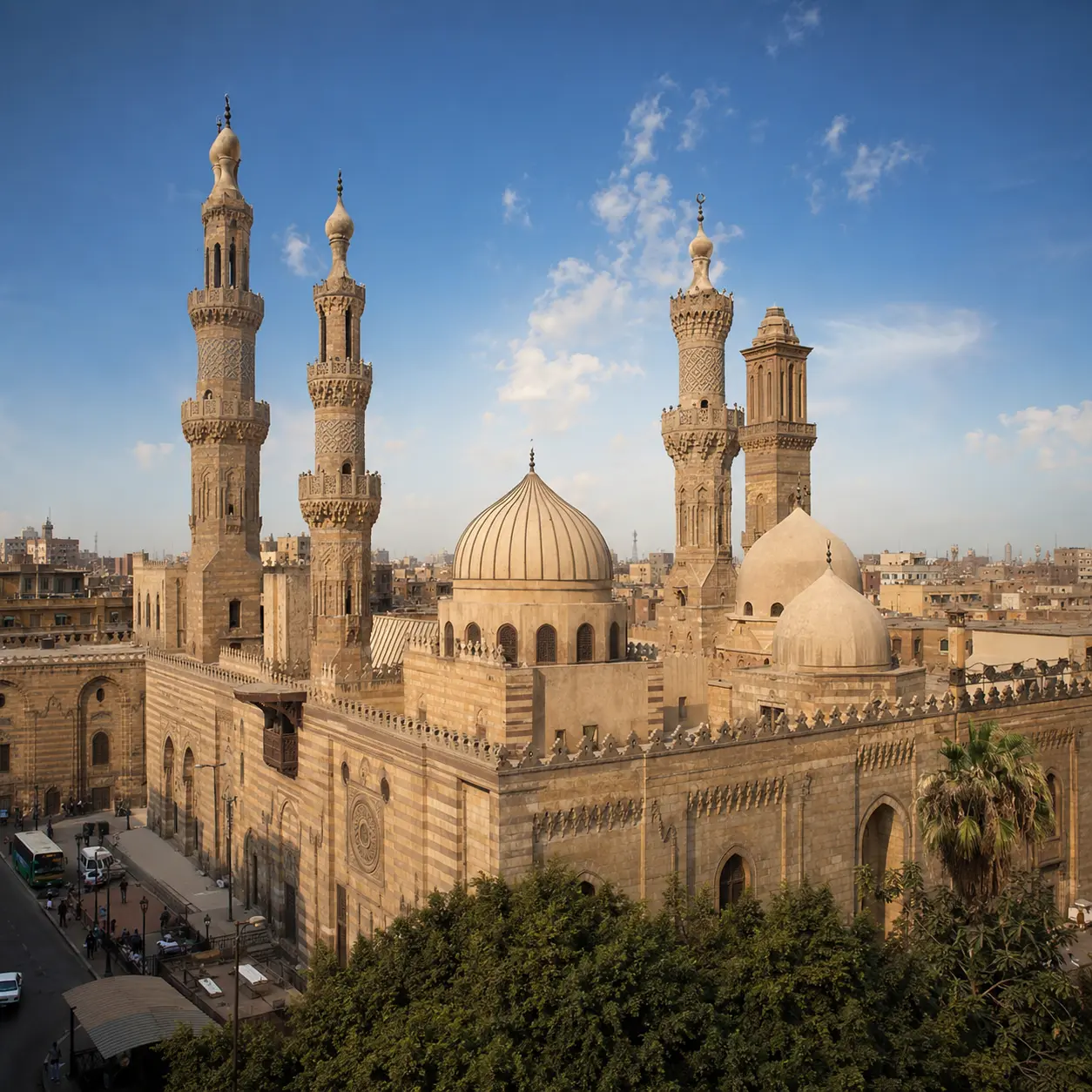
Al-Azhar Mosque
Al-Azhar Mosque is a landmark of Islamic Cairo, known for its graceful courtyard, layered architecture, and long association with religious scholarship.


Plan your visit
- Opening hours
- Al-Azhar Mosque generally welcomes respectful visitors outside prayer times, but access is shaped by daily worship. Hours can vary during Friday prayers, Ramadan, religious holidays, restoration work, or official visits. Check locally on the day, and avoid planning a sightseeing stop at the main Friday prayer time.
- Best time
- The best time to visit Al-Azhar Mosque is usually morning or late afternoon, outside the busiest prayer periods. Avoid arriving during the Friday midday sermon unless you are attending prayers, as sightseeing access is more restricted and the area is crowded. Ramadan evenings can be atmospheric but busier than usual.
- Visit duration
- Plan around 45 to 90 minutes for Al-Azhar Mosque itself. Add more time if you want to walk through Islamic Cairo, visit Khan El Khalili, stop for tea, or continue to other nearby historic mosques and streets.
- Category
- History & Ancient Wonders
- Location
About
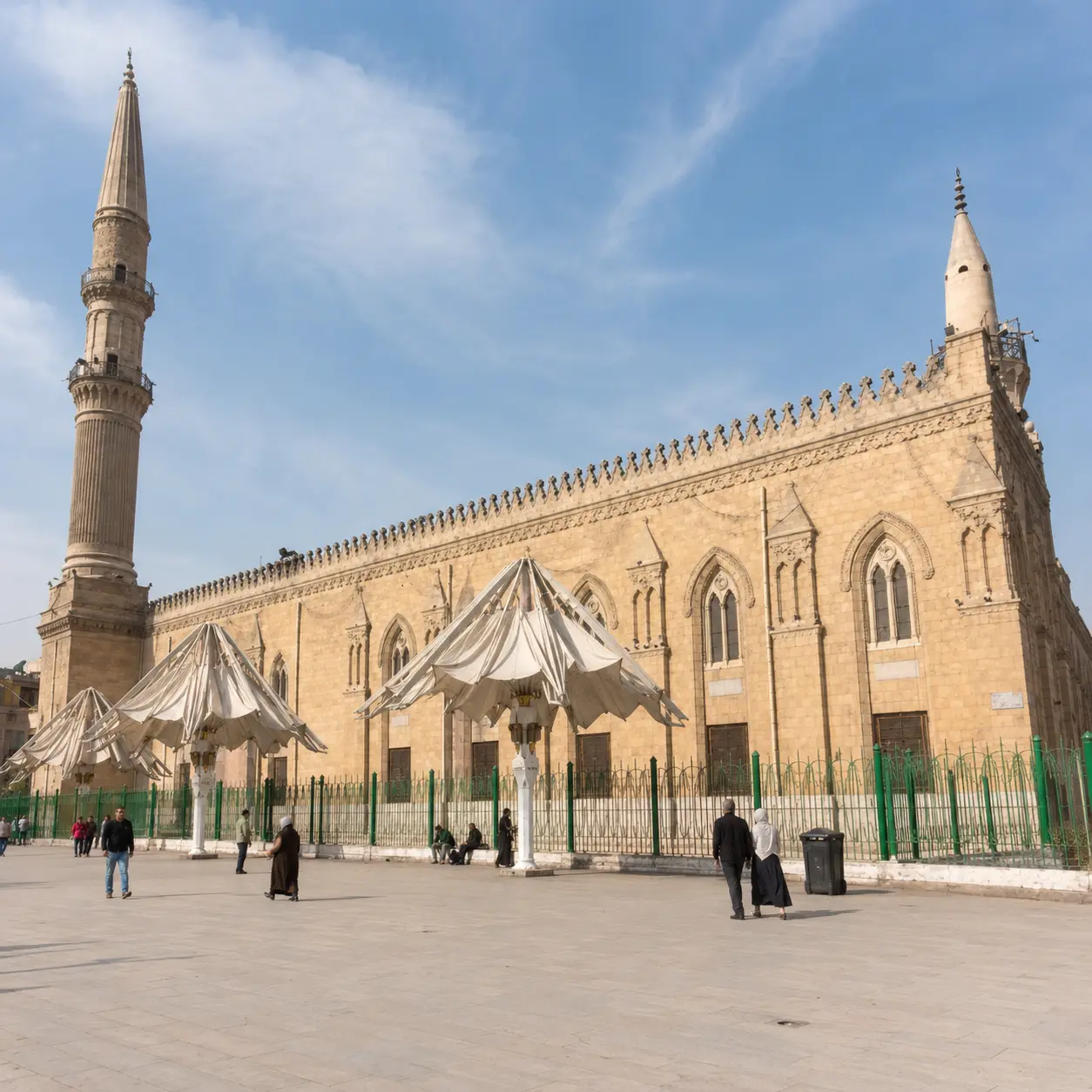
Al-Azhar Mosque is one of Cairo’s great living monuments: a place of prayer, learning, stone, shade, and city noise just beyond the gate. It belongs to Islamic Cairo, close to the medieval market streets and artisan lanes, yet the atmosphere changes as soon as you step inside. Shoes come off, voices drop, and the wide marble courtyard opens out under slender minarets and layered arcades.
The mosque was founded during the Fatimid period and later expanded by rulers from different eras, which is why it does not feel like a single frozen building. Look closely and you can read Cairo’s history in its details: varying minaret styles, carved entrances, columns reused and reworked, and a courtyard designed for both movement and stillness. Al-Azhar is also tied to one of the Islamic world’s most respected centres of religious scholarship, so the site is not only architectural; it is intellectual and spiritual.
For travellers, the best way to visit Al-Azhar Mosque is slowly and respectfully. Pause in the courtyard before moving under the arcades. Notice the cool touch of polished stone underfoot, the soft echo of footsteps, and the shift from Cairo traffic to recitation and prayer. This is an active mosque, not a museum set, so the experience depends on timing, etiquette, and sensitivity.
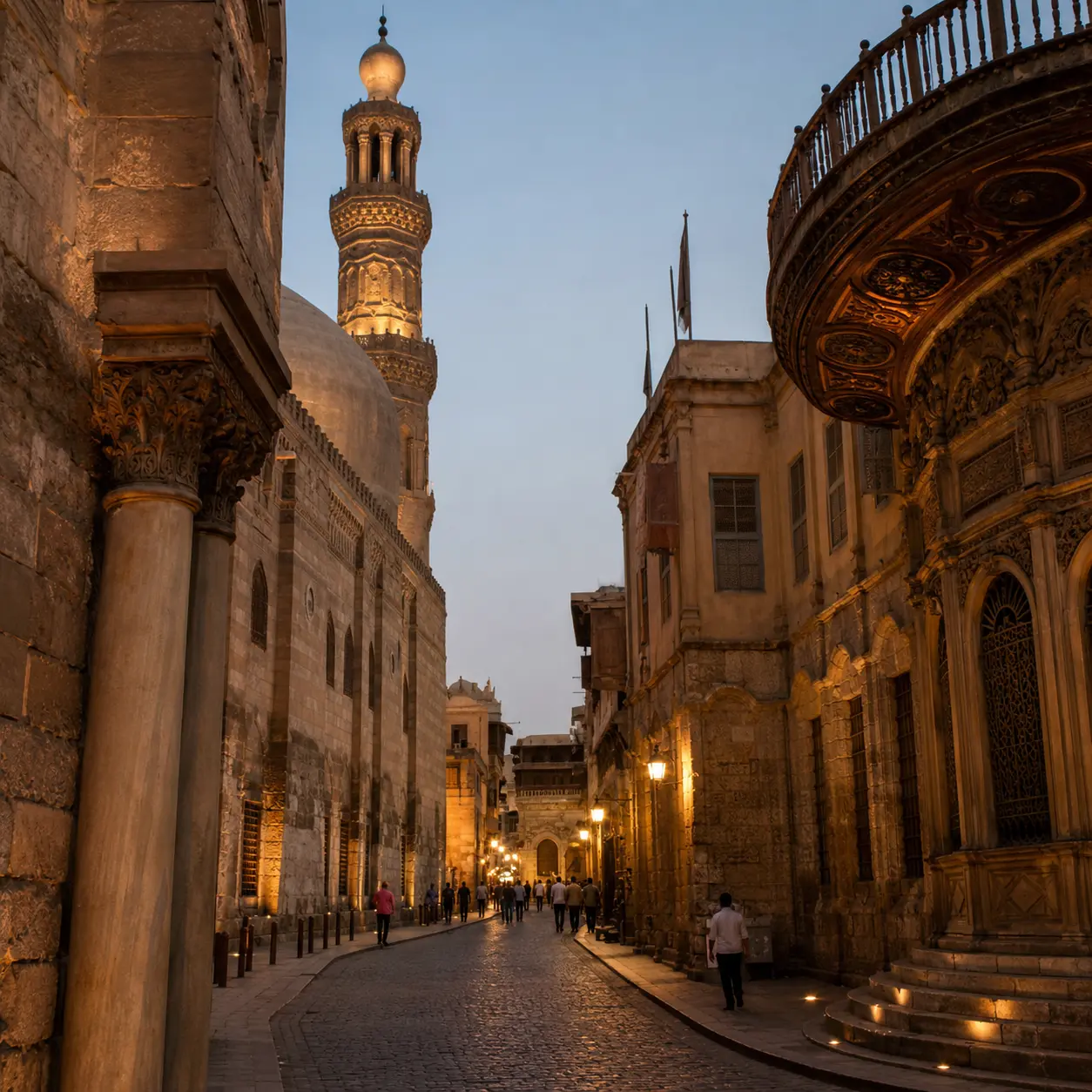
Al-Azhar pairs naturally with the surrounding historic district. Many visitors combine it with the old market streets around Khan El Khalili’s bazaar quarter, then continue for tea, copperwork, perfume shops, or a simple local meal. If you are shaping a wider day in the capital, use it as a calm counterpoint to pharaonic sites in Giza or modern viewpoints such as Cairo from above.
A guide adds real value here. Without context, you may see a beautiful mosque; with context, you start to understand why Al-Azhar matters to Cairo’s identity, education, religious life, and urban memory. Ozes trips are designed to show this kind of contrast on video before you book, so you can judge the pace, setting, and level of cultural depth that suits your travel style. For a broader plan, see curated Cairo travel ideas.
Al-Azhar Mosque is one of Cairo's most-visited history & ancient wonders spots. Plan around The best time to visit Al-Azhar Mosque is usually morning or late afternoon, outside the busiest prayer periods. Avoid arriving during the Friday midday sermon unless you are attending prayers, as sightseeing access is more restricted and the area is crowded. Ramadan evenings can be atmospheric but busier than usual. for the best conditions, and budget roughly Plan around 45 to 90 minutes for Al-Azhar Mosque itself. Add more time if you want to walk through Islamic Cairo, visit Khan El Khalili, stop for tea, or continue to other nearby historic mosques and streets. on-site. Visit early to avoid crowds and heat.

Why travelers visit
Visit Al-Azhar Mosque to experience a living side of historic Cairo: beautiful architecture, active worship, and a deep connection to Islamic scholarship. It gives balance to a Cairo itinerary focused on ancient Egypt, showing how the city continued to grow as a centre of faith, learning, and craft for centuries.
Highlights
 A spacious marble courtyard framed by arcades and historic minarets.
- One of Cairo’s most important Islamic monuments and a major symbol of religious learning.
- Layered architecture shaped by Fatimid, Mamluk, Ottoman, and later restorations.
- A peaceful break from the movement and noise of Islamic Cairo.
- Easy to combine with Khan El Khalili and nearby historic streets.
- Excellent place to understand Cairo beyond pyramids and museums.
Photos
1 photos
Know before you go
Practical tips to make the most of your visit.

What to wear
Dress modestly. Long trousers or a long skirt, covered shoulders, and loose clothing are best. Women should carry a scarf for hair covering, and men should avoid shorts. Shoes are removed in prayer areas, so comfortable socks are useful.

Is a guide recommended?
Build the visit around respect and timing. Enter calmly, remove shoes where required, keep voices low, and do not walk in front of people praying. A guide should explain the mosque’s Fatimid origins, later additions, and scholarly role without turning the visit into a lecture. The strongest moments are often quiet ones: the first view of the courtyard, the minarets against the Cairo sky, and the contrast with the busy streets outside.

Common mistakes to avoid
- Arriving during prayer and expecting to walk around freely.
- Wearing shorts, sleeveless tops, or tight clothing that feels out of place in an active mosque.
- Forgetting socks, then having to walk barefoot on hot or cool stone after removing shoes.
- Rushing through the courtyard without looking at the different architectural layers and minarets.
- Treating the mosque like a photo backdrop rather than a place of worship.
- Visiting without nearby context; Al-Azhar is best understood alongside Islamic Cairo and Khan El Khalili.
Frequently asked questions
Can non-Muslims visit Al-Azhar Mosque?
Yes, non-Muslim visitors can usually enter Al-Azhar Mosque outside prayer times if they dress modestly and behave respectfully. Access may be limited during prayers, Friday services, or religious occasions.
What should women wear at Al-Azhar Mosque?
Women should cover shoulders, arms, and legs, and a headscarf is generally expected inside the mosque. Men should also avoid shorts and sleeveless tops.
How long do you need at Al-Azhar Mosque?
Most visitors spend about 45 to 90 minutes at Al-Azhar Mosque. Allow extra time if you are exploring Islamic Cairo or walking to Khan El Khalili afterwards.
Is Al-Azhar Mosque near Khan El Khalili?
Al-Azhar Mosque is close to Khan El Khalili Bazaar and is often visited on the same walk through historic Cairo. The pairing works well because the mosque offers calm, while the bazaar adds street life and shopping.
Do I need a guide for Al-Azhar Mosque?
A guide is not required, but a good guide makes the visit more meaningful. Al-Azhar’s value lies in its architecture, scholarship, and role in Cairo’s religious life, which are easy to miss without explanation.
Can I take photos inside Al-Azhar Mosque?
Photography is often allowed in exterior and courtyard areas, but always be discreet and avoid photographing people at prayer. If in doubt, ask a mosque attendant or your guide before taking photos.
Visitor info
- Opening hours
- Al-Azhar Mosque generally welcomes respectful visitors outside prayer times, but access is shaped by daily worship. Hours can vary during Friday prayers, Ramadan, religious holidays, restoration work, or official visits. Check locally on the day, and avoid planning a sightseeing stop at the main Friday prayer time.
- Recommended visit
- Plan around 45 to 90 minutes for Al-Azhar Mosque itself. Add more time if you want to walk through Islamic Cairo, visit Khan El Khalili, stop for tea, or continue to other nearby historic mosques and streets.
- Best time to visit
- The best time to visit Al-Azhar Mosque is usually morning or late afternoon, outside the busiest prayer periods. Avoid arriving during the Friday midday sermon unless you are attending prayers, as sightseeing access is more restricted and the area is crowded. Ramadan evenings can be atmospheric but busier than usual.
- Category
- History & Ancient Wonders
How to get there
Open in Google Maps
Reviews

Find guided Egypt tours that include this attraction.