Al-Muizz Street
Al-Muizz Street is a historic walking route in Islamic Cairo, lined with medieval mosques, madrasas, gates, sabils, and old merchant architecture.


Plan your visit
- Opening hours
- Al-Muizz Street is a public street, so access is not usually limited in the same way as a museum. However, individual monuments, restored houses, mosques, and ticketed interiors may open and close at different times, and access can change for prayer, restoration, or local events. For a smoother visit, go during daylight or early evening and confirm any must-see interior locally before you set out.
- Best time
- The most pleasant time to visit Al-Muizz Street is early morning for quieter architecture-focused photography, or late afternoon into evening when the façades warm in the light and the street becomes livelier. Avoid rushing through at midday in hot months, when shade can be patchy and walking feels tiring. During Ramadan and major holidays, the atmosphere can be special but much busier than usual.
- Visit duration
- Plan around 2 to 3 hours for a satisfying Al-Muizz Street walk, including photo stops and time to enter a few accessible buildings. A quick stroll can take less time, but the street rewards slow looking. Add extra time if you continue into Khan El Khalili or stop for tea, shopping, or a meal nearby.
- Category
- History & Ancient Wonders
- Location
About
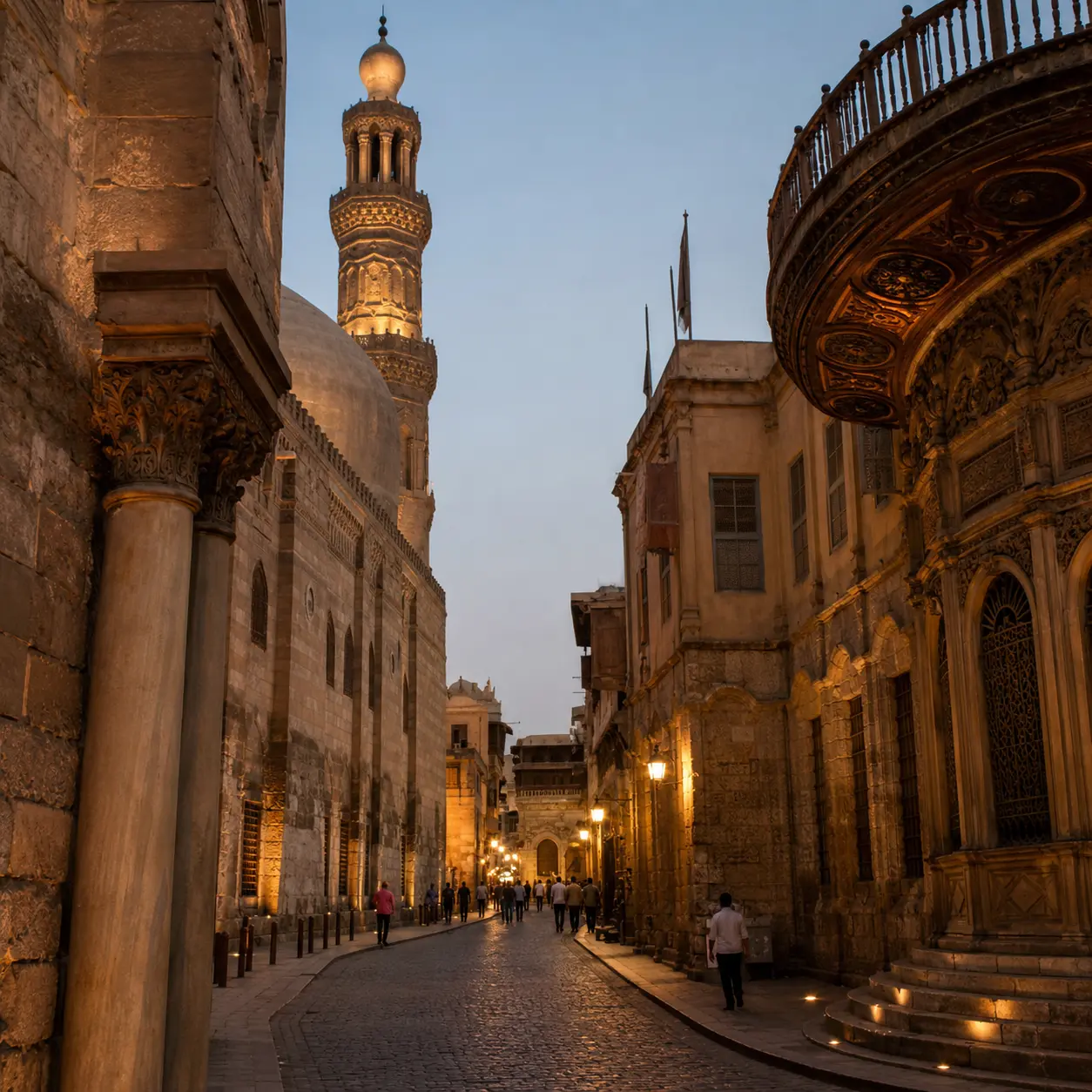
Al-Muizz Street is one of Cairo’s most rewarding walks: a long, stone-paved route through Islamic Cairo where medieval mosques, madrasas, mausoleums, sabils, gates, and merchant houses sit shoulder to shoulder with everyday city life. You do not come here for a single monument. You come for the sequence — carved wooden doors, brass shop lamps, striped stone façades, call to prayer echoing between narrow lanes, and the constant movement of residents, students, shopkeepers, and visitors.
The street is named after the Fatimid caliph Al-Muizz li-Din Allah, whose dynasty founded Cairo in the 10th century. Over later centuries, Ayyubid, Mamluk, and Ottoman rulers kept adding to the area, leaving behind some of the finest Islamic architecture in Egypt. Look closely and you will see the city’s history written in materials: dark and pale ablaq stonework, muqarnas details above entrances, marble panels, bronze-studded doors, and mashrabiya screens that once filtered light and air into private homes.
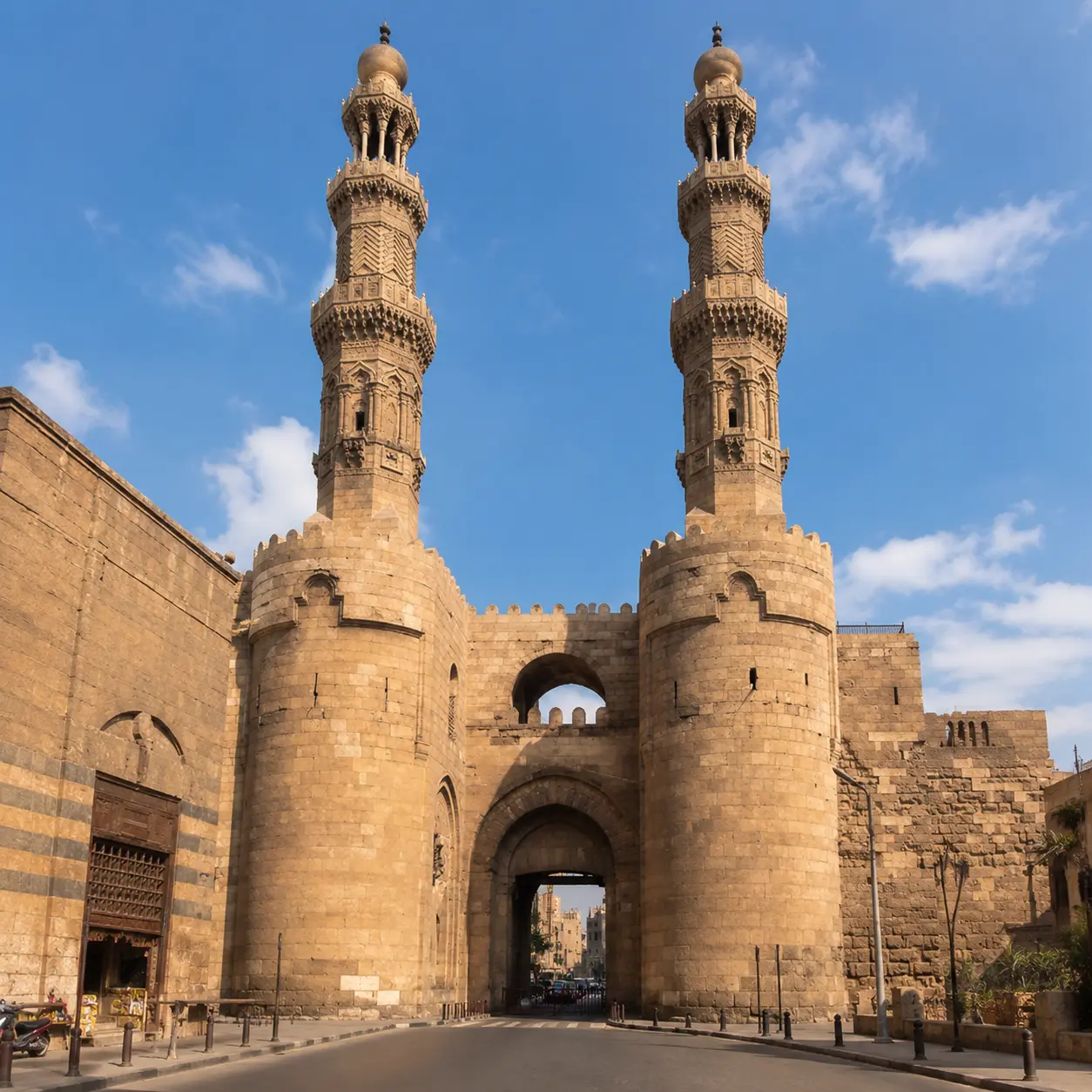
Most travellers start around Bab Al-Futuh or Bab Al-Nasr, the northern gates of old Fatimid Cairo, then walk south along Al-Muizz toward the busy market lanes near Khan El Khalili’s bazaar streets. This direction gives the walk a natural rhythm: monumental gates first, then clusters of religious and civic buildings, then the more commercial energy around gold, perfume, textiles, spices, and souvenirs.
A good visit is not rushed. Step into courtyards when open, pause under shaded arches, and give your eyes time to adjust inside the darker interiors. The exterior details are often just as memorable as the famous names: a Qur’anic inscription cut into stone, an old water fountain built for public use, a minaret rising unexpectedly above a shopfront. Some historic buildings may require a ticket, while the street itself is generally walked as a public area.
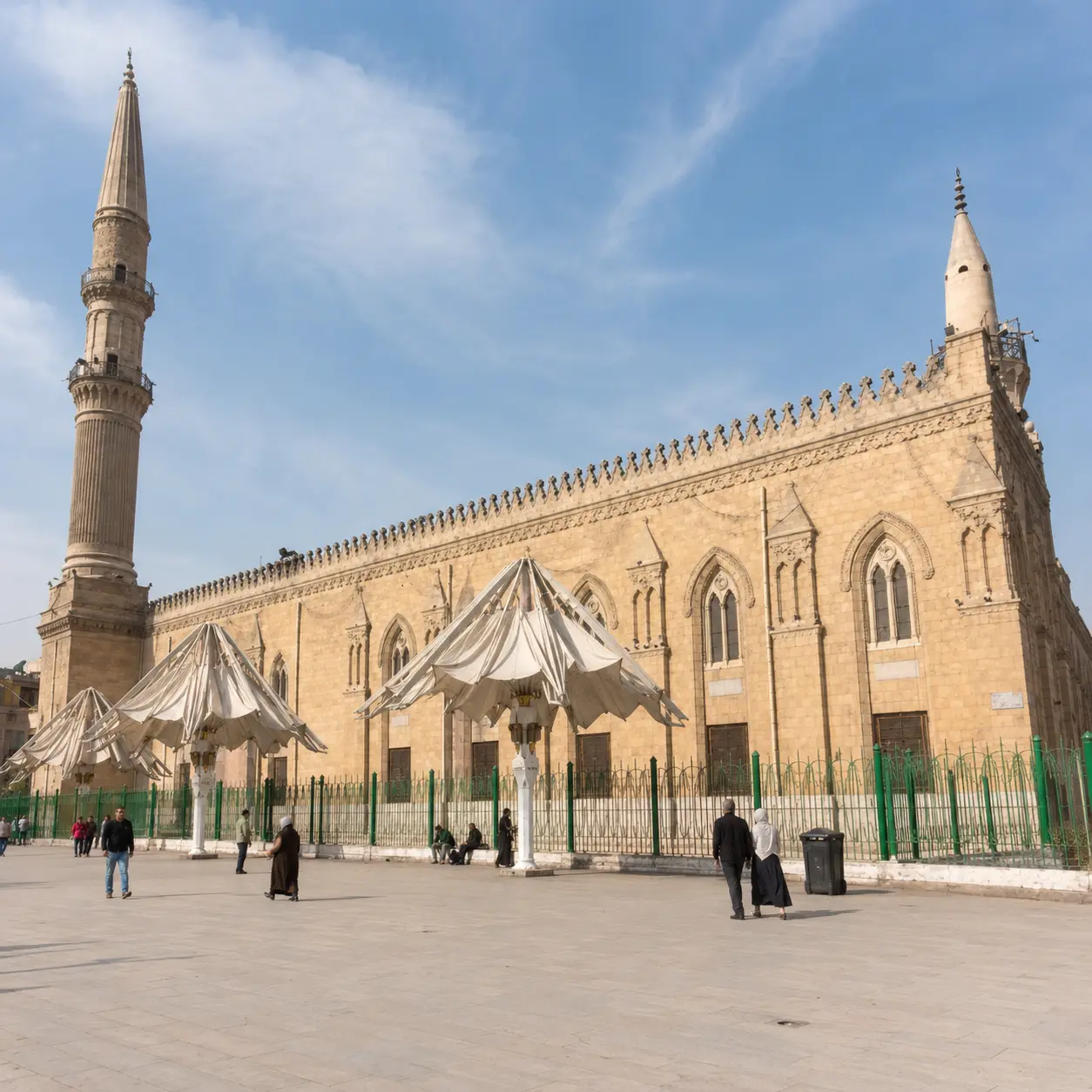
Al-Muizz Street also pairs naturally with nearby Islamic Cairo landmarks. Many visitors combine it with Al-Azhar Mosque nearby, the market atmosphere of Khan El Khalili, or a wider Cairo city itinerary. If you want a broader contrast, add the Cairo Citadel and Muhammad Ali Mosque on the same day, but keep your schedule realistic; Cairo traffic and the density of sights can make a short distance feel much longer.
The best way to experience Al-Muizz Street is with a guide who can decode the façades without turning the walk into a lecture. Many buildings have layered stories: a mosque built beside a madrasa, a ruler commemorated through architecture, a public water dispenser attached to an elementary school. Without context, you may enjoy the beauty. With context, the street becomes a readable timeline of Cairo’s power, faith, trade, and urban life.
Visit with comfortable shoes, a modest outfit, and a little patience. This is a living district, not an open-air museum sealed off from the city. Motorbikes may pass, shopkeepers may invite you in, and restoration work can affect access to specific buildings. That is part of the texture. Al-Muizz Street is at its best when you treat it as a walk through a working neighborhood that happens to hold some of Cairo’s greatest architectural treasures.
Al-Muizz Street is one of Cairo's most-visited history & ancient wonders spots. Plan around The most pleasant time to visit Al-Muizz Street is early morning for quieter architecture-focused photography, or late afternoon into evening when the façades warm in the light and the street becomes livelier. Avoid rushing through at midday in hot months, when shade can be patchy and walking feels tiring. During Ramadan and major holidays, the atmosphere can be special but much busier than usual. for the best conditions, and budget roughly Plan around 2 to 3 hours for a satisfying Al-Muizz Street walk, including photo stops and time to enter a few accessible buildings. A quick stroll can take less time, but the street rewards slow looking. Add extra time if you continue into Khan El Khalili or stop for tea, shopping, or a meal nearby. on-site. Visit early to avoid crowds and heat.

Why travelers visit
Visit Al-Muizz Street to see Cairo’s Islamic history in its most walkable form. Few places in the city offer such a concentrated mix of medieval architecture, working street life, market energy, and photogenic detail. It is ideal for travellers who want Cairo beyond the pyramids and museums.
Highlights
 Walk through one of the most atmospheric historic streets in Islamic Cairo.
- See layers of Fatimid, Ayyubid, Mamluk, and Ottoman architecture in a compact area.
- Photograph carved doors, minarets, stone inscriptions, mashrabiya screens, and restored façades.
- Combine the walk with Khan El Khalili, Al-Azhar Mosque, or a wider Cairo sightseeing day.
- Experience a living neighborhood where monuments, shops, mosques, and daily routines overlap.
Photos
1 photos
Know before you go
Practical tips to make the most of your visit.

What to wear
Wear comfortable walking shoes and modest clothing. Lightweight long trousers, skirts, or dresses and covered shoulders are practical, especially if you may enter mosques or religious spaces. In warm weather, bring sunglasses, a hat, and water; in cooler months, carry a light layer for the evening.

Is a guide recommended?
For the best experience, walk Al-Muizz Street with a local guide who can connect the architecture to Cairo’s Fatimid, Mamluk, and Ottoman history. Ask your guide to pace the route rather than list every building; the street is more enjoyable when there is time to stop, look, and absorb the details.

Common mistakes to avoid
- Trying to see every monument on the street in one rushed visit instead of choosing a manageable walking route.
- Visiting without a guide or background notes and missing the meaning behind the architecture.
- Wearing uncomfortable shoes; the paving and side lanes can be uneven.
- Assuming every historic building will be open at all times. Access can vary because of prayer times, restoration, events, or local management.
- Spending the whole visit shopping and forgetting to look up at the minarets, wooden screens, inscriptions, and stonework.
- Combining too many Cairo sights in one day without allowing for traffic, walking time, and breaks.
Frequently asked questions
Is Al-Muizz Street worth visiting?
Yes, Al-Muizz Street is worth visiting if you enjoy history, architecture, street life, or photography. It offers one of Cairo’s densest concentrations of Islamic-era buildings in a walkable area.
How long do you need for Al-Muizz Street?
Most visitors spend about 2 to 3 hours on Al-Muizz Street. Allow more time if you plan to enter several monuments, shop in nearby lanes, or combine it with Khan El Khalili.
Do I need a guide for Al-Muizz Street?
You can visit Al-Muizz Street without a guide, but a guide makes the experience much richer. Many façades and buildings have stories that are easy to miss if you are simply walking past.
What is the best time of day to visit Al-Muizz Street?
Al-Muizz Street is generally best visited in the morning or late afternoon into evening. Mornings are calmer for photos, while evenings bring more atmosphere around the market areas.
Can I visit Al-Muizz Street and Khan El Khalili together?
Yes, Al-Muizz Street and Khan El Khalili are close enough to combine on the same visit. Many travellers walk Al-Muizz first, then continue toward the bazaar for tea, shopping, or dinner.
What should I wear on Al-Muizz Street?
Wear modest, comfortable clothing for Al-Muizz Street, especially if you plan to enter mosques or religious buildings. Comfortable walking shoes are more important than stylish footwear here.
Does Al-Muizz Street have opening hours?
Al-Muizz Street is a historic street with public access, so it does not function like a single attraction with one fixed opening time. Individual monuments, shops, and religious buildings may have their own access rules.
Is Al-Muizz Street suitable for families?
Al-Muizz Street is suitable for families, but younger children may tire from the walking and crowds. Plan short stops, bring water, and avoid the busiest periods if your children dislike noise or congestion.
Visitor info
- Opening hours
- Al-Muizz Street is a public street, so access is not usually limited in the same way as a museum. However, individual monuments, restored houses, mosques, and ticketed interiors may open and close at different times, and access can change for prayer, restoration, or local events. For a smoother visit, go during daylight or early evening and confirm any must-see interior locally before you set out.
- Recommended visit
- Plan around 2 to 3 hours for a satisfying Al-Muizz Street walk, including photo stops and time to enter a few accessible buildings. A quick stroll can take less time, but the street rewards slow looking. Add extra time if you continue into Khan El Khalili or stop for tea, shopping, or a meal nearby.
- Best time to visit
- The most pleasant time to visit Al-Muizz Street is early morning for quieter architecture-focused photography, or late afternoon into evening when the façades warm in the light and the street becomes livelier. Avoid rushing through at midday in hot months, when shade can be patchy and walking feels tiring. During Ramadan and major holidays, the atmosphere can be special but much busier than usual.
- Category
- History & Ancient Wonders
How to get there
Open in Google Maps
Reviews

Find guided Egypt tours that include this attraction.