Coptic Museum
The Coptic Museum in Old Cairo displays Egypt’s Christian art, manuscripts, textiles, icons, and carved stonework beside the historic Babylon Fortress area.


Plan your visit
- Opening hours
- Opening hours can change for public holidays, religious occasions, restoration work, or official events. Check the latest schedule before travelling across Cairo, and aim to arrive well before closing so you are not rushed through the galleries.
- Best time
- Visit in the morning or earlier part of the afternoon for a calmer experience and better pacing around Old Cairo. Weekdays often feel quieter than weekends and holidays. The museum is indoors, so it is a useful Cairo stop during hot weather, but it still pairs best with nearby churches when temperatures are comfortable enough for walking between sites.
- Visit duration
- Plan for 1–2 hours inside the museum. Add extra time if you are combining it with the Hanging Church, nearby churches, or a wider Old Cairo walk.
- Category
- History & Ancient Wonders
- Location
About
The Coptic Museum is Cairo’s best place to understand Egypt’s Christian heritage through objects, not just dates. Set in Old Cairo beside the Roman-era Babylon Fortress, the museum traces the development of Coptic art from late antiquity into the Islamic period, when Egyptian Christianity continued to shape language, design, music, monastic life, and everyday craft.
Inside, the mood is calmer than Cairo’s larger ancient Egyptian museums. You move through carved limestone panels, wooden screens, painted icons, manuscript fragments, textiles, metalwork, pottery, and architectural pieces rescued from churches and monasteries across Egypt. Look closely and you will see how styles overlap: lotus forms and vine patterns from earlier Egyptian art, classical faces and folds from the Greco-Roman world, and geometric woodwork that later feels at home beside Islamic Cairo.
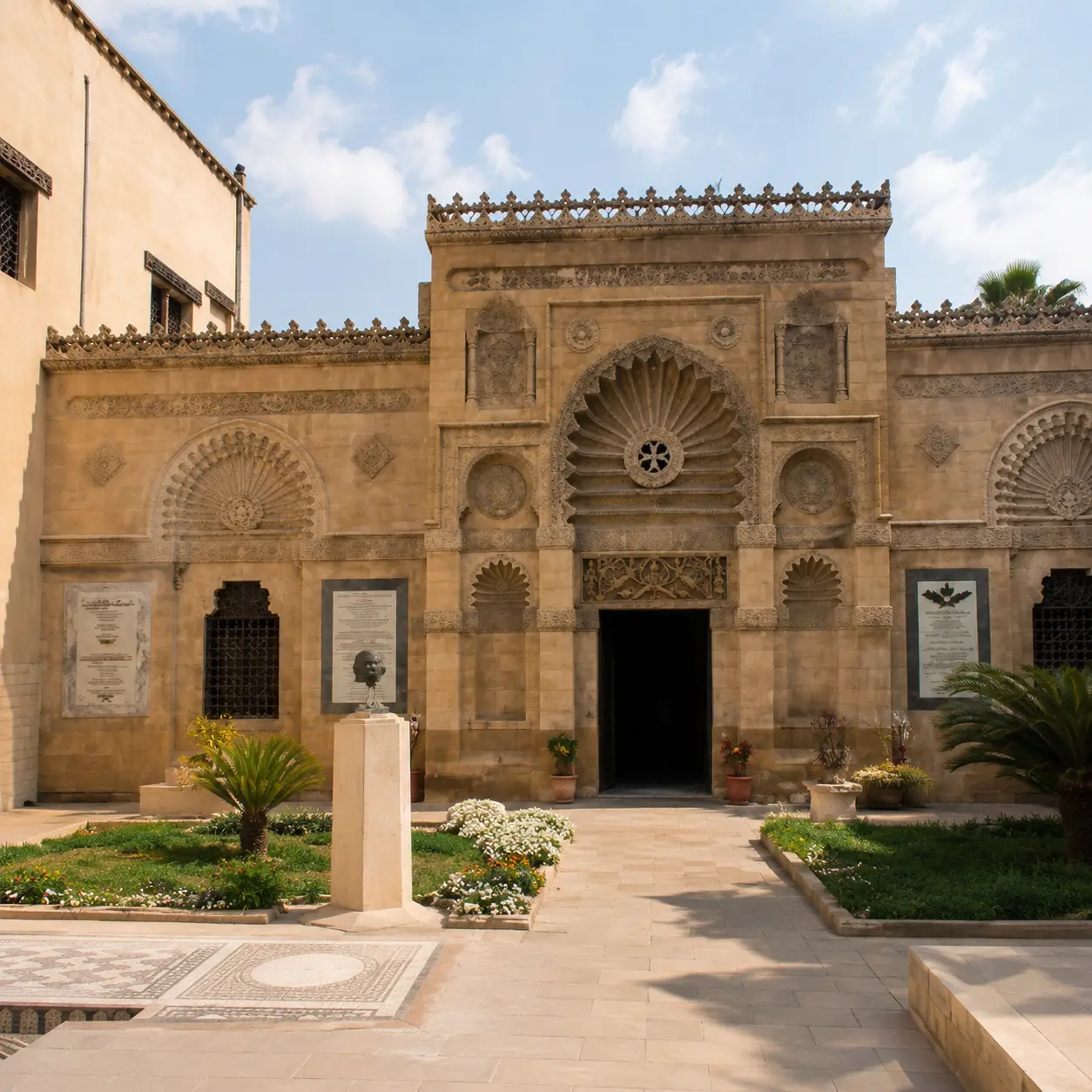
The building is part of the experience. Dark wood ceilings, mashrabiya-style screens, stone courtyards, and soft museum lighting give the galleries a quiet, scholarly feel. Many visitors come expecting a small church museum and leave with a clearer picture of Egypt as a layered civilization, where Pharaonic, Roman, Coptic, and Islamic traditions did not simply replace one another.
A visit works especially well before or after the Hanging Church nearby, because the museum gives context to the churches of Old Cairo. If your Cairo plan also includes the civilization museum in Fustat, the two sites pair well: one offers a broad national timeline, while the Coptic Museum goes deep into a specific cultural and religious chapter.
Give yourself time for the details. The textiles are easy to rush past, but they are among the most revealing pieces: animals, saints, grapevines, crosses, and everyday patterns woven into fabric that once belonged to real homes and religious communities. The stone carvings are also worth a slow pass, especially capitals and friezes where ancient Egyptian motifs meet Christian symbols.
For travellers using Ozes to shape a Cairo route, the Coptic Museum is a strong choice when you want a quieter, more reflective stop between major landmarks. It adds texture to a Cairo itinerary and helps explain why Old Cairo is not just a historic district, but a living bridge between communities, languages, and faiths.
Coptic Museum is one of Cairo's most-visited history & ancient wonders spots. Plan around Visit in the morning or earlier part of the afternoon for a calmer experience and better pacing around Old Cairo. Weekdays often feel quieter than weekends and holidays. The museum is indoors, so it is a useful Cairo stop during hot weather, but it still pairs best with nearby churches when temperatures are comfortable enough for walking between sites. for the best conditions, and budget roughly Plan for 1–2 hours inside the museum. Add extra time if you are combining it with the Hanging Church, nearby churches, or a wider Old Cairo walk. on-site. Visit early to avoid crowds and heat.

Why travelers visit
Visit the Coptic Museum to see the part of Egyptian history that sits between pharaohs, Rome, early Christianity, and Islamic Cairo. It is quieter than many headline attractions, but its objects explain how Egypt’s artistic language changed over centuries while keeping older forms alive.
Highlights
 Coptic textiles with animals, plants, crosses, and daily-life patterns woven into the fabric
- Painted icons and religious objects that show the development of Egyptian Christian devotion
- Carved stone capitals, friezes, and architectural fragments from churches and monasteries
- Woodwork and screens that reveal links between Coptic and later Islamic craftsmanship
- Manuscripts and written material connected to Egypt’s long Christian literary tradition
- Atmospheric Old Cairo setting beside the Babylon Fortress area
Photos
1 photos
Know before you go
Practical tips to make the most of your visit.

What to wear
Wear light, modest clothing suitable for both a museum and nearby religious sites. Covered shoulders and knees are a good idea. Comfortable walking shoes help on the stone paths and uneven surfaces around Old Cairo.

Is a guide recommended?
A good guide can make this museum much more meaningful. Ask them to point out repeated symbols such as the cross, vine, fish, birds, and lotus forms, then explain how these motifs moved between ancient Egyptian, classical, Christian, and Islamic visual worlds.

Common mistakes to avoid
- Treating it as a quick add-on and leaving too little time for the textiles, manuscripts, and carved stonework.
- Visiting Old Cairo without modest clothing; nearby churches and religious sites call for covered shoulders and respectful dress.
- Expecting a Pharaonic museum. The Coptic Museum focuses on Egypt’s Christian period and its links with earlier and later cultures.
- Skipping the labels and visual details. Many of the best pieces are small, worn, or symbolic rather than monumental.
- Arriving with large bags or bulky items, which may slow entry depending on security and storage rules.
Frequently asked questions
Is the Coptic Museum worth visiting in Cairo?
Yes, the Coptic Museum is worth visiting if you want to understand the Christian chapter of Egyptian history beyond churches and monuments. Its collection shows how Coptic art connected ancient Egyptian, Greco-Roman, and Islamic-era visual traditions.
How long should I spend at the Coptic Museum?
Most visitors need about one to two hours at the Coptic Museum. Allow more time if you enjoy manuscripts, textiles, religious art, or want to read labels carefully.
Where is the Coptic Museum located?
The Coptic Museum is in Old Cairo, close to the Hanging Church and the Babylon Fortress area. It is often visited as part of a wider Coptic Cairo walking route.
Can I visit the Coptic Museum with the Hanging Church?
Yes, the Coptic Museum is close to several historic churches in Old Cairo. Pairing it with the Hanging Church makes sense because the museum explains much of the art and symbolism you see in the area.
Can I take photos inside the Coptic Museum?
Photography rules can change, and some galleries or objects may have restrictions. Check signs at the entrance and ask staff before taking photos, especially near manuscripts or sensitive displays.
Is the Coptic Museum good for children?
The Coptic Museum is suitable for children who enjoy stories, symbols, and quieter museums. It is not as visually dramatic as the pyramids, so families may want to keep the visit focused and pair it with a short walk around Old Cairo.
Visitor info
- Opening hours
- Opening hours can change for public holidays, religious occasions, restoration work, or official events. Check the latest schedule before travelling across Cairo, and aim to arrive well before closing so you are not rushed through the galleries.
- Recommended visit
- Plan for 1–2 hours inside the museum. Add extra time if you are combining it with the Hanging Church, nearby churches, or a wider Old Cairo walk.
- Best time to visit
- Visit in the morning or earlier part of the afternoon for a calmer experience and better pacing around Old Cairo. Weekdays often feel quieter than weekends and holidays. The museum is indoors, so it is a useful Cairo stop during hot weather, but it still pairs best with nearby churches when temperatures are comfortable enough for walking between sites.
- Category
- History & Ancient Wonders
How to get there
Open in Google Maps
Reviews

Find guided Egypt tours that include this attraction.