Dahshur Pyramids
Dahshur Pyramids in Giza are home to the Bent Pyramid and Red Pyramid, two Old Kingdom monuments that reveal how Egypt perfected pyramid design.


Plan your visit
- Opening hours
- Dahshur generally operates as a daytime archaeological site, with access controlled through official entry points. Hours can change for security, maintenance, seasonal routines, or special conditions, so confirm the current schedule before travelling, especially if you plan to arrive early or late in the day.
- Best time
- The best time to visit Dahshur Pyramids is in the cooler part of the day, especially morning, when the light is clean and walking on the desert surface is more comfortable. Cooler months are generally easier for longer visits. In hot periods, keep the visit shorter, bring water, and avoid planning strenuous interior climbs at midday.
- Visit duration
- Plan about one to two hours for Dahshur alone. Allow longer if you want to walk slowly, take wide-angle photos, or enter a pyramid when access is available. A full-day ancient Memphis necropolis route can combine Dahshur with Saqqara, Memphis, and Giza.
- Category
- History & Ancient Wonders
- Location
About
Dahshur Pyramids are among the best places in Egypt to understand how pyramid building actually evolved. The site sits south of Giza on the edge of the desert, away from the thickest Cairo crowds, with open views, wind-blown sand, and two pyramids that changed royal architecture: the Bent Pyramid and the Red Pyramid.
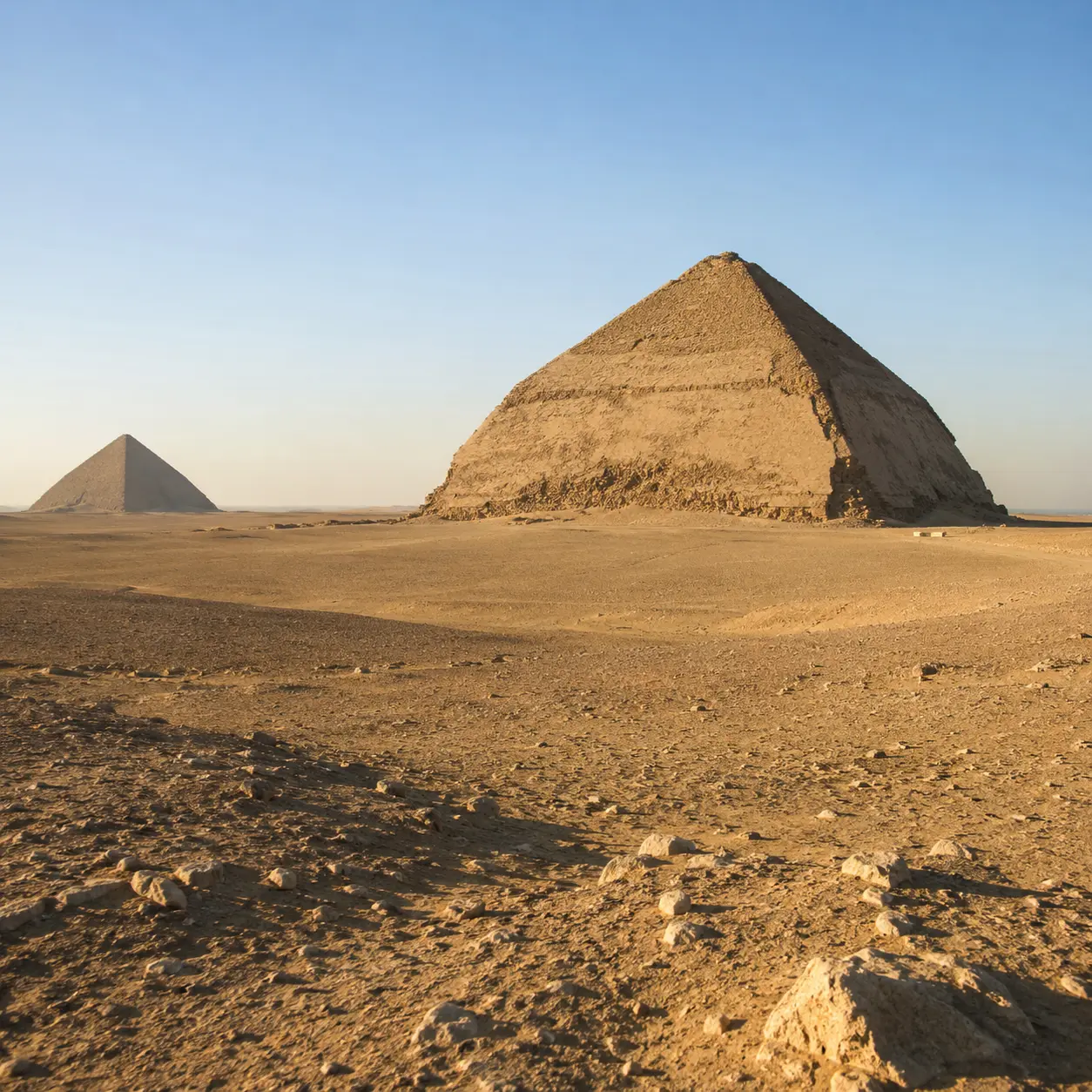
Both are linked to Pharaoh Sneferu, the Fourth Dynasty king whose builders experimented with shape, angle, weight, and internal design before the more famous pyramids reached their mature form. The Bent Pyramid is the dramatic one: its lower sides rise steeply, then shift to a gentler angle near the top, giving it a broken profile you can read from far across the plateau. The Red Pyramid is calmer and more symmetrical, often described as one of Egypt’s earliest successful true smooth-sided pyramids.
Dahshur feels different from the Giza plateau icons. At Giza, the scale and setting are monumental and busy. At Dahshur, the desert feels wider and quieter. You can stand back and see the geometry clearly, then move closer to notice rough stone courses, pale limestone surfaces, and the way the pyramids sit against the low desert horizon.
For travellers who like the story behind ancient engineering, Dahshur pairs naturally with Saqqara’s Step Pyramid. Saqqara shows the leap from mastaba tombs to stacked stone architecture; Dahshur shows the trial-and-correction phase that led toward the classic pyramid form. Add Memphis and Giza, and you have a compact lesson in how Egypt’s Old Kingdom landscape developed across generations.
The site is often visited on a half-day or full-day route from Cairo or Giza. A private driver or guided tour is the simplest option because public transport is not convenient for most visitors, and the best experience comes from having the sequence explained: Step Pyramid, Bent Pyramid, Red Pyramid, then the later pyramids at Giza. Ozes travellers who want this arc in one day can look at a pyramid route from Cairo that connects the major ancient sites without rushing the context.
Inside access may vary, and the interior passages can be steep, narrow, and physically demanding. If an interior is open during your visit, expect a hot, enclosed climb rather than a decorated tomb. The reward is not wall art; it is the raw experience of entering a royal pyramid and feeling the engineering from within.
Go for quiet, space, and perspective. Dahshur is not only a photo stop. It is the place where the pyramid story becomes human: ambitious, experimental, imperfect, then suddenly precise.
Dahshur Pyramids is one of Giza's most-visited history & ancient wonders spots. Plan around The best time to visit Dahshur Pyramids is in the cooler part of the day, especially morning, when the light is clean and walking on the desert surface is more comfortable. Cooler months are generally easier for longer visits. In hot periods, keep the visit shorter, bring water, and avoid planning strenuous interior climbs at midday. for the best conditions, and budget roughly Plan about one to two hours for Dahshur alone. Allow longer if you want to walk slowly, take wide-angle photos, or enter a pyramid when access is available. A full-day ancient Memphis necropolis route can combine Dahshur with Saqqara, Memphis, and Giza. on-site. Visit early to avoid crowds and heat.

Why travelers visit
Visit Dahshur Pyramids to see the missing chapter between Egypt’s earliest stone pyramid experiments and the famous pyramids of Giza. The Bent Pyramid shows trial and adjustment; the Red Pyramid shows confidence and refinement. Together, they make ancient engineering feel tangible rather than abstract.
Highlights
 See the Bent Pyramid, famous for its visible change in angle halfway up the structure.
- Visit the Red Pyramid, a major step toward the classic smooth-sided pyramid form.
- Experience a quieter desert setting than the main Giza plateau.
- Understand Pharaoh Sneferu’s role in the evolution of pyramid construction.
- Pair Dahshur with Saqqara, Memphis, or Giza for a strong Old Kingdom route.
- Photograph broad desert views without the dense crowds common at better-known sites.
Photos
1 photos
Know before you go
Practical tips to make the most of your visit.

What to wear
Wear comfortable closed shoes with grip, light breathable clothing, sunglasses, and a hat. The ground can be sandy and uneven, and shade is limited. If you plan to enter a pyramid, avoid bulky bags and wear clothes that let you move comfortably in low passages.

Is a guide recommended?
A guide adds real value at Dahshur because the site is not only about seeing two pyramids; it is about understanding the design problem ancient builders were trying to solve. Ask your guide to explain why the Bent Pyramid changes angle and how the Red Pyramid fits into the path toward the Great Pyramid.

Common mistakes to avoid
- Treating Dahshur as a quick add-on only. The site makes much more sense when you understand Sneferu, the Bent Pyramid, and the Red Pyramid together.
- Arriving without sun protection. Shade is limited, and the open desert reflects heat and glare.
- Assuming interior access is always available. Pyramid entry can change depending on site conditions and official decisions.
- Underestimating the physical effort of going inside. The passageways can be steep, low, and hot.
- Skipping Saqqara if you care about history. Dahshur is more meaningful when paired with the earlier pyramid experiments at Saqqara.
- Expecting the same atmosphere as Giza. Dahshur is quieter, wider, and less commercial, which is exactly why many travellers like it.
Frequently asked questions
Are the Dahshur Pyramids worth visiting?
Dahshur Pyramids are worth visiting because they show the experimental stage between the Step Pyramid and the classic pyramids of Giza. The Bent Pyramid and Red Pyramid make the engineering story easy to see in the landscape.
What are the main pyramids at Dahshur?
Dahshur is best known for the Bent Pyramid and the Red Pyramid, both associated with Pharaoh Sneferu. They are key monuments in the development of smooth-sided pyramid construction.
Can you go inside the Dahshur Pyramids?
You can sometimes enter a pyramid at Dahshur, but interior access depends on current site rules and conditions. If open, expect steep, narrow passages and a physically demanding visit.
How long do you need at Dahshur Pyramids?
Most visitors spend around one to two hours at Dahshur, depending on photography, walking pace, and whether an interior is open. Add more time if you are combining it with Saqqara, Memphis, or Giza.
Is Dahshur less crowded than Giza?
Dahshur is usually quieter than the Pyramids of Giza. It has fewer crowds and a more open desert atmosphere, though visitor numbers can still vary by season and time of day.
How do you get to Dahshur from Cairo?
Dahshur is commonly visited by private car, driver, or guided tour from Cairo or Giza. Public transport is not the most practical option for most travellers because the site is spread out and sits beyond the main urban routes.
Visitor info
- Opening hours
- Dahshur generally operates as a daytime archaeological site, with access controlled through official entry points. Hours can change for security, maintenance, seasonal routines, or special conditions, so confirm the current schedule before travelling, especially if you plan to arrive early or late in the day.
- Recommended visit
- Plan about one to two hours for Dahshur alone. Allow longer if you want to walk slowly, take wide-angle photos, or enter a pyramid when access is available. A full-day ancient Memphis necropolis route can combine Dahshur with Saqqara, Memphis, and Giza.
- Best time to visit
- The best time to visit Dahshur Pyramids is in the cooler part of the day, especially morning, when the light is clean and walking on the desert surface is more comfortable. Cooler months are generally easier for longer visits. In hot periods, keep the visit shorter, bring water, and avoid planning strenuous interior climbs at midday.
- Category
- History & Ancient Wonders
How to get there
Open in Google Maps
Reviews

Find guided Egypt tours that include this attraction.