Karnak Temple Complex
Karnak Temple Complex is Luxor’s vast ancient religious site, known for monumental pylons, obelisks, sacred spaces, and the dramatic Great Hypostyle Hall.


Plan your visit
- Opening hours
- Karnak Temple Complex is generally open daily, with visiting hours that may vary by season, site management decisions, holidays, or special events. Go early if you want cooler weather and fewer crowds, and confirm current opening times locally before arranging transport.
- Best time
- The most comfortable times to visit Karnak Temple Complex are usually early morning or late afternoon, when the heat is gentler and the light brings out the carvings. Midday can be harsh because much of the site is exposed, with limited shade between major structures. Cooler months are generally easier for long walks around Luxor’s temples.
- Visit duration
- Plan around two to three hours for Karnak Temple Complex. A shorter visit can cover the main courts and Great Hypostyle Hall, but extra time lets you explore the Sacred Lake, obelisks, side chapels, and relief details at a calmer pace.
- Category
- History & Ancient Wonders
- Location
About
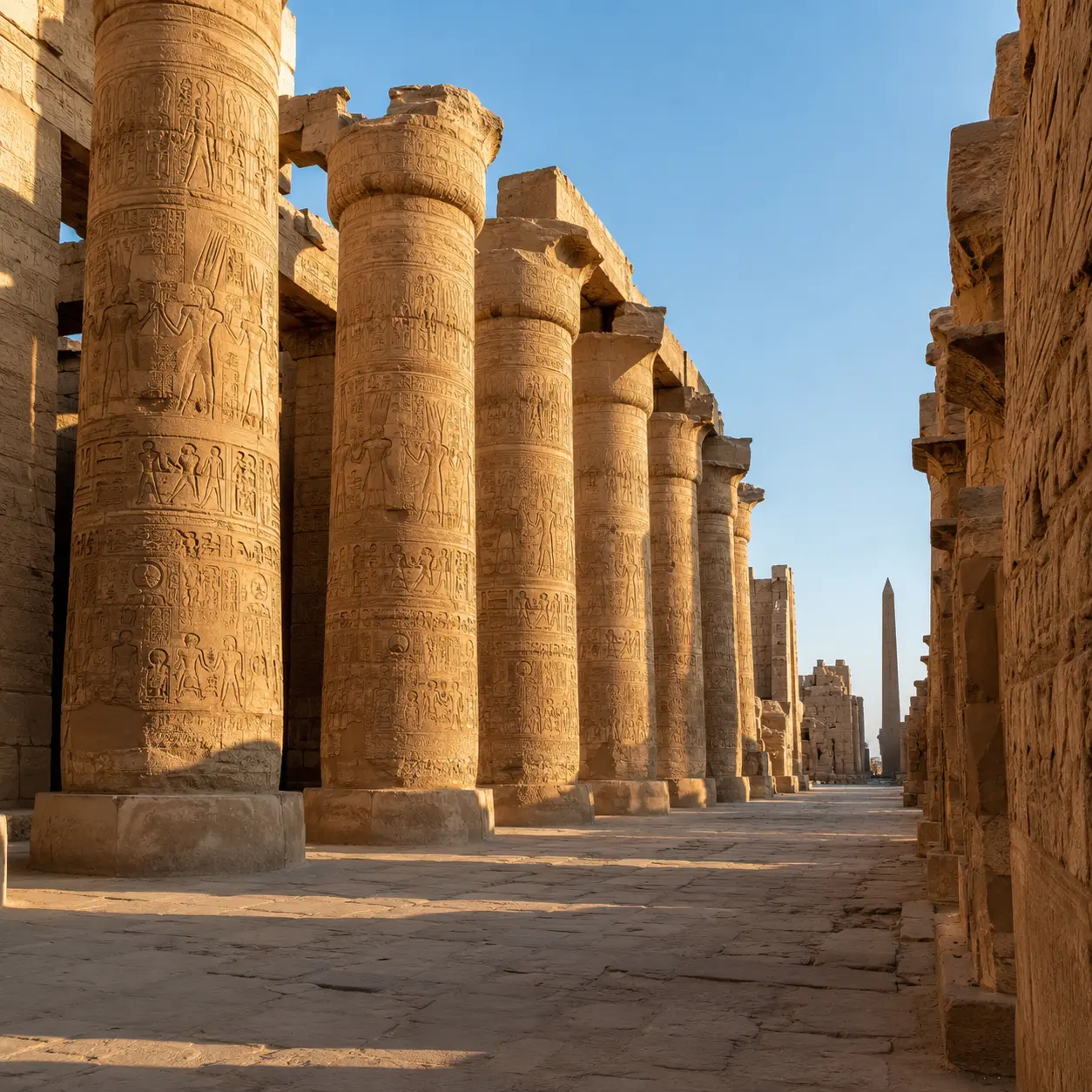
Karnak Temple Complex is the kind of place that changes scale as you walk. From outside, it looks like a spread of sun-baked stone walls and gateways on Luxor’s east bank. Once inside, the site opens into courts, pylons, chapels, obelisks, relief-covered walls, and the famous Great Hypostyle Hall, where thick columns rise above you like a stone forest.
Karnak was not built as a single monument. It grew over many centuries as pharaohs added, repaired, expanded, and inscribed their names into the sacred landscape. The main area is dedicated to Amun-Ra, with spaces also connected to other Theban deities, including Mut and Khonsu. That layered history is what makes Karnak so rewarding: you are not seeing one ruler’s project, but a long record of royal ambition, religious ritual, and artistic change.
The Great Hypostyle Hall is usually the moment visitors remember first. Look up at the capitals, then look closely at the carvings lower down. Some reliefs still hold traces of colour, especially where shade has protected the surface. In the open courts, the sunlight can be fierce, making the deep-cut hieroglyphs and royal scenes stand out in sharp shadow.
Do not rush straight from the entrance to the largest columns and leave. Karnak rewards side steps. The Sacred Lake offers a quieter pause, the obelisks show the precision and confidence of ancient stonework, and the smaller chapels reveal details that are easy to miss when groups are moving fast. A guide can help decode the sequence of kings, gods, festival routes, and symbols, but even without one, the site has a strong physical presence.
Karnak pairs naturally with a wider Luxor-focused Egypt trip, especially if you plan to see the west bank tombs and temples on another day. Many travellers also visit Karnak as part of a Nile cruise route, since Luxor is one of the classic gateways for exploring ancient Upper Egypt.
For the best visit, give yourself space. Karnak is large, exposed, and visually dense. Early morning often feels calmer and cooler, while late afternoon can bring warmer light across the columns and walls. Carry water, wear a hat, and move slowly enough to notice how the architecture guides your body from open sun into shade, from wide courts into sacred rooms, and from public display into more intimate ritual spaces.
Karnak Temple Complex is one of Cairo's most-visited history & ancient wonders spots. Plan around The most comfortable times to visit Karnak Temple Complex are usually early morning or late afternoon, when the heat is gentler and the light brings out the carvings. Midday can be harsh because much of the site is exposed, with limited shade between major structures. Cooler months are generally easier for long walks around Luxor’s temples. for the best conditions, and budget roughly Plan around two to three hours for Karnak Temple Complex. A shorter visit can cover the main courts and Great Hypostyle Hall, but extra time lets you explore the Sacred Lake, obelisks, side chapels, and relief details at a calmer pace. on-site. Visit early to avoid crowds and heat.

Why travelers visit
Visit Karnak Temple Complex to experience the scale of ancient Egyptian sacred architecture, not just as ruins but as a living layout of processions, offerings, royal messages, and ritual spaces. It is one of Luxor’s essential ancient sites and a powerful introduction to the religious world of Thebes.
Highlights
 The Great Hypostyle Hall, with towering columns and carved capitals.
- Massive pylons and open courts that show the ceremonial scale of the complex.
- Obelisks and reliefs linked to powerful New Kingdom rulers.
- The Sacred Lake, a calmer area that helps explain the ritual life of the temple.
- Detailed hieroglyphs, offering scenes, and traces of ancient colour in shaded areas.
- A strong sense of how centuries of pharaohs expanded and reshaped one sacred site.
Photos
1 photos
Know before you go
Practical tips to make the most of your visit.

What to wear
Wear breathable clothing, a hat, sunglasses, and sturdy walking shoes. The site is large and exposed, so modest sun-smart clothing is more practical than heavy layers. A light scarf can help with sun, dust, or sudden wind.

Is a guide recommended?
Pause before entering the Great Hypostyle Hall and look at how the columns frame the route ahead. Then step to the side rather than staying in the central flow of visitors; the angled view often reveals more depth, shadow, and surviving colour on the reliefs.

Common mistakes to avoid
- Arriving at midday without enough water or sun protection.
- Only visiting the Great Hypostyle Hall and skipping quieter areas such as the Sacred Lake and smaller chapels.
- Trying to see Karnak too quickly; the scale and detail need time.
- Not hiring a guide or using a reliable explanation, which can make the site feel like a maze of similar stone walls.
- Touching reliefs or leaning on ancient stone surfaces, which contributes to wear over time.
- Forgetting that photography conditions change sharply between bright courtyards and shaded halls.
Frequently asked questions
What is Karnak Temple Complex famous for?
Karnak Temple Complex is best known for the Great Hypostyle Hall, its monumental gateways, obelisks, and long history as a major religious centre in ancient Thebes. It is one of the most important temple sites in Luxor.
How long do you need at Karnak Temple Complex?
You should allow at least two to three hours for a meaningful visit to Karnak. Travellers with a strong interest in ancient history, photography, or inscriptions may want longer.
Is Karnak Temple Complex worth visiting?
Yes, Karnak Temple Complex is worth visiting because it shows the scale, symbolism, and power of ancient Egyptian temple architecture better than almost anywhere else in Luxor. The site is especially impressive when explored slowly with context.
Do I need a guide for Karnak Temple Complex?
A guide is not required at Karnak, but a knowledgeable guide makes the visit much easier to understand. The complex is large, and many of its best details are easy to miss without explanation.
Is Karnak Temple the same as Luxor Temple?
Karnak and Luxor Temple are different sites, although both are on Luxor’s east bank and were historically connected by a processional route. Karnak is larger and more complex, while Luxor Temple is more compact and atmospheric, especially later in the day.
What should I wear to Karnak Temple Complex?
Wear light, breathable clothing, comfortable walking shoes, sunglasses, and a hat at Karnak. Much of the complex is exposed to direct sun, and the ground can be uneven.
Can you take photos at Karnak Temple Complex?
Photography is generally possible in many outdoor areas of Karnak, but rules can change for equipment, tripods, drones, or special sections. Check current site regulations before filming or using professional gear.
Visitor info
- Opening hours
- Karnak Temple Complex is generally open daily, with visiting hours that may vary by season, site management decisions, holidays, or special events. Go early if you want cooler weather and fewer crowds, and confirm current opening times locally before arranging transport.
- Recommended visit
- Plan around two to three hours for Karnak Temple Complex. A shorter visit can cover the main courts and Great Hypostyle Hall, but extra time lets you explore the Sacred Lake, obelisks, side chapels, and relief details at a calmer pace.
- Best time to visit
- The most comfortable times to visit Karnak Temple Complex are usually early morning or late afternoon, when the heat is gentler and the light brings out the carvings. Midday can be harsh because much of the site is exposed, with limited shade between major structures. Cooler months are generally easier for long walks around Luxor’s temples.
- Category
- History & Ancient Wonders
How to get there
Open in Google Maps
Reviews

Find guided Egypt tours that include this attraction.