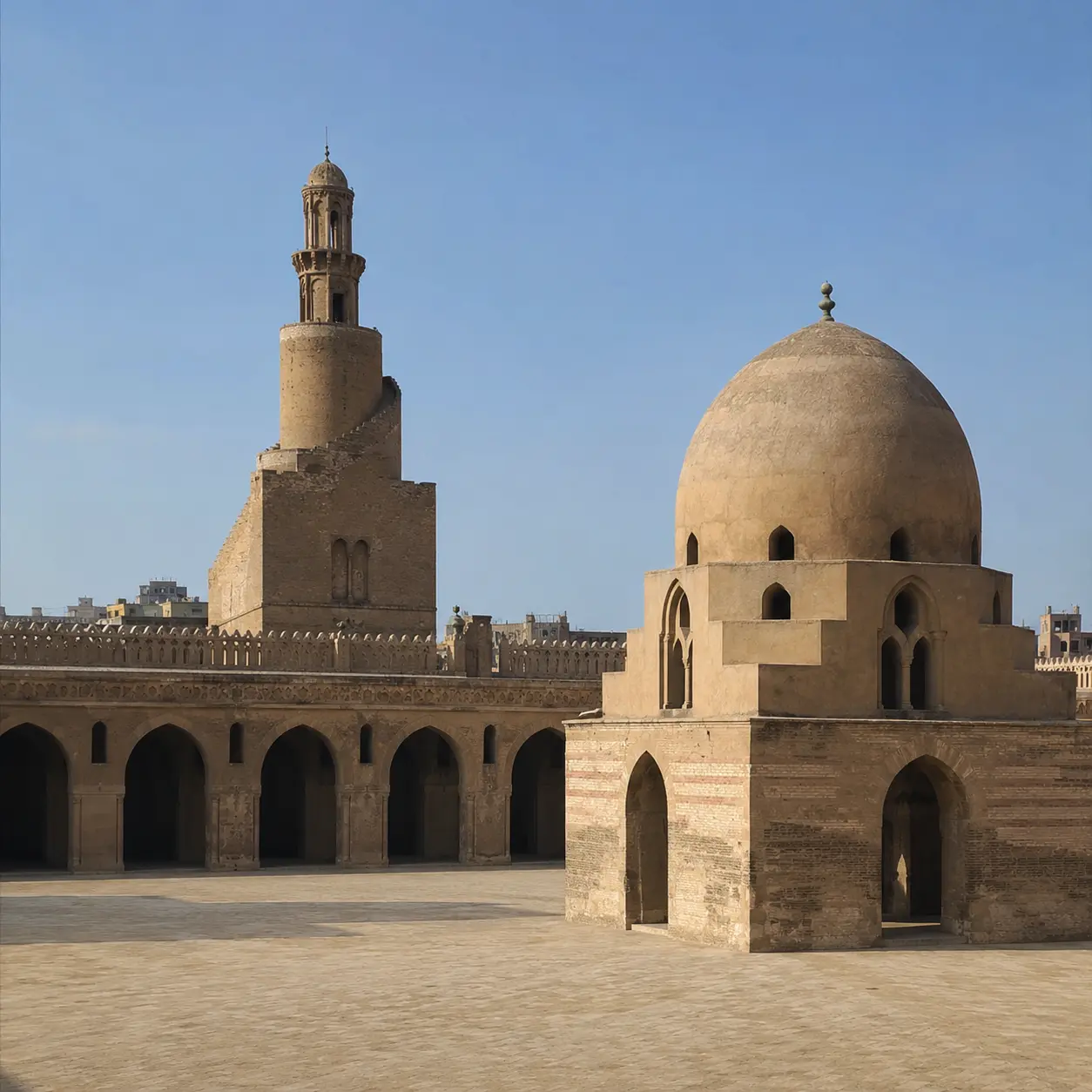
Mosque of Ibn Tulun
The Mosque of Ibn Tulun is a vast 9th-century mosque in Cairo known for its open courtyard, brick arcades, carved stucco decoration and spiral-style minaret.


Plan your visit
- Opening hours
- The mosque is typically visited during daytime hours, but access can vary around prayer times, Friday worship, religious occasions and maintenance. Check locally before going, and avoid sightseeing during active prayers.
- Best time
- Visit in the morning or late afternoon for softer light, cooler temperatures and better shadows along the arcades. Avoid Friday midday and active prayer times if you want to explore calmly, as parts of the mosque may be busier or less appropriate for sightseeing.
- Visit duration
- Plan for 30 to 60 minutes. Add extra time if you want to climb the minaret when it is open, visit the nearby museum area, or explore the mosque with a specialist guide.
- Category
- History & Ancient Wonders
- Location
About
The Mosque of Ibn Tulun is one of Cairo’s great quiet monuments: a vast 9th-century mosque where space, brick, shadow and proportion do most of the talking. Built under Ahmad ibn Tulun, the founder of Egypt’s Tulunid dynasty, it is among the oldest mosques in Egypt to survive with much of its early layout still readable. Unlike many Cairo landmarks that feel crowded with ornament, Ibn Tulun impresses through scale and restraint.
Step inside and the city noise drops away. The mosque is arranged around a large open courtyard, with arcades on all four sides and a central fountain structure used for ablutions. Look up at the pointed arches, the carved stucco bands, the long rhythm of brick piers and the deep shade around the prayer hall. The design carries Abbasid influence, especially from Samarra in present-day Iraq, which makes it feel different from later Mamluk and Ottoman mosques in Cairo.
The minaret is the feature most visitors remember. Its external spiral stair recalls the famous minarets of Samarra, although the structure seen today includes later restoration and rebuilding. Access can vary, but when it is open, the climb gives a strong sense of the mosque’s footprint and the dense historic neighbourhood around it. Ask the attendant before attempting it; conditions and permissions are not always the same from one visit to the next.
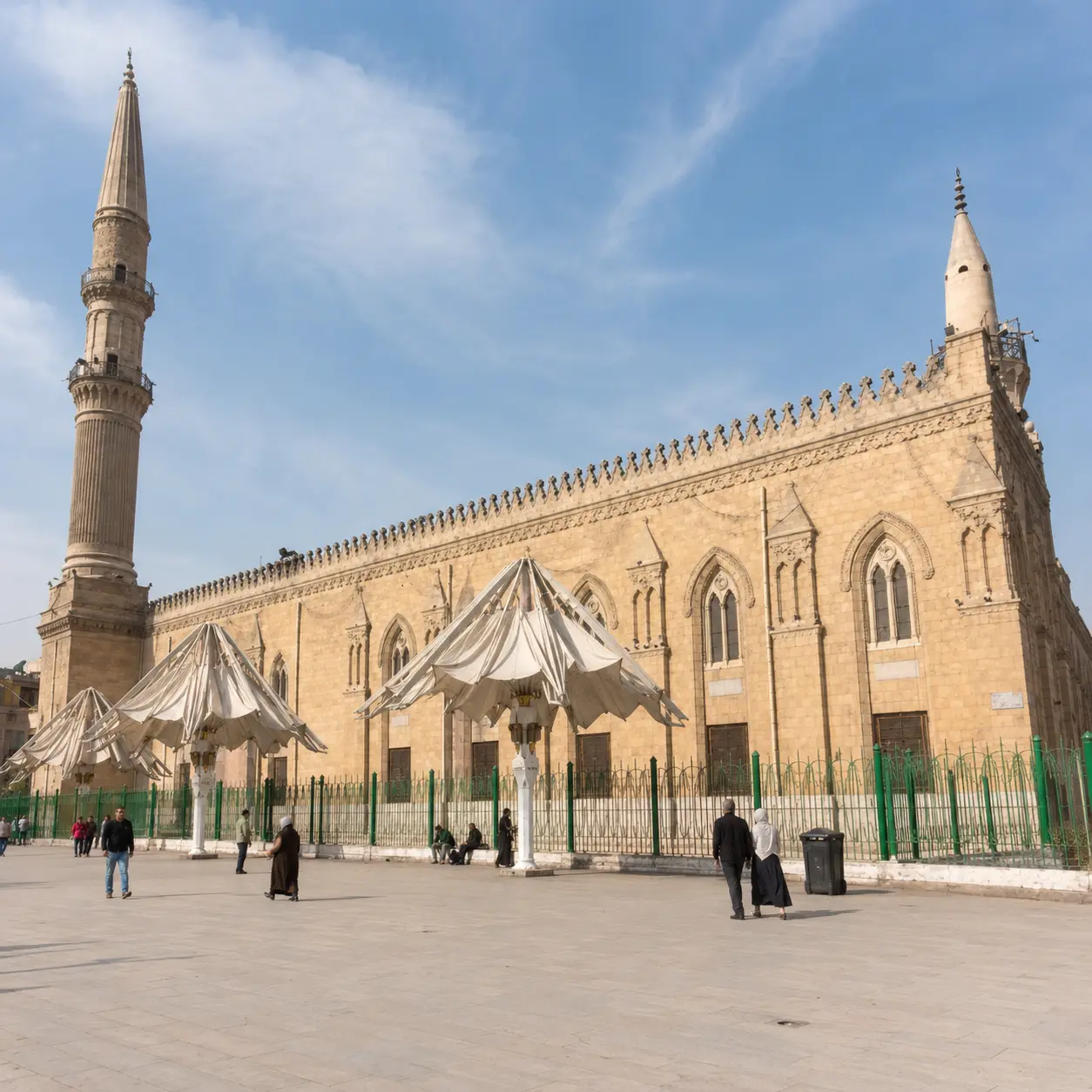
Ibn Tulun works especially well for travellers who want Islamic Cairo without the constant crush. It is close to the Gayer-Anderson Museum and can be paired with Al-Azhar’s historic mosque, the lanes around Khan El Khalili, or the Citadel and Muhammad Ali Mosque for a fuller view of Cairo’s Islamic architecture.
Because this is an active mosque, visit with the same courtesy you would bring to any place of worship. Dress modestly, keep voices low, remove shoes where required, and avoid stepping through prayer rows during worship. A guide can add valuable context here, especially on the Tulunid period, the Samarra connection and the later history of the surrounding district. For a broader plan, place it within a Cairo itinerary rather than treating it as a quick photo stop.
Mosque of Ibn Tulun is one of Cairo's most-visited history & ancient wonders spots. Plan around Visit in the morning or late afternoon for softer light, cooler temperatures and better shadows along the arcades. Avoid Friday midday and active prayer times if you want to explore calmly, as parts of the mosque may be busier or less appropriate for sightseeing. for the best conditions, and budget roughly Plan for 30 to 60 minutes. Add extra time if you want to climb the minaret when it is open, visit the nearby museum area, or explore the mosque with a specialist guide. on-site. Visit early to avoid crowds and heat.

Why travelers visit
Visit the Mosque of Ibn Tulun to experience one of Cairo’s most atmospheric early Islamic monuments without heavy decoration or crowds. It is a place to read architecture through scale, shade and silence, and it adds important depth to any Cairo history route.
Highlights
 One of Egypt’s oldest surviving mosques with a largely preserved early Islamic layout
- Large open courtyard framed by shaded arcades and brick piers
- Distinctive spiral-style minaret associated with Abbasid architectural influence
- Carved stucco details and a restrained design that contrasts with later Cairo mosques
- A quieter stop for understanding Islamic Cairo beyond the busiest tourist routes
Photos
1 photos
Know before you go
Practical tips to make the most of your visit.

What to wear
Wear modest, breathable clothing: covered shoulders, covered knees and comfortable shoes that are easy to remove. Women may want to carry a lightweight scarf, especially if entering prayer areas.

Is a guide recommended?
Do not treat Ibn Tulun as only a photo stop. Stand in the courtyard for a few minutes, then walk the shaded arcades slowly; the mosque reveals itself through repetition, silence and proportion. A guide is especially useful for explaining why its Samarra-inspired design is rare in Cairo.

Common mistakes to avoid
- Arriving dressed for a casual city walk rather than a mosque visit; shoulders and knees should be covered, and women may want to carry a light scarf.
- Assuming the minaret is always open; access can change, so ask the attendant before climbing.
- Rushing through the courtyard without looking at the stucco details, arch forms and the way the building uses shade.
- Visiting during major prayer times and expecting unrestricted sightseeing access.
- Skipping nearby historic sites, which makes the mosque feel isolated rather than part of Cairo’s wider Islamic architecture story.
Frequently asked questions
Is the Mosque of Ibn Tulun worth visiting?
Yes, the Mosque of Ibn Tulun is worth visiting if you enjoy architecture, quiet historic places and early Islamic Cairo. Its huge courtyard, restrained decoration and unusual minaret make it very different from Cairo’s later Ottoman mosques.
How long do you need at the Mosque of Ibn Tulun?
Most visitors spend 30 to 60 minutes at the Mosque of Ibn Tulun. Allow longer if you are visiting with a guide, photographing architectural details or combining it with the nearby Gayer-Anderson Museum.
Can non-Muslims enter the Mosque of Ibn Tulun?
Non-Muslim visitors can generally enter the Mosque of Ibn Tulun outside prayer times, provided they dress modestly and behave respectfully. Access may be adjusted during worship, religious occasions or maintenance.
What should I wear to the Mosque of Ibn Tulun?
You should wear modest clothing that covers shoulders and knees at the Mosque of Ibn Tulun. Women may feel more comfortable carrying a scarf, and shoes may need to be removed in prayer areas.
Can you climb the minaret at Ibn Tulun Mosque?
The Ibn Tulun minaret is not guaranteed to be open to visitors. If access is allowed on the day, ask the attendant first and be prepared for stairs and uneven surfaces.
Where is the Mosque of Ibn Tulun located?
The Mosque of Ibn Tulun is in historic Cairo, in the Sayyida Zaynab area, not far from the Gayer-Anderson Museum. It is usually easiest to reach by taxi, ride-hailing car or with a guided Cairo driver.
Visitor info
- Opening hours
- The mosque is typically visited during daytime hours, but access can vary around prayer times, Friday worship, religious occasions and maintenance. Check locally before going, and avoid sightseeing during active prayers.
- Recommended visit
- Plan for 30 to 60 minutes. Add extra time if you want to climb the minaret when it is open, visit the nearby museum area, or explore the mosque with a specialist guide.
- Best time to visit
- Visit in the morning or late afternoon for softer light, cooler temperatures and better shadows along the arcades. Avoid Friday midday and active prayer times if you want to explore calmly, as parts of the mosque may be busier or less appropriate for sightseeing.
- Category
- History & Ancient Wonders
How to get there
Open in Google Maps
Reviews

Find guided Egypt tours that include this attraction.