Pyramids Horse & Camel Ride
Ride a horse or camel on the desert edge of the Giza Plateau for wide-angle views of the pyramids, with practical guidance on timing, ethics, tickets, and comfort.

Plan your visit
- Opening hours
- Horse and camel rides generally operate during daylight hours around the Giza Plateau, with availability depending on site access, weather, season, and local operator schedules. Early morning and late afternoon are the most comfortable times. Avoid planning a ride too close to closing time, and confirm current access rules locally before you go.
- Best time
- The best time for a Pyramids Horse & Camel Ride is early morning or late afternoon, when the light is softer and the desert heat is easier to manage. Clear winter days can be especially comfortable, while summer rides are best kept short and timed away from the strongest sun. Sunset rides are popular for photos, so book ahead and confirm where the ride will end before dark.
- Visit duration
- Allow around 30 minutes to 1.5 hours for the ride itself, depending on the route and photo stops. Add extra time for ticketing, reaching the stable or meeting point, negotiating details, mounting, and returning to your driver or guide.
- Category
- Nature & Outdoor Adventures
- Location
About
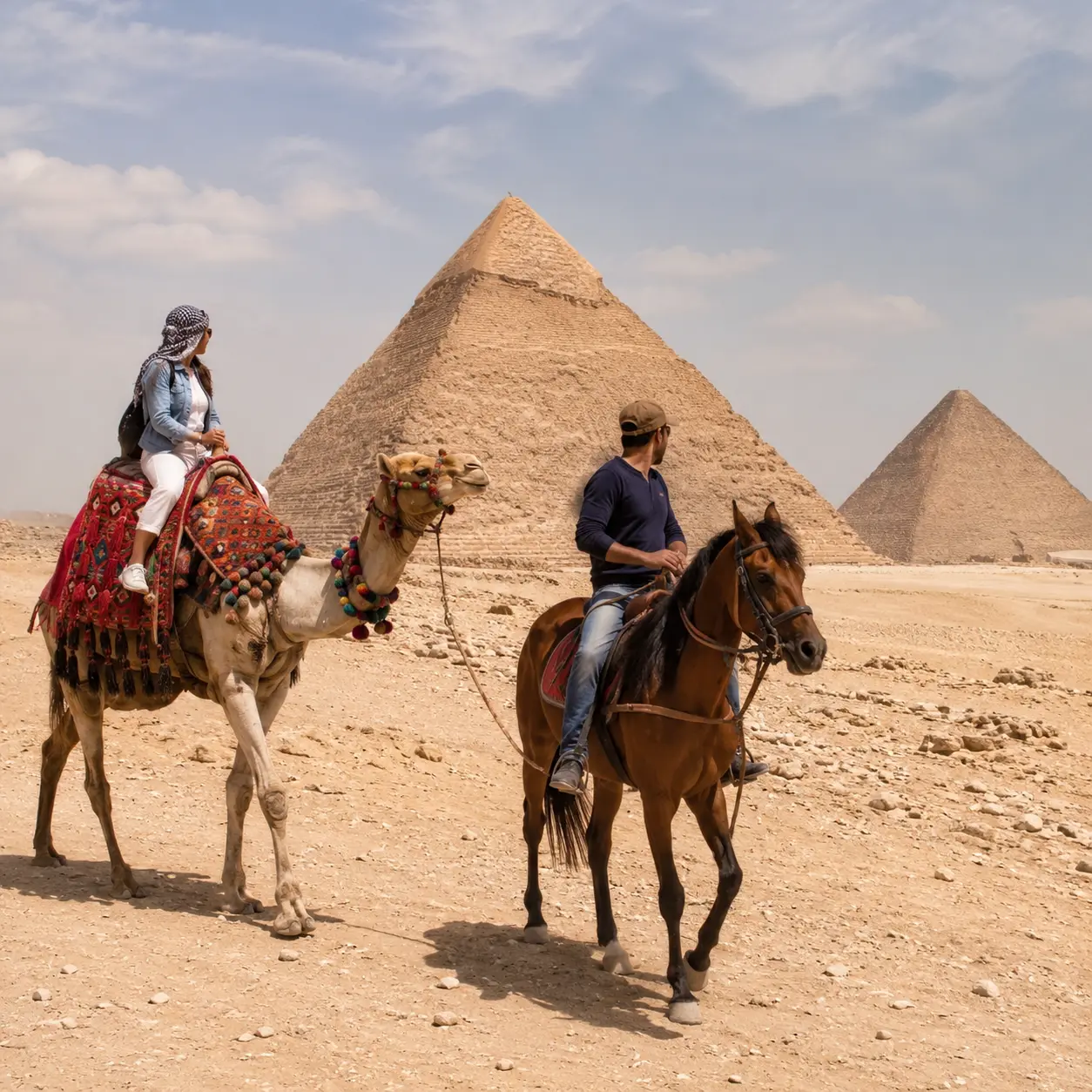
A Pyramids Horse & Camel Ride is one of the most atmospheric ways to see the Giza Plateau, especially from the desert tracks beyond the main monument zone. Instead of standing only at the base of the stones, you move out onto open sand where the pyramids line up against the sky and the city noise drops behind you. The experience is less about speed and more about perspective: the slow sway of a camel, the soft scrape of hooves, the smell of warm dust, and the sudden view of Khufu, Khafre, and Menkaure from a distance.
Most rides take place around the outer areas of the plateau, with common photo stops looking back toward the Giza pyramid skyline. Short rides suit travellers who mainly want the classic panorama, while longer rides can reach quieter viewpoints on the desert side. Horses are usually better for confident riders or anyone wanting a smoother pace over a longer route. Camels are slower, higher, and more traditional, but the mounting and dismounting can feel awkward if it is your first time.
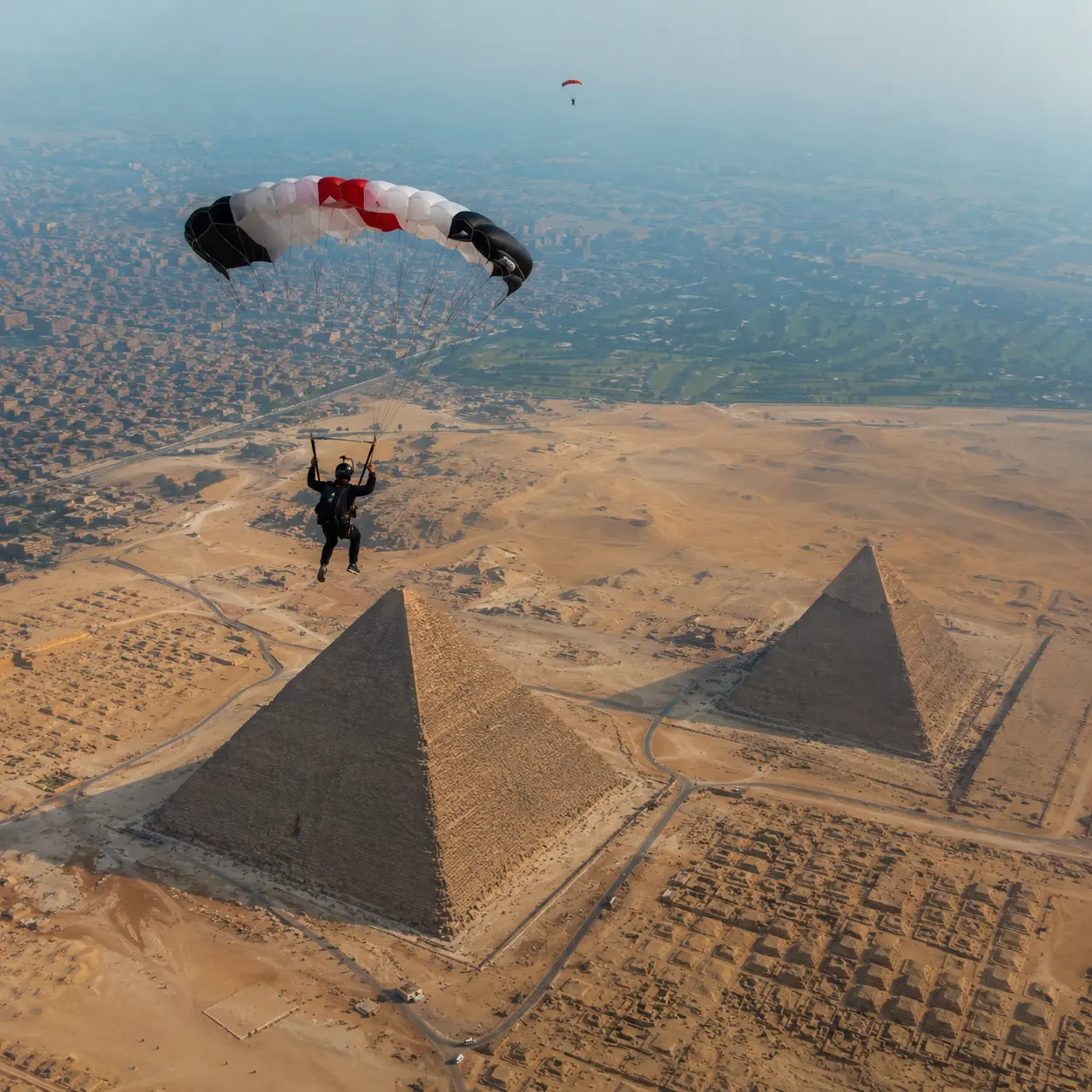
The best part of riding near the pyramids is the changing scale. Up close, the blocks feel massive and almost abstract. From the sand, the full geometry becomes clearer: three pyramids, smaller queens’ pyramids, causeways, and the plateau edge falling away toward modern Giza. If your schedule allows, pair the ride with time at the Great Sphinx viewpoint or add museum time at the new Giza museum complex for context before or after the desert ride.
Choose your operator carefully. A good handler explains the route before you start, matches the animal to your comfort level, provides a clear price in advance, and does not pressure you into extras mid-ride. Look at the animal before agreeing: it should appear alert, reasonably clean, and not visibly injured or exhausted. If something feels wrong, walk away. Ethical choice matters here, and a better-run ride will feel calmer for both traveller and animal.
For photos, early morning and late afternoon usually give the most flattering light and softer heat. Midday can be harsh, with glare off the sand and hard shadows across faces. Bring a scarf or light layer if wind is blowing dust across the plateau, and keep a firm hold on phones and cameras when mounting. The ride is scenic, but the desert edge is still a working tourist area, so agree on timing, route, photo stops, and tipping expectations before you get on.
A horse or camel ride should not replace a proper visit to the monuments. Think of it as a visual companion to the main archaeological stop: first study the pyramids up close, then ride out for the wide desert view, or do the reverse if you prefer cooler morning light. Travellers interested in pyramid history beyond Giza can also compare the landscape with Saqqara’s Step Pyramid area, where Egypt’s pyramid story began much earlier.
Pyramids Horse & Camel Ride is one of Giza's most-visited nature & outdoor adventures spots. Plan around The best time for a Pyramids Horse & Camel Ride is early morning or late afternoon, when the light is softer and the desert heat is easier to manage. Clear winter days can be especially comfortable, while summer rides are best kept short and timed away from the strongest sun. Sunset rides are popular for photos, so book ahead and confirm where the ride will end before dark. for the best conditions, and budget roughly Allow around 30 minutes to 1.5 hours for the ride itself, depending on the route and photo stops. Add extra time for ticketing, reaching the stable or meeting point, negotiating details, mounting, and returning to your driver or guide. on-site. Visit early to avoid crowds and heat.

Why travelers visit
Visit for the wide desert perspective that you cannot get from the main walking paths alone. A well-arranged Pyramids Horse & Camel Ride gives you space, scale, and classic Giza views, while adding a traditional travel experience to one of Egypt’s most famous ancient landscapes.
Highlights
 Wide desert views of the three main Giza pyramids from outside the busiest walking areas.
- Choice of camel for a classic elevated perspective or horse for a steadier longer ride.
- Strong photo opportunities in early morning or late afternoon light.
- A slower, sensory way to experience the scale of the Giza Plateau.
- Easy to combine with the Pyramids of Giza, the Great Sphinx, and the Grand Egyptian Museum.
Photos
1 photos
Know before you go
Practical tips to make the most of your visit.
What to wear
Wear closed-toe shoes with grip, light breathable clothing, and a hat that can be secured in the wind. Long trousers are more comfortable than shorts on a saddle or camel blanket. Sunglasses and sunscreen help with glare, and a light scarf can protect against dust. Avoid dangling jewellery or loose bags that may catch while mounting.
Is a guide recommended?
Ask your guide to arrange the ride through a trusted stable or handler rather than accepting the first offer at the plateau entrance. Before you mount, confirm the route, duration, final price, and where the ride ends. If the animal looks distressed or the handler is vague about costs, politely decline and choose another option.

Common mistakes to avoid
- Agreeing to a ride before confirming the total price, route, duration, and what is included.
- Choosing the cheapest handler without checking the condition of the animal or the professionalism of the guide.
- Leaving the ride until midday in hot months, when the sun and glare can make the experience tiring.
- Assuming the ride includes entry to the Giza Plateau; entrance fees and animal rides are usually handled separately.
- Carrying loose phones, hats, or cameras while mounting without securing them first.
- Expecting a quiet wilderness experience; parts of the area can be busy with vendors, vehicles, and other riders.
Frequently asked questions
Is a horse or camel ride at the Pyramids worth it?
Yes, a Pyramids Horse & Camel Ride can be worth it if you choose a reputable handler and want panoramic desert views of the pyramids. It is best treated as an add-on to a proper Giza visit, not a substitute for walking around the monuments.
How long should I book for a Pyramids camel or horse ride?
A short ride is usually enough for the classic pyramid panorama, while a longer ride suits travellers who want quieter desert viewpoints. Confirm the exact duration before you start, because expectations can differ between travellers and handlers.
Is a camel or horse better at the Giza Pyramids?
A camel is more traditional and gives a higher viewpoint, while a horse often feels smoother for longer routes. First-time riders who dislike heights may prefer a calm horse or a very short camel ride.
Is riding a camel or horse at the Pyramids safe?
It can be safe when arranged with a responsible operator, a suitable animal, and clear guidance, but riding always carries some risk. Wear secure shoes, follow the handler’s instructions, and avoid riding if you have back, neck, hip, or balance concerns.
How do I avoid overpaying for a Pyramids horse or camel ride?
You should agree the full price before getting on the animal. Make sure the amount covers the ride duration, route, photo stops, guide help, and any expected tip so there are no surprises later.
Can children do a camel or horse ride near the Pyramids?
Yes, children can sometimes ride, but only with careful supervision and an animal matched to their size and confidence. Parents should ask about helmets where available, mounting help, and whether the child will ride alone, with an adult, or led by a handler.
Visitor info
- Opening hours
- Horse and camel rides generally operate during daylight hours around the Giza Plateau, with availability depending on site access, weather, season, and local operator schedules. Early morning and late afternoon are the most comfortable times. Avoid planning a ride too close to closing time, and confirm current access rules locally before you go.
- Recommended visit
- Allow around 30 minutes to 1.5 hours for the ride itself, depending on the route and photo stops. Add extra time for ticketing, reaching the stable or meeting point, negotiating details, mounting, and returning to your driver or guide.
- Best time to visit
- The best time for a Pyramids Horse & Camel Ride is early morning or late afternoon, when the light is softer and the desert heat is easier to manage. Clear winter days can be especially comfortable, while summer rides are best kept short and timed away from the strongest sun. Sunset rides are popular for photos, so book ahead and confirm where the ride will end before dark.
- Category
- Nature & Outdoor Adventures
How to get there
Open in Google Maps
Reviews

Find guided Egypt tours that include this attraction.