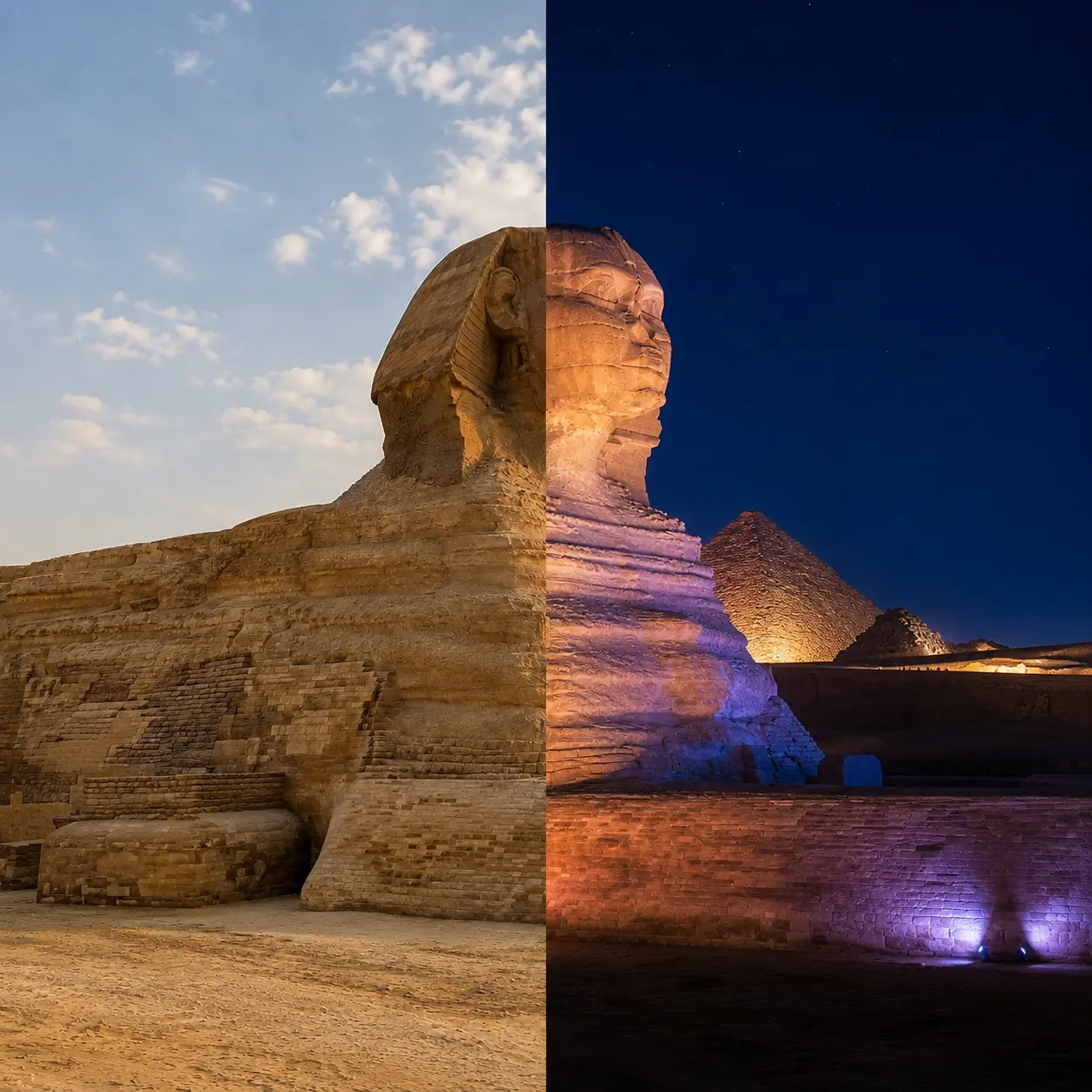
Great Sphinx of Giza
The Great Sphinx of Giza is Egypt’s iconic limestone guardian, facing east below the pyramids with a lion’s body, human head, and centuries of mystery carved into the plateau.


Plan your visit
- Opening hours
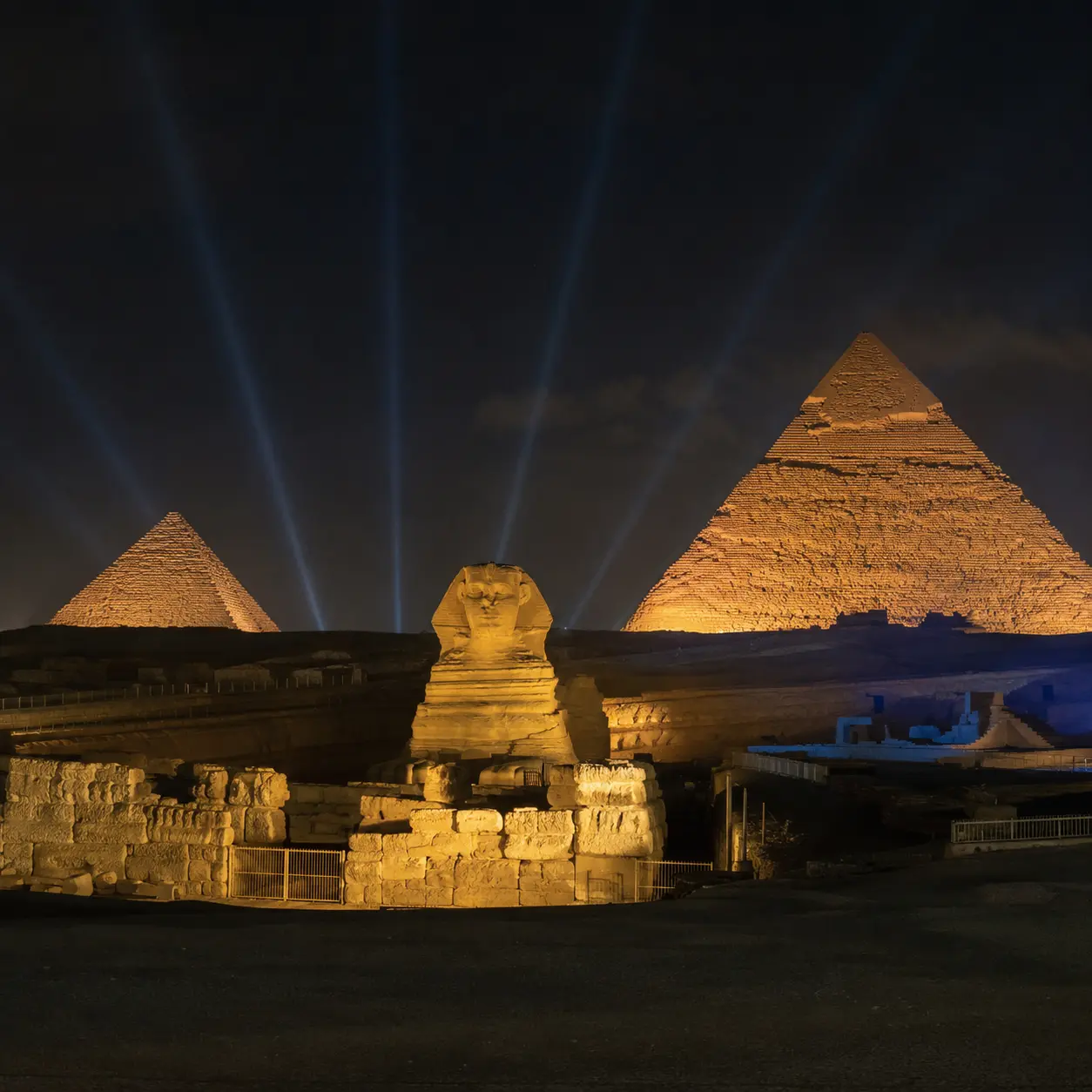
- The Giza Plateau generally operates on daytime visiting hours, with seasonal adjustments and occasional changes for security, restoration, or special events. Confirm current opening times shortly before your visit, especially if you plan to arrive very early, stay near sunset, or attend an evening sound-and-light style program.
- Best time
- The most comfortable time to visit the Great Sphinx is early morning or late afternoon, when the light is softer and the plateau is less harsh under the sun. Winter and shoulder-season months are generally easier for walking, while summer visits are best planned as early as possible with water, a hat, and a short, focused route.
- Visit duration
- Allow 30 to 45 minutes for the Sphinx area alone, including photos and a short explanation. If you are visiting the pyramids, temples, panoramic viewpoints, and the Sphinx together, plan a half day at minimum; a slower guided visit can comfortably take longer.
- Category
- History & Ancient Wonders
- Location
About
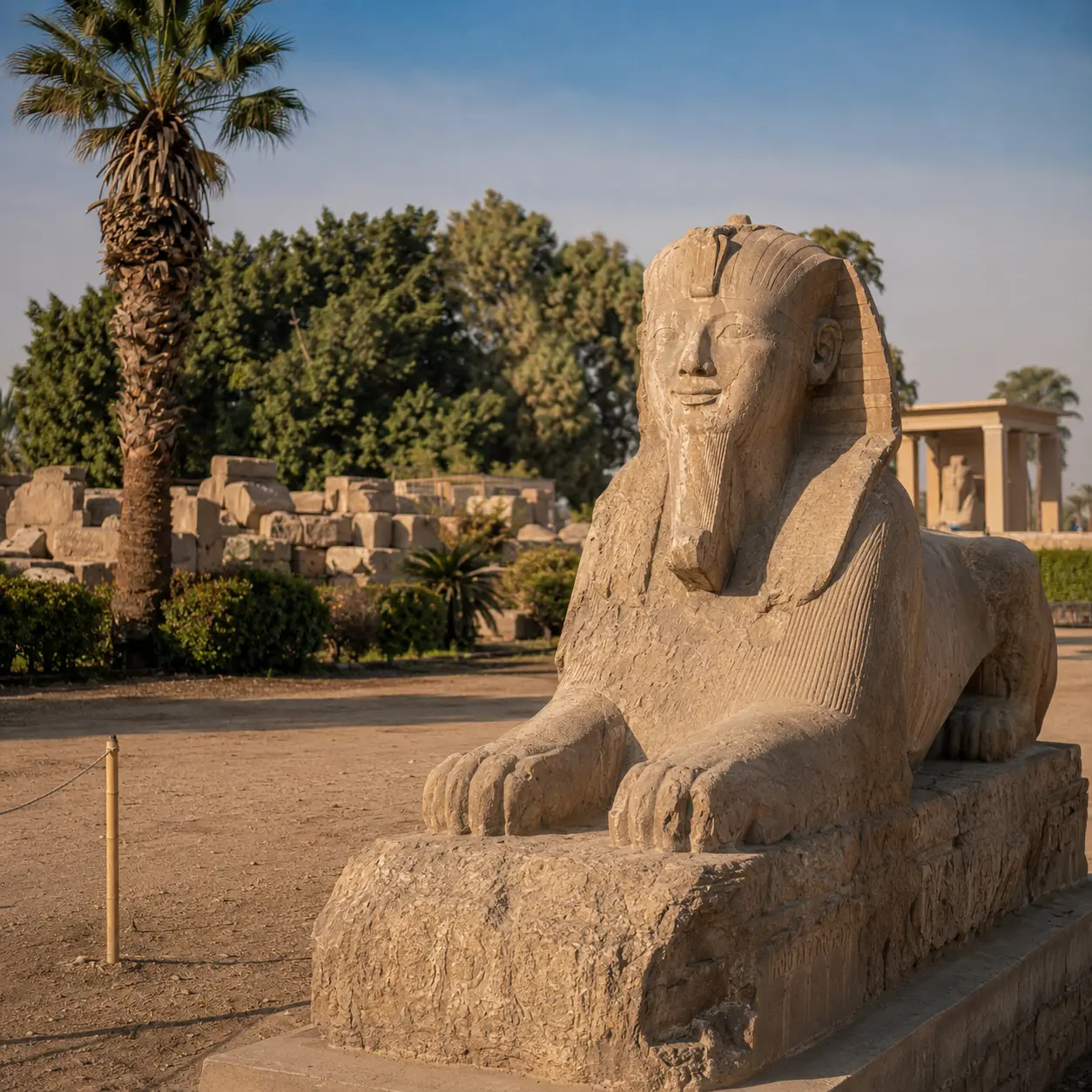
The Great Sphinx of Giza is the limestone guardian of the Giza Plateau: a lion’s body with a human head, cut largely from the natural bedrock and facing the sunrise across the desert edge. It sits below the pyramid complex traditionally linked with King Khafre, close to the valley temple and the ancient causeway that once connected river, temple, and tomb.
Most travellers first see the Sphinx from the viewing area in front of the monument, where the scale is easier to read than in photographs. The paws stretch forward, the shoulders rise from the floor of the enclosure, and the head looks smaller than many expect because the body has been shaped by centuries of erosion, repair, and exposure. The missing nose is often the first detail people ask about, but the real power of the statue is its setting: stone, sand-coloured temples, and the pyramids rising just behind.
The Sphinx is best visited as part of a wider Giza day, especially with the nearby Giza pyramid complex. The two sights belong to the same ancient landscape, and moving between them helps the layout make sense: the high plateau for the pyramids, the lower temple zone for ritual and procession, and the Sphinx positioned like a watchful marker between them.
A guide can add useful context here because the Sphinx raises more questions than it answers. Egyptologists generally place it in the Old Kingdom, often in relation to Khafre, though some details remain debated. You do not need a lecture to enjoy it, but a clear explanation of the temples, quarry marks, restoration layers, and old flood lines will make the stop far more rewarding.
For photography, come with patience rather than a fixed pose in mind. The classic angle aligns the Sphinx with a pyramid in the background, but the site can be busy and the best view changes with light, crowd flow, and security barriers. Early light brings softer shadows on the face; later in the day, the limestone often turns warmer and more golden.
If you are planning your stay around the plateau, Ozes’ Giza travel options and pyramid-focused Egypt trips are the easiest way to build the Sphinx into a route that also covers Cairo’s museums, old markets, and the Nile without wasting time in traffic.
Great Sphinx of Giza is one of Giza's most-visited history & ancient wonders spots. Plan around The most comfortable time to visit the Great Sphinx is early morning or late afternoon, when the light is softer and the plateau is less harsh under the sun. Winter and shoulder-season months are generally easier for walking, while summer visits are best planned as early as possible with water, a hat, and a short, focused route. for the best conditions, and budget roughly Allow 30 to 45 minutes for the Sphinx area alone, including photos and a short explanation. If you are visiting the pyramids, temples, panoramic viewpoints, and the Sphinx together, plan a half day at minimum; a slower guided visit can comfortably take longer. on-site. Visit early to avoid crowds and heat.

Why travelers visit
Visit the Great Sphinx to see one of ancient Egypt’s most powerful images in its original landscape. It is not just a statue; it is part of the ceremonial approach to the Giza pyramids, where royal power, solar symbolism, temple architecture, and desert geology meet in one compact view.
Highlights
 Close-up views of the lion-bodied, human-headed limestone statue facing east across the Giza Plateau.
- Classic photo angles with the Sphinx and pyramids in the same frame.
- Nearby valley temple masonry, where massive limestone and granite blocks show the engineering of the Old Kingdom site.
- A clear sense of how the lower temple area connects to the pyramids above by ancient causeways.
- Excellent context for travellers interested in royal symbolism, ancient quarrying, restoration, and Egyptology debates.
Photos
1 photos
Know before you go
Practical tips to make the most of your visit.

What to wear
Wear light, breathable clothing, a hat, sunglasses, and comfortable closed shoes with grip. The ground can be dusty, uneven, and bright underfoot. Modest dress is sensible for Egypt generally, and a light layer can help with wind on the plateau in cooler months.
Is a guide recommended?
Do not treat the Sphinx as a separate roadside photo stop. The strongest visit links it to the temples and pyramids around it, so allow time to stand back, look at the stone layers, and understand why this lower part of the plateau mattered in ancient ritual movement.

Common mistakes to avoid
- Visiting only for a quick photo and leaving without understanding how the Sphinx connects to the valley temple, causeway, and pyramid complex.
- Expecting to walk right up to the statue; access is controlled, and most views are from designated areas.
- Underestimating the sun and wind on the open plateau, even outside peak summer.
- Booking the day too tightly; traffic between Cairo and Giza can affect timing, especially around busy periods.
- Following unofficial sellers or guides before confirming what is included and what is optional.
Frequently asked questions
Why is the Great Sphinx of Giza famous?
The Great Sphinx is famous because it is one of ancient Egypt’s most recognizable monuments, combining royal symbolism, massive scale, and a dramatic position beside the Giza pyramids. Its age, missing nose, and debated details also make it one of the most discussed sights on the plateau.
Who built the Great Sphinx?
Most Egyptologists associate the Great Sphinx with the Old Kingdom and often with King Khafre, whose pyramid complex stands nearby. Some details remain debated, so it is best understood as part of the wider Giza royal landscape rather than a monument with every question fully settled.
Can you go inside or touch the Sphinx?
You usually cannot touch or climb the Great Sphinx, as access is restricted to protect the monument. Visitors view it from designated areas around the enclosure and nearby temple zone.
How long do you need at the Great Sphinx?
Plan around 30 to 45 minutes for the Sphinx itself, or longer if you want guided explanation and photos from different angles. Most visitors combine it with the pyramids, which turns the Giza Plateau into a half-day or full-day visit.
When is the best time to photograph the Sphinx?
The best photos are often taken in the morning or late afternoon, when the light is lower and the limestone has more texture. The classic composition places the Sphinx in front of a pyramid, but crowds and site barriers mean you may need to wait or adjust your angle.
Do I need a guide for the Great Sphinx?
A guide is not required, but a good guide helps you understand what you are seeing and avoid a rushed photo stop. The Sphinx makes more sense when explained alongside the valley temple, causeway, quarrying, and pyramid layout.
Visitor info
- Opening hours
- The Giza Plateau generally operates on daytime visiting hours, with seasonal adjustments and occasional changes for security, restoration, or special events. Confirm current opening times shortly before your visit, especially if you plan to arrive very early, stay near sunset, or attend an evening sound-and-light style program.
- Recommended visit
- Allow 30 to 45 minutes for the Sphinx area alone, including photos and a short explanation. If you are visiting the pyramids, temples, panoramic viewpoints, and the Sphinx together, plan a half day at minimum; a slower guided visit can comfortably take longer.
- Best time to visit
- The most comfortable time to visit the Great Sphinx is early morning or late afternoon, when the light is softer and the plateau is less harsh under the sun. Winter and shoulder-season months are generally easier for walking, while summer visits are best planned as early as possible with water, a hat, and a short, focused route.
- Category
- History & Ancient Wonders
How to get there
Open in Google Maps
Reviews

Find guided Egypt tours that include this attraction.