Egyptian Food: What to Eat & Try
A practical guide to Egyptian food: what to eat, how to order, street-food tips, regional dishes and the meals worth building into your Egypt trip.

Ozes
Travel Writer

A practical guide to Egyptian food: what to eat, how to order, street-food tips, regional dishes and the meals worth building into your Egypt trip.
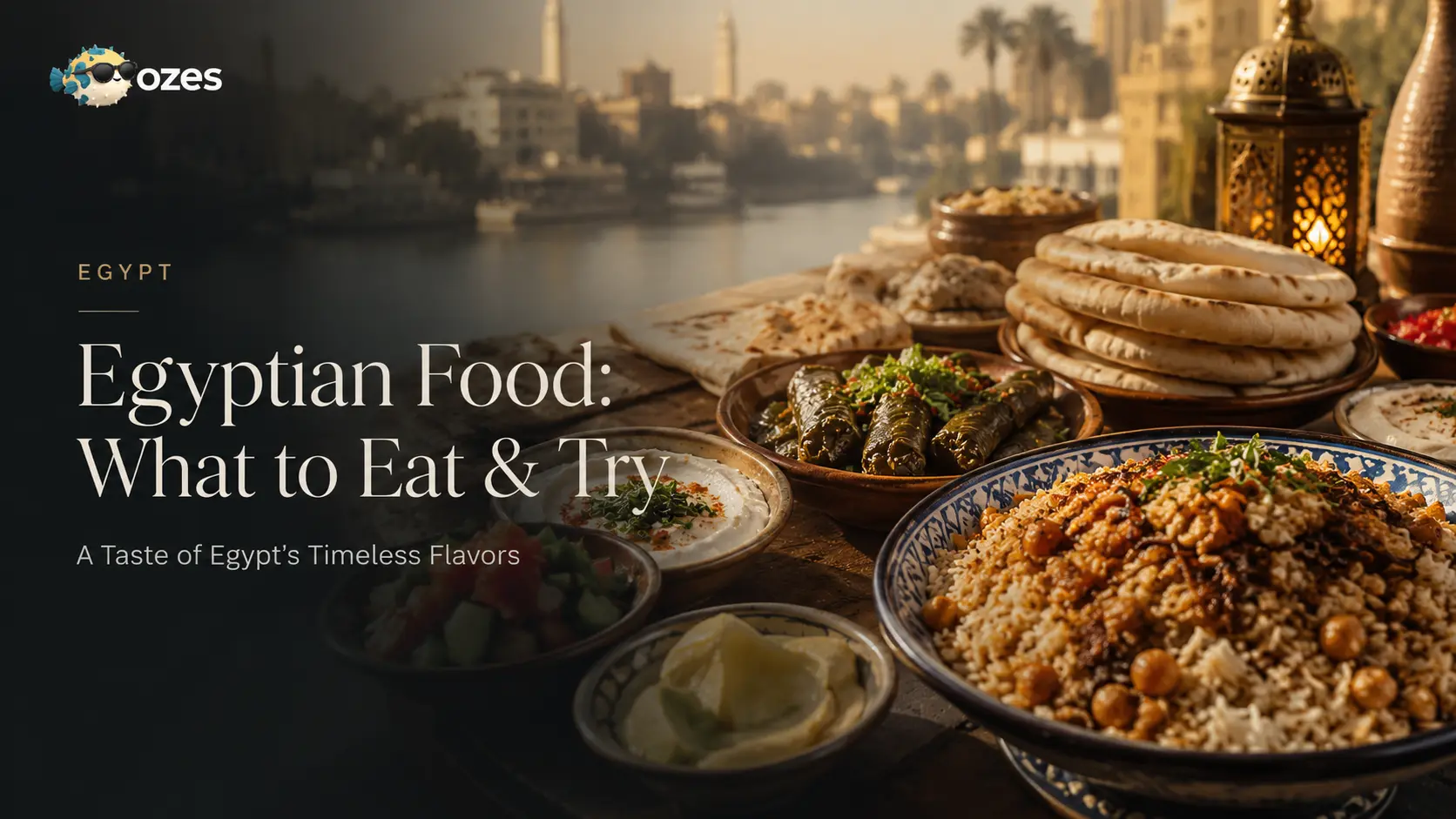
Egyptian food is generous, practical and built for sharing: bowls of beans at breakfast, crisp falafel from a street counter, rice-stuffed vegetables, grilled fish by the sea and honey-soaked pastries with tea. The best way to eat in Egypt is to follow the rhythm of local life, not just the restaurant menu.
If you try only a handful of foods in Egypt, make them the ones Egyptians eat on ordinary days. They are filling, affordable, easy to find and deeply tied to home cooking, street stalls and lunch counters.
Koshary is Egypt’s great carb-and-crunch comfort food: rice, lentils, pasta and chickpeas topped with tomato sauce, garlic vinegar and fried onions. Add chilli slowly; some places serve a sauce that starts politely and then catches up with you.
In Cairo, many travellers make a dedicated stop for koshary after museums or market browsing. Ozes travellers often pair a Koshary Abou Tarek stop with a wider day of exploring the city rather than treating lunch as an afterthought.
Ful medames is slow-cooked fava beans dressed with oil, lemon, cumin and sometimes chilli. Taameya is Egypt’s version of falafel, usually made with fava beans, which gives it a greener centre and a softer, herb-heavy bite.
Molokhia is a leafy green soup with a distinctive silky texture, often served with rice and chicken, rabbit or meat. Mahshi covers vegetables such as vine leaves, courgettes or peppers stuffed with rice and herbs; it is delicate, fragrant and easy to keep eating long after you meant to stop.
Fatta is a celebratory dish of rice, bread, garlicky sauce and meat. You may see it more in family settings or traditional restaurants than at fast street counters, so ask your guide where it is done well.
Street food in Egypt can be excellent, but the smartest travellers use their eyes first. Look for busy places with high turnover, hot food being cooked in front of you and locals ordering with confidence.
Around older Cairo, a Khan El Khalili wander can easily turn into a snack trail: sesame bread, grilled corn, fresh juice, mint tea and small sweets. Go slowly, because portions are often larger than they look.
“The best food stop is usually the one where nobody is trying hard to convince you.”
Follow the queue, watch the grill and ask what just came out hot.— Cairo food guide
Common street foods to try include hawawshi, a spiced minced-meat bread baked until crisp; liver sandwiches, especially in Alexandria; grilled kofta; sweet potato from pushcarts in cooler months; and fresh sugarcane juice pressed to order.
Do not feel pressured to try everything in one evening. Egyptian food rewards repeat tastings: the second ful sandwich or third cup of tea often tells you more than a rushed checklist.
Choose heat and turnover
Food hygiene basics
Prioritise food that is cooked hot, served quickly and popular with locals. For raw salads, unpeeled fruit or ice, use your own comfort level and ask your guide for reliable stops.
Egyptian food changes as you travel. Cairo is dense with quick meals and classic restaurants; Alexandria leans toward seafood and Levantine touches; Upper Egypt brings slower village-style cooking; Nubian kitchens in Aswan use warm spices, simple grills and hospitality as part of the meal.
On the Mediterranean coast, order grilled or fried fish by weight if you are comfortable with a more local setup, and ask what is fresh rather than what sounds familiar. Alexandria is also known for liver sandwiches, often cooked quickly on a hot griddle with peppers and spices.
In Luxor and Aswan, food often feels calmer after the pace of Cairo. A simple lunch of grilled chicken, rice, tahini, bread and salad can be exactly what you want between temple visits, especially when the day is warm.
If your route includes Aswan days, leave space for Nubian-style meals. Expect bright colours, spiced stews, grilled fish when available and tea served with the kind of patience that makes you stop checking the time.
In Hurghada, Sharm El Sheikh and Dahab, menus often mix Egyptian dishes with seafood, grills and international comfort food. After a day in the water, a spread of mezze, grilled fish and fresh bread feels easier than a heavy multi-course dinner.
Travellers adding a Dahab escape should ask local guides about casual fish restaurants and seaside cafés rather than judging a place by décor alone. The simplest terrace can serve the meal you remember most clearly.
Good to know before you order
Alcohol and local customs
Alcohol is available in many tourist hotels and some restaurants, but it is not part of every dining setting. In local eateries, tea, juice, soft drinks and water are more common choices.
Baladi bread is not a side note in Egypt. It scoops, wraps, mops and carries; at many meals it is the utensil as much as the accompaniment.
Pickles cut through rich beans and grilled meats. Tahini cools the heat. Garlic vinegar sharpens koshary. Lemon wakes up fish, soup and salads.
There is also an etiquette to the table: pass dishes, tear bread rather than biting from the shared piece, and accept that someone will probably insist you eat more. Refusing gently is fine; refusing too early may not be believed.
Eat with the table, not around it
Shared plates
Many Egyptian meals are social by design. If dishes land in the middle, take small portions first and keep the conversation moving; seconds are normal.
Egyptian desserts are sweet in the direct, syrupy way that makes strong tea feel necessary. Basbousa brings semolina and syrup; konafa is shredded pastry, often filled or layered; zalabya are little fried dough bites; rice pudding is soft, familiar and comforting.
Dates are part of daily life and hospitality, especially around the Nile Valley and oases. In Siwa and other desert regions, date-based snacks and drinks can be simple, earthy and far less polished than hotel desserts, which is part of their appeal.
Tea is everywhere, usually black and often sweet unless you ask otherwise. Mint tea is common in tourist areas and cafés, while fresh juices can be excellent when the fruit is in season and the stall is busy.
Coffee drinkers should expect a different pace. Turkish-style coffee is small, strong and meant to be sipped, not carried down the street in a paper cup.
You do not need fluent Arabic to eat well in Egypt, but a few habits help. Ask what is fresh today, let your guide suggest a house specialty and avoid over-ordering at the start, especially when bread, dips and salads keep appearing.
Menus in tourist areas may translate dishes imperfectly. If a description sounds unclear, ask what the base is: beans, rice, bread, meat, fish or vegetables. That simple question prevents most surprises.
Be clear, not shy
Dietary needs
Vegetarian eating is easy in many parts of Egypt, but allergies and strict diets need careful communication. Tell your guide and restaurant staff before food is ordered, not when dishes arrive.
The best food moments usually happen between major sights: breakfast before the pyramids, lunch after a museum, grilled fish after a boat day, tea when the afternoon heat softens. Build slack into the itinerary so meals are not squeezed into the gaps.
If you are planning a classic Cairo route, aim for one proper local lunch rather than relying only on hotel breakfast and late dinners. Cairo’s food scene is too central to the city to treat as background.
 Plan a Cairo food-and-history baseA compact Cairo plan that leaves room for museums, pyramids and a serious local meal between sights.
 Add the Nile to your tableTravel between Aswan and Luxor with time for Nile-side meals, temple days and slower Upper Egyptian rhythms.
 Taste a different side of Egypt in AlexandriaA Mediterranean day trip where seafood, sea views and city history fit naturally together.
Do not chase only famous names. A good guide will know when a celebrated restaurant is worth the detour and when a quieter local place is serving a better lunch that day.
Key takeaways
Food is one of the easiest ways to make Egypt feel personal. The temples, tombs and museums give the trip its scale; breakfast counters, tea glasses and shared bread give it texture.
When you preview an Ozes trip, look beyond the route line on the map. Notice where the day slows down, where a local lunch fits, and where a guide can turn “what should we eat?” into one of the best questions of the trip.