Egyptian Museum vs Grand Egyptian Museum: Which Cairo Museum Should You Visit?
A practical guide to Egyptian Museum vs Grand Egyptian Museum: atmosphere, collections, location, timing, and which Cairo museum fits your trip best.

Ozes
Travel Writer

A practical guide to Egyptian Museum vs Grand Egyptian Museum: atmosphere, collections, location, timing, and which Cairo museum fits your trip best.
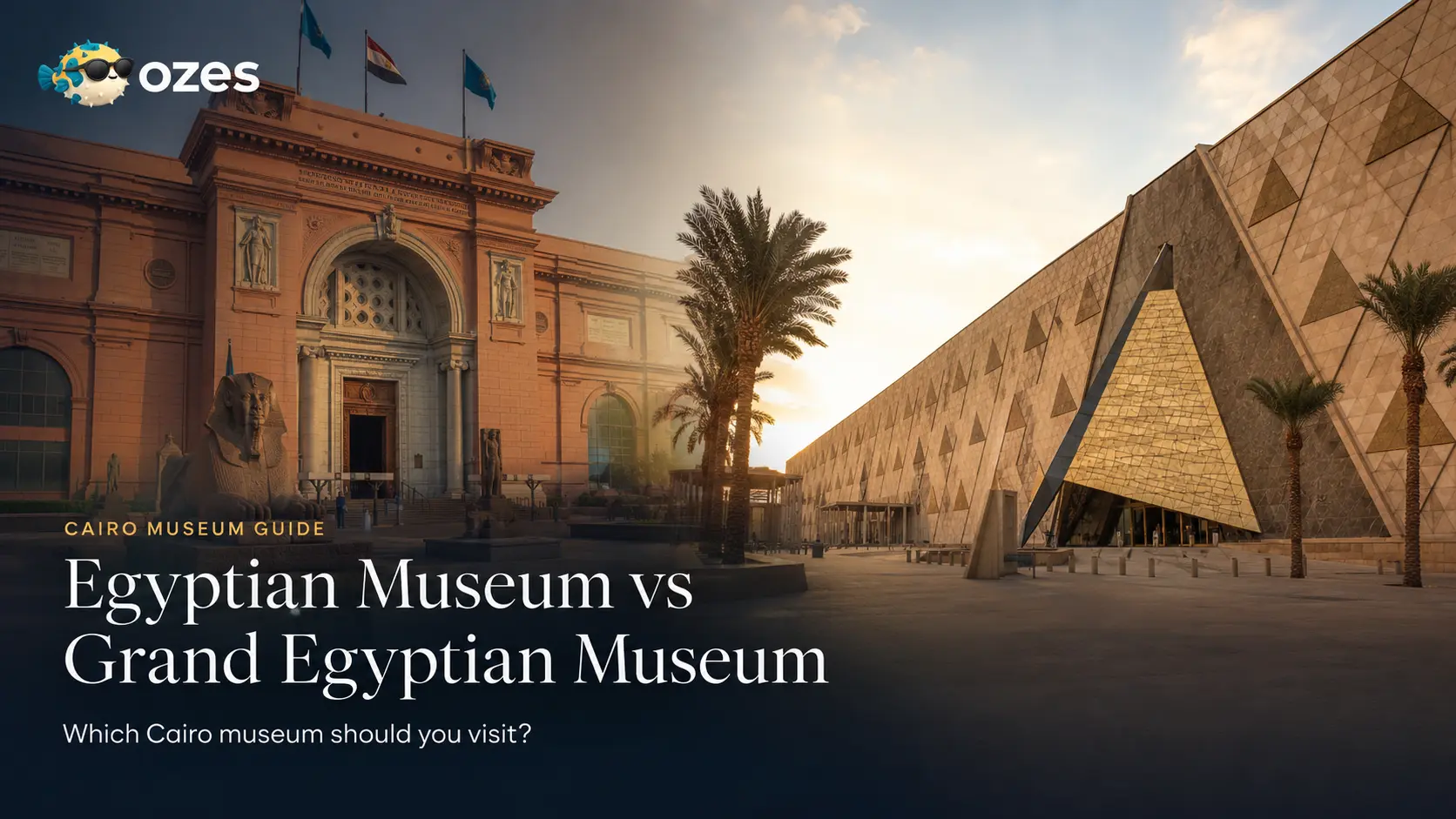
Cairo now has two heavyweight museums telling the story of ancient Egypt, and they feel nothing alike. The real question in the Egyptian Museum vs Grand Egyptian Museum debate is not which one is “better” — it is which one fits your day, your attention span, and the way you like to meet history.
If you only have one museum slot, the Grand Egyptian Museum suits travellers who want space, modern interpretation, and an easy pairing with Giza. The Egyptian Museum in Tahrir suits travellers who love old-school discovery: crowded cabinets, creaking floors, faded labels, and the feeling that every corner may hold something extraordinary.
The two museums are not duplicates. They are different experiences, shaped by different eras of museum design. One is a historic institution on Tahrir Square; the other is a purpose-built museum complex near the pyramids.
For background before you go, compare the historic Tahrir museum setting with the newer Giza-side museum complex. Reading a little first makes the visit feel less like a race through glass cases.
 Cairo highlights in four daysA compact Cairo itinerary with guided time for the capital’s major ancient sites.
The Egyptian Museum in Tahrir has the character of an old archive. The light is softer, the halls feel layered, and the displays often sit close together. You move from sarcophagi to statues to funerary objects with little ceremony, which can be thrilling if you like raw abundance.
This is the museum for travellers who enjoy texture: wood-and-glass cases, handwritten-feeling labels, high ceilings, and the murmur of guides translating dynasties into human stories. It can feel busy, imperfect, and deeply alive.
The Grand Egyptian Museum is built for scale. Its location near the Giza Plateau gives the visit a different rhythm from the start: wide approaches, open sightlines, and a stronger sense of arrival. It feels more like a cultural campus than a single museum building.
The GEM is designed around clearer circulation and modern storytelling. If Tahrir feels like opening drawers in a scholar’s study, GEM feels like walking through a carefully staged narrative of ancient Egypt.
Tahrir asks you to search; GEM guides your eye. Both can be magical, but they reward different kinds of curiosity.
“Tahrir is where many Egyptians first met the pharaohs. GEM is where the world is being reintroduced to them.”— Cairo museum guide
A useful way to compare the Egyptian Museum vs Grand Egyptian Museum is to stop thinking only in terms of famous objects. Think instead about presentation. Tahrir is strongest as a deep, dense historic collection; GEM is strongest as a modern interpretive experience connected to the Giza landscape.
Tahrir remains one of Cairo’s most atmospheric places to see ancient Egyptian art and objects. You can expect a broad sweep of sculpture, coffins, funerary objects, royal imagery, and everyday materials that help ancient Egypt feel less abstract.
The experience can be less polished than newer museums, but that is part of its appeal. It feels like a working memory bank for the country, not a sealed display box.
The Grand Egyptian Museum is built to give ancient objects more room to breathe. Large pieces, monumental forms, and major narratives benefit from space, lighting, and visitor movement. It is especially appealing if you like museums that explain context without forcing you to read every label.
Because Egypt’s museum landscape continues to evolve, confirm current gallery access before your visit. Some collections and display areas may change as institutions adjust their roles.
Many visitors assume the royal mummies are still the main reason to visit Tahrir, but Cairo’s museum map has changed. The National Museum of Egyptian Civilization is now the key stop for many travellers interested in royal mummies and the broader story of Egyptian life across periods.
 See where the royal mummies fitAdd this Cairo museum if royal mummies and civilization-wide context matter to you.
The Egyptian Museum in Tahrir is central Cairo. It works well with downtown hotels, Nile views, traditional restaurants, and historic Cairo neighborhoods. Traffic can still shape your day, but you are already in the city’s urban core.
The Grand Egyptian Museum belongs naturally to a Giza day. Pair it with the pyramids and you create a clean ancient Egypt arc: monumental architecture outside, artifacts and interpretation inside.
 Pair GEM with the pyramidsBuild a full ancient Egypt day around the plateau before or after GEM.
If you want a guided city base instead of piecing it together yourself, Ozes’ Cairo travel options make it easier to match museum time with traffic, lunch, and the pyramids. That matters more than it sounds on a short trip.
Tahrir can feel intense when groups arrive at the same time. Narrower routes and older display styles mean you may need patience, especially if you like to stop and read. Go with a plan: choose a few themes instead of trying to absorb everything.
GEM is generally better suited to travellers who want a smoother physical experience. The broader layout helps, especially for families, older travellers, and anyone who prefers to move through a museum without feeling boxed in.
Pace yourself
Museum fatigue does not mean you are bored. It usually means you tried to understand five thousand years before lunch.
Do not rely on yesterday’s museum plan
Check current ticketing, gallery access, and entry procedures before you go. Cairo’s major museums can adjust access during transitions, special events, maintenance, or high-demand periods.
For first-time visitors with only one Cairo day, GEM often makes the cleanest sense when paired with Giza. You see the pyramids, then step into a museum designed to deepen what you have just seen outside.
For travellers who love atmosphere, Tahrir is hard to replace. It has the feel of a place that has witnessed generations of guides, school groups, archaeologists, and wide-eyed visitors passing through its halls.
The Grand Egyptian Museum is usually the easier family choice because the layout feels more spacious and the visit can be structured around big visual moments. Children often respond better to fewer objects with stronger context than to endless cases.
Do not skip Tahrir if you like deep collections and old museum character. A knowledgeable guide can turn the dense displays into a coherent story, especially if you focus on a few periods instead of the entire building.
If your hotel or airport route puts you closer to Giza, GEM is the more logical choice. If you are staying downtown and want a compact cultural stop before dinner, Tahrir may fit better.
For travellers arriving from the Red Sea, a guided Cairo day can remove the stress of timing the pyramids, traffic, and museum entry. This Hurghada to Cairo museum day keeps the focus on the big ancient sites without making you solve the logistics alone.
 Plan a private Cairo museum stayA private Cairo trip gives you more control over museum pace and guide focus.
Mixed groups need a softer plan
If you are travelling with mixed interests, split the day: one person gets deep museum time, another gets a shorter guided route and a café break. Cairo rewards honesty about energy levels.
Still torn between the Egyptian Museum vs Grand Egyptian Museum? Use your surrounding plans as the tie-breaker. Museums are not isolated boxes in Cairo; they sit inside traffic patterns, meal times, hotel locations, and the mental load of visiting huge ancient sites.
Key takeaways
A strong Cairo itinerary often treats the museums as complementary rather than competitive. Tahrir carries the memory of Egyptian archaeology as travellers have known it for decades; GEM points toward the next chapter of how Egypt presents its ancient world.
The smartest choice is the one that gives you enough time to actually look. Ten rushed galleries are less rewarding than three objects you understand, remember, and talk about later over dinner.
If Egypt is more than a stopover for you, build the museums into a wider route: Giza for scale, Cairo for layers, Luxor and Aswan for temples and tombs. With Ozes, you can preview trips on video before booking, so your museum day fits the rhythm of the whole journey rather than becoming a rushed checkbox.