Egypt Packing List: What to Wear (and What Not To)
A practical Egypt packing list covering what to wear in Cairo, Giza, Luxor, Aswan, the Red Sea, Nile cruises, mosques, deserts, and what to leave at home.

ozes
Travel Writer

A practical Egypt packing list covering what to wear in Cairo, Giza, Luxor, Aswan, the Red Sea, Nile cruises, mosques, deserts, and what to leave at home.
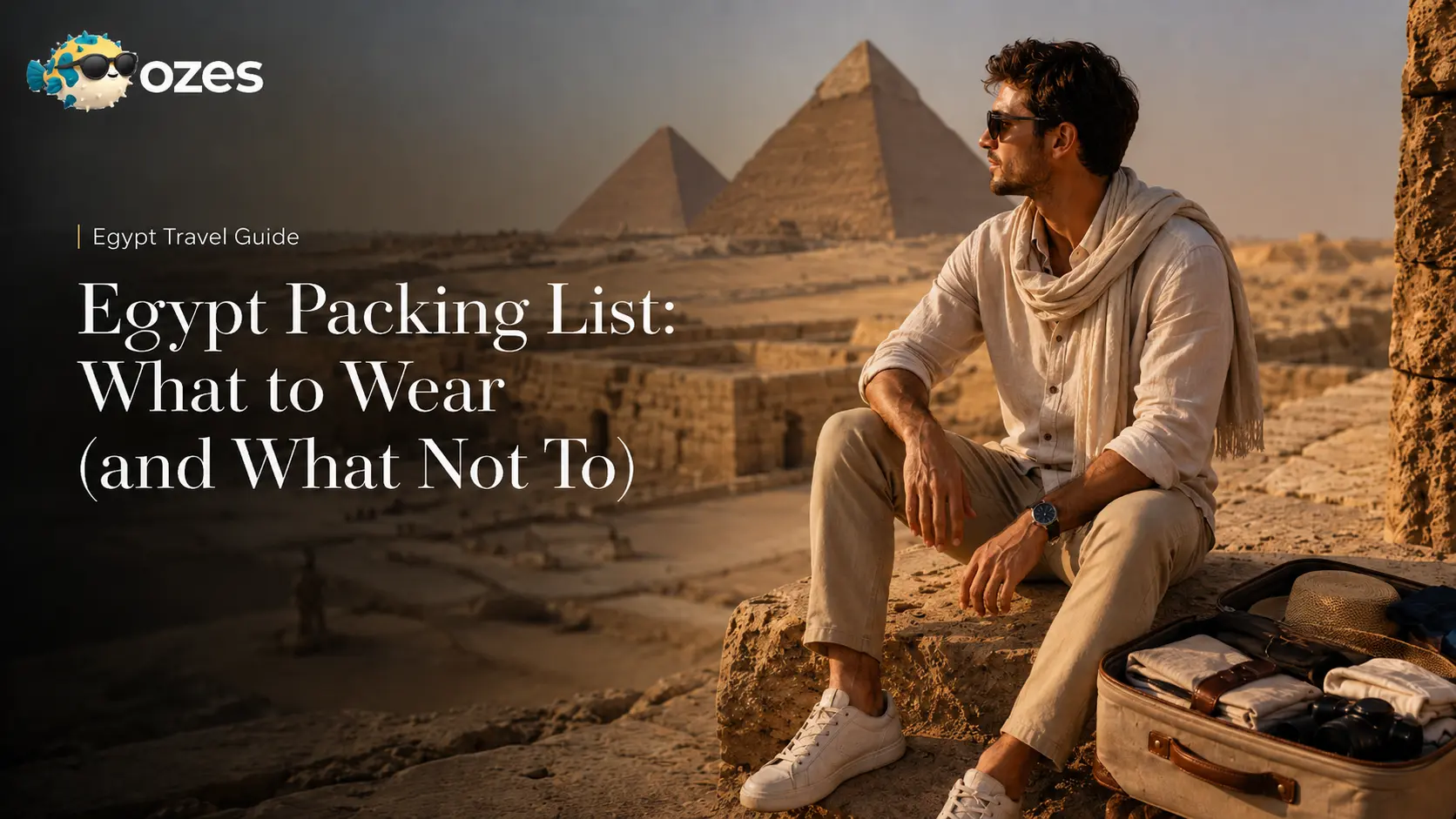
Packing for Egypt is less about dressing “up” or “down” and more about staying cool, covered, and comfortable while moving between desert heat, temple dust, city traffic, and breezy nights on the Nile.
Egypt rewards light luggage. You may move from Cairo pavements to Giza sand, from mosque courtyards to a Nile boat, and from air-conditioned museums to blazing open-air temples in the same trip.
The best Egypt packing list starts with breathable layers, modest silhouettes, sun protection, and shoes you can trust on uneven stone. If your route includes Cairo, Luxor, Aswan, and the Red Sea, think “versatile” before “variety.”
A polished outfit that feels fine in a hotel lobby can become a problem on temple steps or in a crowded bazaar. In places such as Khan El Khalili’s lanes, clothes that let you bend, climb, sit, and walk matter more than a perfect look.
For pyramid days, avoid long hems that drag in dust. If you are planning time around Giza’s ancient plateau, choose ankle-length trousers or a skirt that does not need constant adjusting in the wind.
In major cities and archaeological sites, modest clothing is both practical and respectful. You do not need to dress formally, but shoulders, cleavage, and thighs are best kept covered outside resorts and private hotel spaces.
Cairo has a busy, urban rhythm: pavements can be uneven, traffic is close, and days often run longer than planned. Luxor and Aswan feel more open and sun-exposed, especially around temples, tombs, and riverfronts.
If your clothes protect you from the sun and let you walk without thinking about them, you packed well.— Local guide in Luxor
Loose trousers, culottes, midi skirts, maxi skirts, linen shirts, and T-shirts with sleeves work well across Egypt. A scarf is useful for mosque visits, surprise wind, boat rides, and extra sun coverage.
You can wear dresses, but choose breathable fabric and a cut that allows easy steps into vans, boats, and temple thresholds. For visits to religious sites such as Al-Azhar Mosque, carry a scarf and avoid sheer fabrics.
Men will be comfortable in lightweight trousers or longer shorts, plain T-shirts, polos, and linen shirts. In mosques and more traditional neighbourhoods, long trousers are the better choice.
Tank tops are best kept for beach resorts or gym spaces. A collared shirt can help if your itinerary includes smarter hotels, dinners, or a Nile cruise evening.
For children, pack soft layers, closed shoes for ruins, a sun hat they will actually keep on, and spare clothes for dusty days. Light colours help in the heat, but avoid anything too precious; Egypt is not gentle on white fabric.
The wrong shoes can spoil a brilliant day. Egypt’s famous sites often involve sand, gravel, polished stone, ramps, steps, and long stretches without much shade.
For the Valley of the Kings, Giza, Saqqara, and temple complexes, choose trainers or walking sandals with a supportive sole. Save delicate sandals for dinner, not desert paths.
A good day bag holds water, sunscreen, a power bank, a scarf, sunglasses, and copies of key documents. Keep it light enough to carry for hours and secure enough for crowded places.
If your plans include a long guided day, such as a Pyramids and Saqqara route, avoid overpacking the bag. You want hands free for steps, photos, tickets, and the occasional bottle of cold water.
For a week or more, pack fewer clothes and plan to repeat outfits. Many hotels can help with laundry, and light fabrics often dry faster than denim or thick cotton.
Neutral colours make this easier: beige, olive, white, navy, black, and soft blue all mix well. Add colour with a scarf or shirt rather than packing five separate “statement” outfits.
Egypt changes character quickly. A Cairo outfit may feel too covered on a Hurghada boat, while beachwear that works at a resort feels out of place in an old Cairo mosque or Luxor village street.
If your itinerary combines the pyramids with the coast, plan a separate beach section inside your suitcase. A packing cube for swimwear, reef-safe-style sun protection, sandals, and quick-dry clothes keeps the shift easy.
At Red Sea resorts, swimwear is normal at pools, beaches, and boat decks. Away from the water, add a cover-up, shirt, or loose dress, especially in town areas, cafés, and hotel restaurants.
For snorkelling at places such as Blue Hole in Dahab or Orange Bay off Hurghada, a rash vest is useful because the sun reflects hard off the water. Water shoes can help on rocky entries, but always follow local reef rules and guide instructions.
Desert air can feel sharply different after sunset, especially outside the hottest months. Pack a warm layer, closed shoes, lip balm, and something to protect your phone or camera from fine sand.
If you are heading toward Bahariya, the White Desert, or Siwa, avoid rolling luggage for camp-style routes. A soft duffel is easier to move between vehicles and sand.
Nile cruise days are relaxed, but evenings can call for slightly smarter casual wear. A linen shirt, simple dress, neat trousers, or a light cardigan usually covers dinner without needing formal clothing.
On deck, the breeze can surprise you after a hot day at temples. Keep a thin jacket or wrap close, especially on early starts and sunset sailing.
You do not need to hide your style in Egypt. Still, some clothing choices create avoidable discomfort, unwanted attention, or simple practical problems.
The short version: keep revealing outfits for resort zones, avoid heavy fabrics in the heat, and do not rely on shoes that cannot handle dust, steps, and sand.
For mosque visits, dress more conservatively than you would for general sightseeing. Women should be ready to cover hair, shoulders, arms, and legs; men should avoid shorts and sleeveless tops.
Some religious sites can provide cover garments, but carrying your own scarf is easier and more comfortable. Lightweight, opaque fabric is best.
Synthetic fabrics can cling and feel hot during long outdoor days. Linen, cotton, bamboo blends, and technical fabrics designed for heat are more forgiving.
White can look crisp, but dust and sunscreen marks show quickly. Pack at least a few mid-tone pieces that still look good after a full day out.
Egypt has strong seasonal contrasts, but the core wardrobe stays similar: breathable daytime clothing, sun protection, modest layers, and a warmer piece for evenings when needed.
Summer calls for the lightest fabrics you own and a serious approach to hydration. In cooler months, mornings and nights can feel brisk, especially on the Nile, in desert areas, and during early balloon or temple starts.
A hat, sunglasses, and long sleeves in breathable fabric can feel cooler than bare skin under direct sun. If you burn easily, choose UPF-style clothing or a long-sleeve linen shirt for exposed sites.
Plan outfits that work with sweat, not against it. Loose cuts, darker underlayers, and quick-dry fabrics make long days easier.
A light fleece, thin puffer, cardigan, or denim jacket can be enough for many travellers, depending on your route and personal tolerance. Desert nights and early starts often feel colder than people expect after a sunny afternoon.
If your trip includes a short Nile cruise from Aswan to Luxor, keep one warm layer accessible rather than buried at the bottom of your suitcase.
An umbrella is not essential for most Egypt trips, but a compact one can be useful for shade if you are sensitive to sun. Many travellers prefer a hat because it leaves both hands free.
For rare rainy conditions, a light packable jacket is more practical than a heavy raincoat. Check local forecasts close to departure and adjust small items, not your entire suitcase.
Good packing reduces friction. It helps you step into a mosque calmly, cross a temple forecourt without overheating, board a boat without fuss, and sit through a long transfer in comfort.
If your trip is guided, ask before departure about any special clothing needs for desert camps, resort dinners, or religious visits. Ozes itineraries are designed to show the rhythm of each day on video before you book, so you can picture what you will actually be doing, not just where you will be going.
Key takeaways
Before you zip the suitcase, group your outfits into four categories: city sightseeing, archaeological sites, water days, and evenings. This prevents the classic mistake of packing plenty of clothes but nothing right for the day ahead.
A Cairo museum morning, a Giza afternoon, and dinner by the Nile can all work with the same base outfit if you add or remove one layer. That is the packing sweet spot.
The right Egypt packing list gives you confidence without weighing you down. Once the shoes, scarf, sun gear, and breathable layers are sorted, the real planning becomes much more enjoyable.
Start with a route that matches your pace: classic Cairo and Giza, a Nile cruise, a Red Sea reset, or a desert escape. Browse Ozes Egypt tour ideas and use the videos to see the terrain, clothing, and daily flow before you choose.
 See a short Cairo-focused tripA compact Cairo and Giza route that helps you plan what to wear for pyramids, museums, and city touring.
 Preview an Aswan-to-Luxor Nile cruiseA practical option for temple days, river breezes, and smarter casual cruise evenings.
 Plan a Red Sea escape in DahabUseful for understanding how beachwear, cover-ups, and snorkelling gear fit into a coastal Egypt stay.
 Check a Siwa oasis itineraryA good reference for closed shoes, warm layers, dust protection, and soft luggage on desert routes.