Abu Simbel Temples
Abu Simbel Temples are among Egypt’s most powerful ancient monuments: two rock-cut temples built for Ramesses II and Queen Nefertari near Lake Nasser, south of Aswan.


Plan your visit
- Opening hours
- Abu Simbel Temples are generally open daily, with visiting hours often starting early to suit the desert climate and long transfers from Aswan. Hours may shift by season, security arrangements, or special events, so verify the current schedule before travelling.
- Best time
- The best time to visit Abu Simbel Temples is early morning, when temperatures are cooler and the stone façades catch softer light. The milder months of the year are generally more comfortable than peak summer. If you plan to visit around the famous solar alignment period, confirm the current schedule locally, as crowd control and access arrangements can vary.
- Visit duration
- Plan for about 1.5 to 2 hours at the temple site if you want time for both temples, exterior photos, and a guided explanation. The full excursion from Aswan takes much longer because of the remote desert location.
- Category
- History & Ancient Wonders
- Location
About
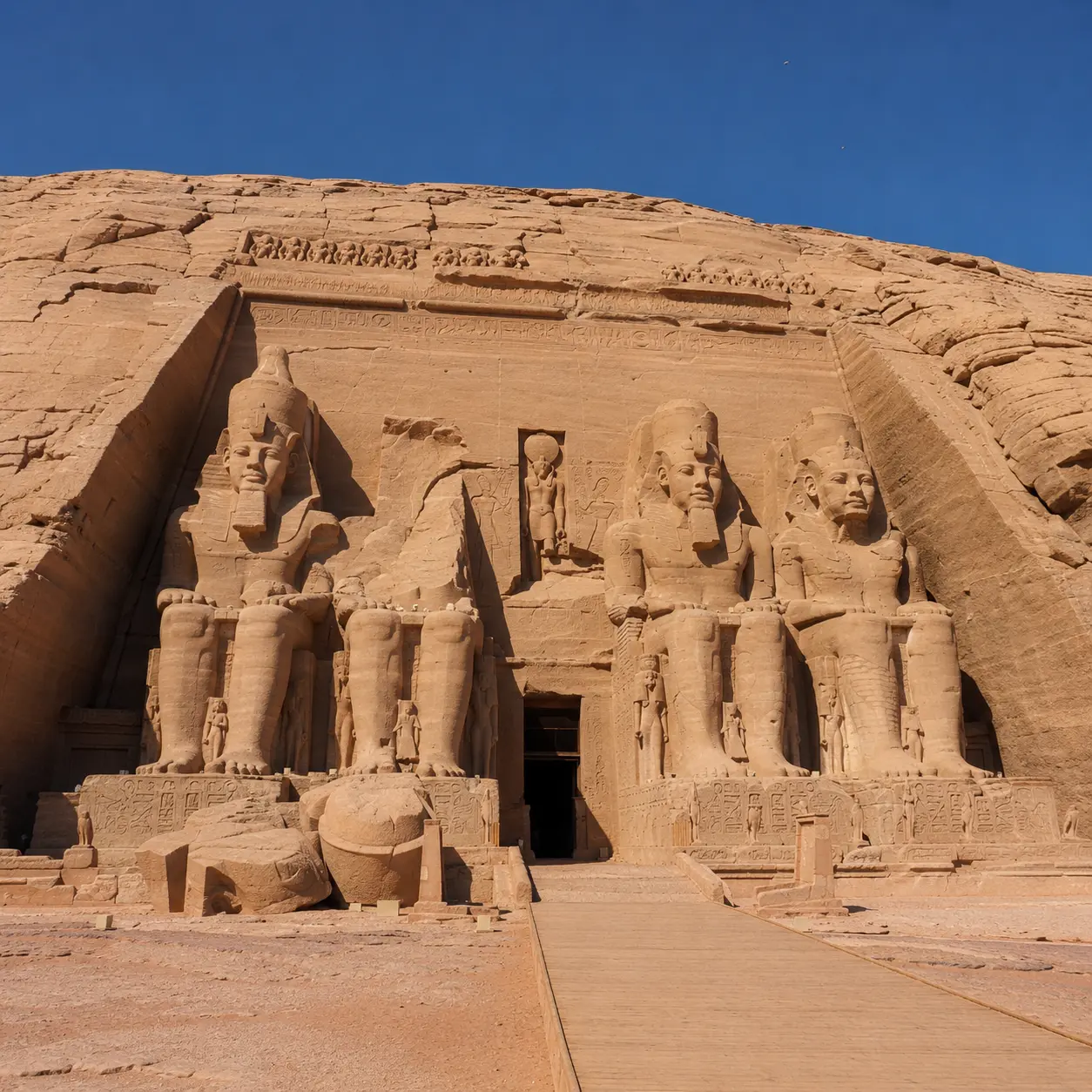
The Abu Simbel Temples sit close to Egypt’s southern border, facing Lake Nasser with a scale that feels deliberately theatrical. Four seated figures of Ramesses II guard the Great Temple, their knees taller than a person and their faces cut with the calm authority of a king who wanted to be remembered. A few steps away, the smaller temple honours Queen Nefertari and the goddess Hathor, with statues of the queen shown at a rare, almost equal scale beside the pharaoh.
Most travellers visit Abu Simbel from Aswan, usually by an early road transfer across the desert. The journey is part of the experience: flat sand, pale rock, a huge sky, then the sudden arrival at one of Egypt’s most dramatic ancient sites. If your Egypt route includes Aswan’s island temples, Abu Simbel adds a different mood — remote, monumental, and closely tied to royal power.
The Great Temple was built for Ramesses II and aligned with intense symbolic purpose. Inside, the air cools, the sound drops, and reliefs cover the walls with scenes of battle, offerings, and divine approval. The sanctuary at the back is the focal point, where seated gods and the deified king are arranged in a way that still draws careful attention from guides and Egyptology fans.
The Small Temple is quieter but no less important. It is one of the most memorable places in Egypt to see Nefertari’s status expressed in stone. Look for the Hathor-headed columns and the softer rhythm of the carved scenes. Many visitors rush through after taking photos outside; give this temple time, because its details reward a slower pace.
Abu Simbel is also famous for its modern rescue story. When the Aswan High Dam project threatened to flood the temples, they were carefully cut, moved, and reassembled on higher ground. You can sense that engineering achievement when you step back from the façade and notice how the temples now sit within an artificial hill. It is ancient ambition preserved by modern effort.
The best visit is paced, not frantic. Arrive with water, sun protection, and a guide who can explain the carvings before you enter, since lingering inside may be limited when groups arrive together. Photography rules can change by area, so check before taking pictures, especially inside the chambers. If you are building a southern Egypt itinerary, Ozes can help pair Abu Simbel with Aswan-based touring and onward time in Luxor, where sites such as Karnak’s vast temple complex continue the story of pharaohs, gods, and ritual space.
Abu Simbel Temples is one of Aswan's most-visited history & ancient wonders spots. Plan around The best time to visit Abu Simbel Temples is early morning, when temperatures are cooler and the stone façades catch softer light. The milder months of the year are generally more comfortable than peak summer. If you plan to visit around the famous solar alignment period, confirm the current schedule locally, as crowd control and access arrangements can vary. for the best conditions, and budget roughly Plan for about 1.5 to 2 hours at the temple site if you want time for both temples, exterior photos, and a guided explanation. The full excursion from Aswan takes much longer because of the remote desert location. on-site. Visit early to avoid crowds and heat.

Why travelers visit
Visit Abu Simbel for the rare combination of ancient scale, remote desert atmosphere, and modern preservation history. Few places in Egypt express pharaonic power as directly as the Great Temple, and few honour a queen as visibly as the temple of Nefertari.
Highlights
 The colossal seated statues of Ramesses II on the Great Temple façade
- The Small Temple dedicated to Queen Nefertari and Hathor
- Deeply carved interior scenes showing royal power, ritual offerings, and divine protection
- A dramatic Lake Nasser setting near Egypt’s southern frontier
- The modern relocation project that saved the temples from flooding
- Early morning light across the sandstone façades
Photos
1 photos
Know before you go
Practical tips to make the most of your visit.

What to wear
Wear light, breathable clothing, comfortable walking shoes, sunglasses, and a hat. The site is exposed, so sunscreen is useful year-round. Modest casual clothing is appropriate, and a light layer can help if you leave Aswan before sunrise.

Is a guide recommended?
Ask your guide to explain the façade before you enter the Great Temple. Once inside, the chambers can be busy and dim, so it helps to know what you are looking for: the royal battle scenes, offering rituals, side rooms, and the sanctuary figures at the rear.

Common mistakes to avoid
- Leaving too little time at the Small Temple of Nefertari; it is more than a quick add-on to the Great Temple.
- Underestimating the desert journey from Aswan and planning a full, tiring day immediately afterward.
- Arriving without sun protection; shade is limited and the open approach can feel harsh even in cooler months.
- Focusing only on exterior photos and missing the carved battle, offering, and sanctuary scenes inside.
- Assuming photography rules are fixed; always check current restrictions before taking pictures inside the temples.
- Booking transport too casually; for a remote site like Abu Simbel, reliable timing and clear pickup details matter.
Frequently asked questions
Are Abu Simbel Temples worth visiting?
Yes, Abu Simbel Temples are worth visiting if you can spare the travel time from Aswan. The scale of the façades, the carved interiors, and the temple relocation story make it one of Egypt’s most distinctive ancient sites.
How do you get to Abu Simbel from Aswan?
Most travellers reach Abu Simbel from Aswan by private car, group transfer, or an arranged tour. Some itineraries may use domestic flights or Lake Nasser cruise routes when available.
How long do you need at Abu Simbel?
You should allow several hours for the round trip from Aswan plus enough time to explore both temples properly. Many visitors treat Abu Simbel as a half-day or longer excursion rather than a quick stop.
What should I not miss at Abu Simbel?
The main things to see are the Great Temple of Ramesses II, the Small Temple of Nefertari and Hathor, the carved interiors, and the lakeside setting. The relocation history is also an essential part of the visit.
Do I need a guide for Abu Simbel Temples?
A guide is not strictly required, but Abu Simbel is much better with expert explanation. The carvings, royal symbolism, and relocation engineering are easy to underappreciate without context.
Can you take photos inside Abu Simbel?
Photography is usually allowed in some outdoor areas, but rules for interiors can vary. Check the current policy at the ticket area or with your guide before taking photos inside.
Visitor info
- Opening hours
- Abu Simbel Temples are generally open daily, with visiting hours often starting early to suit the desert climate and long transfers from Aswan. Hours may shift by season, security arrangements, or special events, so verify the current schedule before travelling.
- Recommended visit
- Plan for about 1.5 to 2 hours at the temple site if you want time for both temples, exterior photos, and a guided explanation. The full excursion from Aswan takes much longer because of the remote desert location.
- Best time to visit
- The best time to visit Abu Simbel Temples is early morning, when temperatures are cooler and the stone façades catch softer light. The milder months of the year are generally more comfortable than peak summer. If you plan to visit around the famous solar alignment period, confirm the current schedule locally, as crowd control and access arrangements can vary.
- Category
- History & Ancient Wonders
How to get there
Open in Google Maps
Reviews

Find guided Egypt tours that include this attraction.