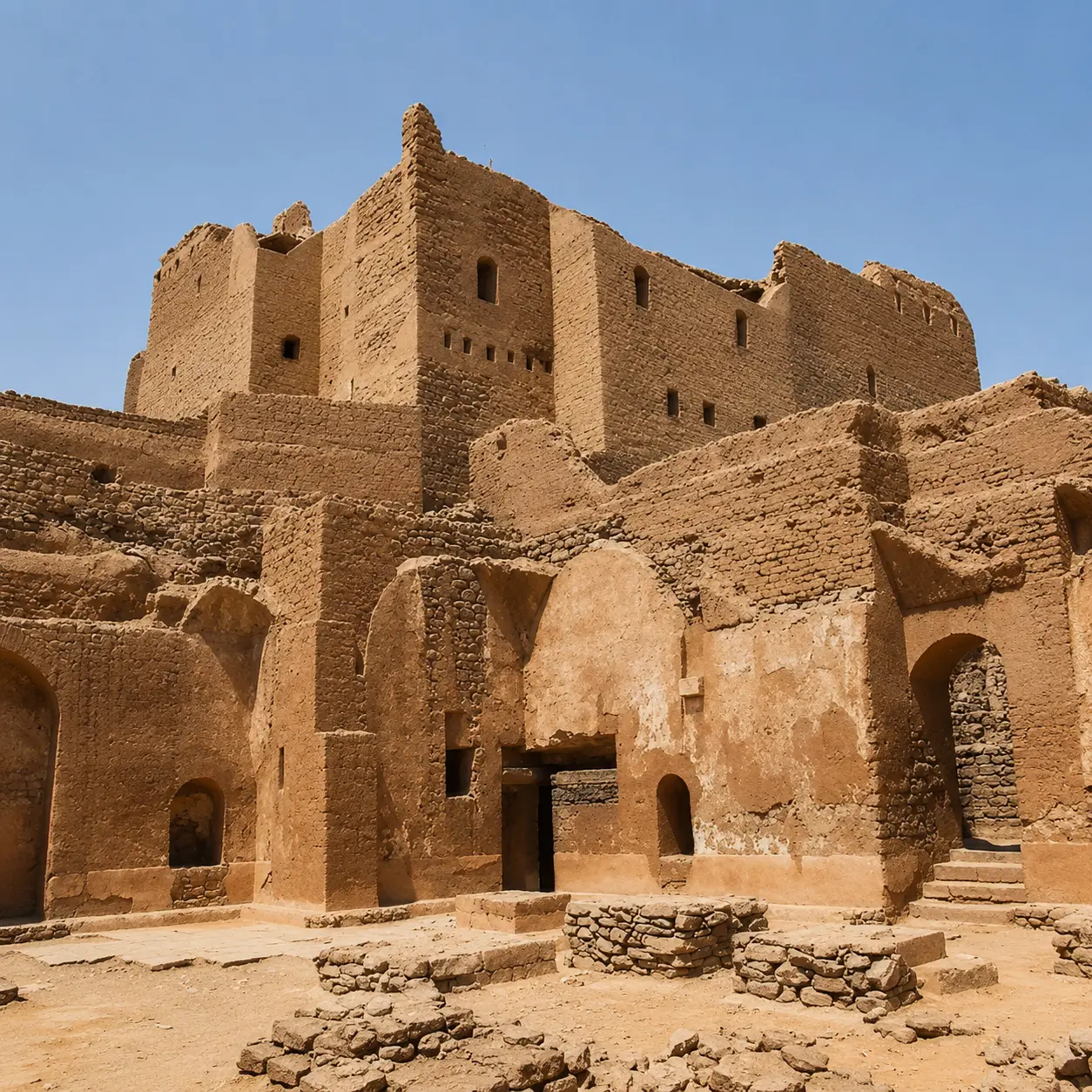
Monastery of St Simeon Aswan
The Monastery of St Simeon Aswan is a fortified Coptic monastery ruin on the Nile’s west bank, known for desert views, thick mudbrick walls, monks’ cells, and early Christian history.


Plan your visit
- Opening hours
- The monastery is generally visited during daylight hours, but access times and local arrangements can change. Check current opening guidance with your guide, hotel, or ticket office before setting out, especially around holidays, extreme heat, or if you are coordinating boat transfers.
- Best time
- The best time to visit the Monastery of St Simeon Aswan is early morning or late afternoon, when the desert light is softer and the heat is easier to manage. The cooler months, roughly from autumn through spring, are generally more comfortable for walking and photography. In summer, avoid the middle of the day.
- Visit duration
- Allow around 1 to 2 hours for the monastery itself. With the Nile crossing, onward transfer, and time for photos, many visitors plan a half-morning or late-afternoon outing, especially if combining it with other west-bank sights.
- Category
- History & Ancient Wonders
- Location
About
The Monastery of St Simeon Aswan sits on the desert edge west of the Nile, away from the traffic and gardens of the east bank. From a distance it looks like a small fortress: high ochre walls, broken towers, and a long line of mudbrick pressed into the hillside. Up close, the place feels quieter than Aswan’s river temples, with sand underfoot, wind moving through empty cells, and views back toward the Nile’s blue strip.
Also known locally as Deir Anba Simaan, the monastery is one of Egypt’s most impressive Coptic monastic ruins. Its history is linked with Anba Hadra, a respected Christian ascetic and bishop associated with Aswan, while the name St Simeon became more commonly used later. The complex grew over several phases in the early medieval period, when monasteries were not only places of prayer but also working communities, shelters, storehouses, and stops for travellers moving through Nubia and Upper Egypt.
The architecture is what makes the visit special. The outer walls are thick and defensive, built for isolation as much as protection. Inside, you can still trace the layout of the monastery: a church with surviving painted fragments, rows of monks’ cells, communal rooms, storage areas, and service spaces. The ruins are not polished or heavily reconstructed, so the site rewards slow looking. A guide can help you read the different materials, from stone foundations to sun-dried brick, and explain how the community lived in such a dry landscape.
The approach is part of the experience. Most visitors cross the Nile by boat from Aswan’s east bank, then continue by camel, on foot, or by vehicle where access allows. The desert track is open and bright, so bring water and cover your head. The monastery pairs naturally with a relaxed west-bank route, or with a broader Aswan plan that includes the island temple at Philae, a Nubian village visit, and the modern engineering story of the High Dam.
Compared with major Nile landmarks, the Monastery of St Simeon is often less crowded and more atmospheric. It is a good choice if you want to understand Aswan beyond pharaonic monuments: the city’s Christian heritage, its desert routes, and the practical challenges of building a religious community on the edge of the Sahara. For travellers planning more time in southern Egypt, it also fits well before or after a larger Aswan itinerary or a day focused on Abu Simbel’s rock-cut temples.
Monastery of St Simeon Aswan is one of Aswan's most-visited history & ancient wonders spots. Plan around The best time to visit the Monastery of St Simeon Aswan is early morning or late afternoon, when the desert light is softer and the heat is easier to manage. The cooler months, roughly from autumn through spring, are generally more comfortable for walking and photography. In summer, avoid the middle of the day. for the best conditions, and budget roughly Allow around 1 to 2 hours for the monastery itself. With the Nile crossing, onward transfer, and time for photos, many visitors plan a half-morning or late-afternoon outing, especially if combining it with other west-bank sights. on-site. Visit early to avoid crowds and heat.

Why travelers visit
Visit the Monastery of St Simeon Aswan to see a powerful piece of Egypt’s Coptic heritage in a raw desert setting. The site combines early Christian history, monastic architecture, Nile views, and a sense of quiet that is hard to find at busier monuments.
Highlights
 Fortified Coptic monastery ruins on Aswan’s west bank
- Thick mudbrick and stone walls rising from the desert
- Remains of a church, monks’ cells, communal rooms, and storage areas
- Wide views over the Nile valley and surrounding sandscape
- A quieter historical stop that adds Christian and medieval context to an Aswan visit
Photos
1 photos
Know before you go
Practical tips to make the most of your visit.

What to wear
Wear closed or sturdy walking shoes, as the ground is sandy and uneven. Choose light breathable clothing, a sun hat, and sunglasses. Modest dress is sensible for a religious heritage site, and long sleeves or a scarf can also help with sun protection.

Is a guide recommended?
Ask your guide to show you the church area, monks’ cells, and the old service spaces before you start taking photos. Once you understand the layout, the ruins become much more readable. For the best atmosphere, pause near the outer walls and look back toward the Nile; the contrast between desert and river explains why this location was both difficult and strategic.

Common mistakes to avoid
- Arriving without enough water; the desert approach has little shade and heat builds quickly.
- Assuming the monastery is on Aswan’s main east bank; it is on the west bank and usually needs a boat crossing plus onward transport or walking.
- Wearing smooth-soled shoes or sandals that are poor on sand and broken stone.
- Skipping a guide if you care about history; the ruined layout is much easier to understand with context.
- Planning it too tightly between boat schedules or cruise departures; allow buffer time for crossings and local transport.
Frequently asked questions
Is the Monastery of St Simeon Aswan worth visiting?
Yes, the Monastery of St Simeon Aswan is worth visiting if you like quiet ruins, Coptic history, and desert scenery. It is less crowded than Aswan’s major temple sites and offers a different view of the city’s past.
How do you get to the Monastery of St Simeon in Aswan?
You usually reach the monastery by crossing the Nile to the west bank, then continuing by camel, on foot, or by local transport depending on access. It is best arranged with a guide or trusted local operator so the boat and transfer connect smoothly.
How long do you need at the Monastery of St Simeon?
Most travellers spend about 1 to 2 hours on the visit, not including extra waiting time for boats or transport. Add more time if you want to walk slowly, take photos, or combine it with other west-bank stops.
Do I need a guide for the Monastery of St Simeon?
A guide is not mandatory, but a guide makes the site much easier to understand. The monastery is partly ruined, and the story of its church, cells, defensive walls, and Coptic background is not always obvious without explanation.
Is the Monastery of St Simeon accessible?
The site is not very suitable for visitors with limited mobility. Expect uneven surfaces, sand, steps, exposed areas, and a transfer route that may involve a boat and desert track.
What should I wear to visit the Monastery of St Simeon?
Wear comfortable walking shoes, a hat, sunglasses, and light breathable clothing that covers your shoulders from the sun. Bring water, especially if visiting outside the coolest part of the day.
Visitor info
- Opening hours
- The monastery is generally visited during daylight hours, but access times and local arrangements can change. Check current opening guidance with your guide, hotel, or ticket office before setting out, especially around holidays, extreme heat, or if you are coordinating boat transfers.
- Recommended visit
- Allow around 1 to 2 hours for the monastery itself. With the Nile crossing, onward transfer, and time for photos, many visitors plan a half-morning or late-afternoon outing, especially if combining it with other west-bank sights.
- Best time to visit
- The best time to visit the Monastery of St Simeon Aswan is early morning or late afternoon, when the desert light is softer and the heat is easier to manage. The cooler months, roughly from autumn through spring, are generally more comfortable for walking and photography. In summer, avoid the middle of the day.
- Category
- History & Ancient Wonders
How to get there
Open in Google Maps
Reviews

Find guided Egypt tours that include this attraction.