Common Tourist Scams in Egypt & How to Avoid Them
Learn the common tourist scams in Egypt — from taxi fares to camel rides, bazaars and tipping — plus calm, practical ways to avoid them.

Ozes
Travel Writer

Learn the common tourist scams in Egypt — from taxi fares to camel rides, bazaars and tipping — plus calm, practical ways to avoid them.
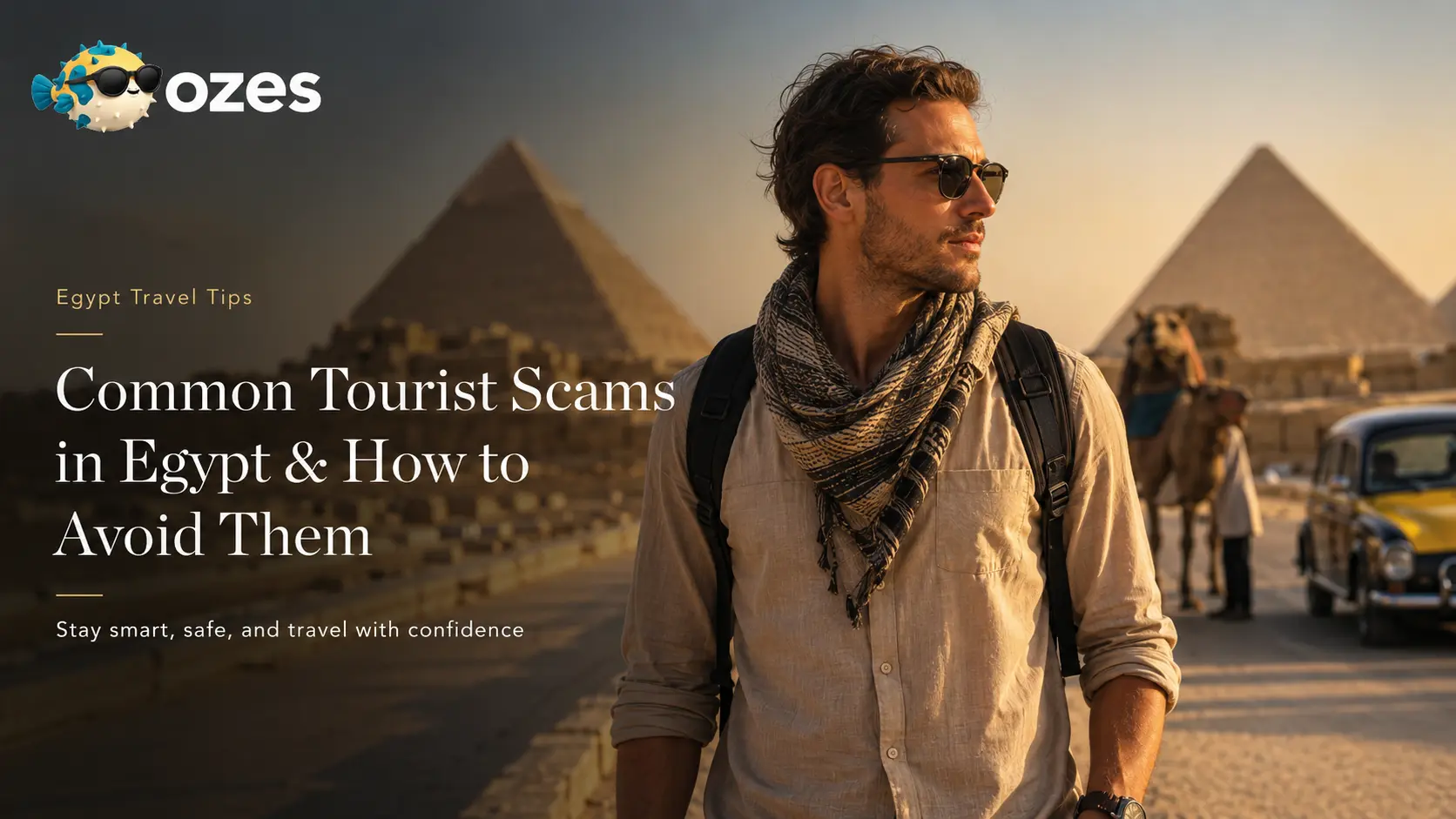
Egypt is a generous country to travel through: tea offered in a shop, directions called across a street, a driver waiting while you take one more photo. The trick is learning the difference between genuine hospitality and the small, avoidable pressure plays that can turn a good day sour.
Most tourist scams in Egypt begin with ambiguity. A ride starts before the fare is clear. A “free” photo becomes a tip demand. A “quick look” inside a shop turns into a long sales routine.
You do not need to be suspicious of everyone. You do need to slow the moment down, smile, and make the terms simple before anything begins.
If the price is not clear before you say yes, the price is not agreed.
A calm “la, shukran” — no, thank you — is often more useful than a long explanation.— Ozes travel tip
At airports, stations and major sights, drivers may approach with urgent language: “official taxi,” “meter broken,” “same price,” or “your hotel is far.” Some are legitimate drivers; the risk is starting a trip without a firm fare.
If you use a taxi, agree the full price before the bags go in the trunk. If you use an app, check the plate and driver details, then avoid switching to a separate cash deal unless you are fully comfortable with the price.
Someone may reach for your luggage, open a car door, or guide you to a counter, then ask for money. In Egypt, tipping is common, but unsolicited help is not an obligation.
 Browse guided Egypt optionsA curated starting point for travellers who prefer arranged transport, guides and a clear route through Egypt.
The busiest monuments attract the most hustle because visitors are distracted. Around the Giza plateau, you may meet people offering “included” camel rides, special photo spots, shortcuts, or claims that the entrance has changed.
Official ticket offices and clearly marked entry points are your anchor. If someone tells you a museum, temple or gate is closed, verify it with security staff, your licensed guide, or the attraction’s official channel before changing plans.
A common complaint is not the ride itself, but the end of it. The first price may cover “getting on,” while getting off, returning, photos, or a longer route suddenly costs more.
Before mounting, state the exact duration, route, number of people, and total price. If you book through a reputable operator, ask what animal welfare standards they expect and what is included in the ride.
At temples and museums, a stranger may offer to “explain quickly” or help you skip a line, then demand payment. A licensed guide should be clear about who they are, what they offer, and how long the service lasts.
If you want deeper context, pre-book a guide or join a structured tour. It is far more relaxing to explore the Egyptian Museum on Tahrir Square when your timing, tickets and transport are already organised.
 See the pyramids with structureA practical day route that combines Giza, Saqqara and Memphis with a clearer plan for transport and guiding.
 Make Luxor easier to navigateCover Luxor’s East and West Bank sights with a guide, reducing on-the-spot negotiation around major temples and tombs.
Markets in Egypt are lively, social and often playful. At Khan El Khalili, bargaining is part of the experience, but pressure can build fast if you sit down for tea, accept a “gift,” or allow a long product demonstration.
Papyrus, perfume oil, spices, alabaster and cotton shops can be perfectly legitimate. The warning sign is not selling; it is urgency, emotional pressure, or a claim that the offer is only possible “right now.”
A small souvenir, bracelet, scarf or name written in Arabic may be offered as a gift. Sometimes it is a warm gesture; sometimes it becomes a request for money once you accept it.
If you do not want to buy, keep your hands free and decline gently. If you do want to browse, ask prices first and avoid being drawn into a back room before you understand the shop’s rhythm.
Bargaining etiquette
In many Egyptian markets, the first price is an invitation to talk, not a final insult.
Tipping — often called baksheesh — is a normal part of service culture in Egypt. It becomes uncomfortable when the request is attached to something you did not ask for, such as directions, a photo, or someone pointing at a wall relief inside a temple.
The easiest approach is to budget mentally for tips, carry small notes, and decide in advance what you will tip for: hotel help, drivers, guides, boat crews, restroom attendants, or excellent service.
Good-to-know tipping rule
A tip is for service you accepted, not for pressure you did not invite.
At busy landmarks, a person may offer to take a photo, then ask for money or keep suggesting extra poses. If you want the help, agree on a tip before handing over your phone, or ask another traveller instead.
This is especially useful at sunset viewpoints, temple gateways and crowded museum entrances, where you may be more focused on the shot than the exchange.
You can avoid many problems by making your money habits boring. Keep larger notes separate, use small cash for everyday spending, and check bills in restaurants before paying.
In cafés or restaurants near major sights, ask for a menu before ordering and confirm if taxes or service are included. If paying by card, keep the terminal in sight and check the amount before entering your PIN.
Slow down at payment moments
Do not let anyone rush you at an ATM, ticket counter or card machine. Step aside, count, check, then pay.
On longer routes, such as a short Nile cruise from Aswan to Luxor, organised transfers and set sightseeing times can reduce the number of small negotiations you face each day.
Consider a private Egypt planFor travellers who want flexibility without constant street-level negotiation, a private format can simplify the trip.The best response is usually calm, public and boring. Stop moving, keep your belongings close, and repeat a short phrase: “No, thank you,” “I did not agree,” or “I will ask police/security.”
At major attractions, move toward uniformed tourist police, official security or the ticket office. In hotels, restaurants and stations, ask staff for help rather than arguing in the street.
Key takeaways
Egypt rewards travellers who arrive curious and prepared. Learn the common pressure points, set boundaries early, and you can spend more energy on tomb colours, mosque courtyards, Red Sea light and the sound of the Nile at dusk.
If you prefer fewer on-the-ground negotiations, choose a well-planned route with trusted guides and transport. Start with broader Egypt tour ideas, then match the pace to how independent you want each day to feel.