Temple of Hatshepsut
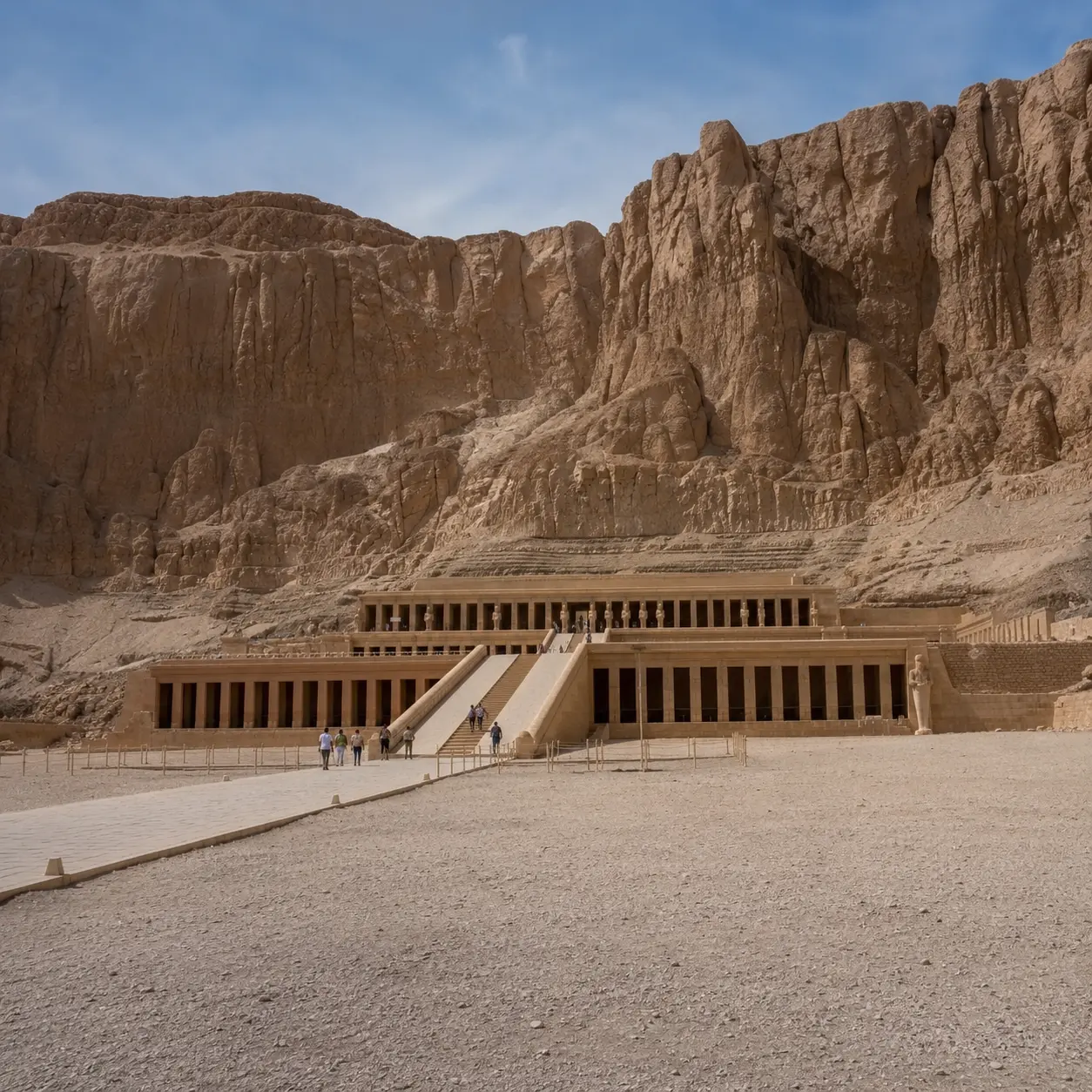
The Temple of Hatshepsut in Luxor is a terraced 18th Dynasty mortuary temple at Deir el-Bahari, known for its cliffside setting, elegant ramps, royal reliefs, and rare scenes linked to Queen Hatshepsut’s reign.


Plan your visit
- Opening hours
- The Temple of Hatshepsut generally opens daily, with visiting hours set by the Egyptian antiquities authorities and adjusted seasonally or for operational reasons. Go early in the day for cooler conditions, and confirm current hours locally if you are planning a late visit.
- Best time
- The best time to visit the Temple of Hatshepsut is early morning, when the stone is cooler, the light is softer, and the terraces are more comfortable to explore. Late afternoon can also be atmospheric, but check local closing arrangements before planning a slow visit.
- Visit duration
- Plan around 60 to 90 minutes for the Temple of Hatshepsut. A quick visit is possible, but the site rewards extra time for the reliefs, chapels, upper terraces, and views back across the West Bank.
- Category
- History & Ancient Wonders
- Location
About
The Temple of Hatshepsut is one of Luxor’s most striking ancient sites, cut into the desert landscape at Deir el-Bahari on the West Bank. Instead of rising as a forest of columns like many Egyptian temples, it climbs in clean horizontal terraces against pale limestone cliffs. From the approach road, the design looks almost modern: ramps, colonnades, shadowed porticoes, and a cliff face that frames the whole structure.
The temple was built for Hatshepsut, one of ancient Egypt’s most successful female pharaohs, during the 18th Dynasty. It served as her mortuary temple, a place for royal cult rituals and offerings after death, but it also made a political statement. Hatshepsut ruled in a world where kingship was usually male, so the temple’s decoration presents her legitimacy through divine birth scenes, offerings to the gods, and images of royal power.
One of the most interesting areas shows the expedition to Punt, a trading region prized by the Egyptians for incense, exotic goods, and rare materials. Look for reliefs of ships, trees, and foreign landscapes. Even where the carvings are worn, they give the site a different texture from battle scenes and royal processions found elsewhere in Egypt.
The chapels dedicated to Hathor and Anubis are especially worth slowing down for. Hathor’s area has columns with the goddess’s face, while the Anubis chapel preserves delicate painted details in places. The colours are not as complete as in some tombs, but the contrast between sun-bleached stone outside and painted relief inside is part of the experience.
A visit to the Temple of Hatshepsut pairs naturally with the royal tombs across the West Bank. Many travellers see both in the same half day, but they feel very different: the Valley of the Kings pulls you underground into painted burial chambers, while Hatshepsut’s temple is all light, scale, and architectural control.
For a fuller Luxor story, balance the West Bank with the East Bank temples. The vast ritual avenues and pylons of Karnak’s temple precinct show the religious power of Thebes, while Luxor’s riverside temple is especially atmospheric later in the day. Together, these sites explain why ancient Thebes became one of Egypt’s great sacred landscapes.
Practical tip: the open terraces can feel very hot and bright, even when the weather seems mild elsewhere in Luxor. Arrive early if you can, bring water, and take your time in the shaded colonnades rather than trying to rush straight to the top level.
Temple of Hatshepsut is one of Cairo's most-visited history & ancient wonders spots. Plan around The best time to visit the Temple of Hatshepsut is early morning, when the stone is cooler, the light is softer, and the terraces are more comfortable to explore. Late afternoon can also be atmospheric, but check local closing arrangements before planning a slow visit. for the best conditions, and budget roughly Plan around 60 to 90 minutes for the Temple of Hatshepsut. A quick visit is possible, but the site rewards extra time for the reliefs, chapels, upper terraces, and views back across the West Bank. on-site. Visit early to avoid crowds and heat.

Why travelers visit
Visit the Temple of Hatshepsut to see one of ancient Egypt’s most distinctive royal monuments: a bold terraced temple shaped by politics, religion, and landscape. It adds architectural variety to a Luxor itinerary and gives context to Hatshepsut’s unusual reign as pharaoh.
Highlights
 Terraced architecture set against the cliffs of Deir el-Bahari
- Reliefs connected to Hatshepsut’s divine birth and royal legitimacy
- Scenes of the expedition to Punt, including ships and trade goods
- Chapels associated with Hathor and Anubis
- Wide views across the Theban West Bank desert landscape
- Easy pairing with the Valley of the Kings on a Luxor West Bank route
Photos
1 photos
Know before you go
Practical tips to make the most of your visit.

What to wear
Wear light, breathable clothing, a hat, sunglasses, and comfortable walking shoes with grip. The site is exposed to strong sun, so modest loose layers and sunscreen are practical, especially when moving between terraces.

Is a guide recommended?
Give Hatshepsut’s story before entering the terraces, not after. Travellers understand the site better when they know she ruled as pharaoh, used temple art to support her legitimacy, and chose a setting that linked royal power with the cliffs of western Thebes.

Common mistakes to avoid
- Visiting at midday without enough water or sun protection; the limestone reflects heat and glare strongly.
- Treating the temple as a quick photo stop instead of looking closely at the reliefs, especially the Punt scenes and chapels.
- Trying to see every West Bank site in one rushed block; combine highlights, but leave breathing room.
- Skipping a guide or background reading, which makes the political story of Hatshepsut much harder to appreciate.
- Wearing slippery footwear; stone ramps and dusty paths are easier with stable walking shoes.
Frequently asked questions
Why is the Temple of Hatshepsut famous?
The Temple of Hatshepsut is famous for its dramatic terraced design and for being built for one of ancient Egypt’s most powerful female pharaohs. Its reliefs also include unusual scenes of trade expeditions, divine legitimacy, and royal ritual.
Where is the Temple of Hatshepsut located?
The Temple of Hatshepsut is on Luxor’s West Bank at Deir el-Bahari, close to the Valley of the Kings. Most visitors reach it by car or guided transfer from Luxor city.
How long do you need at the Temple of Hatshepsut?
Most travellers spend about 60 to 90 minutes at the Temple of Hatshepsut. Allow more time if you want to study the reliefs, take photos from different terraces, or visit with an Egyptologist guide.
Is the Temple of Hatshepsut worth visiting?
Yes, the Temple of Hatshepsut is worth visiting because it looks unlike most other major Egyptian temples. Its cliffside terraces, ramps, and political story make it a key Luxor site, especially when paired with the Valley of the Kings.
Can you visit the Temple of Hatshepsut and the Valley of the Kings together?
Yes, you can visit the Temple of Hatshepsut and the Valley of the Kings on the same day. They are both on Luxor’s West Bank, and many itineraries combine them in a half-day or full-day route.
Do you need a guide for the Temple of Hatshepsut?
A guide is not required, but a good guide makes the visit more meaningful. The architecture is impressive on its own, yet Hatshepsut’s political story and the reliefs are easier to understand with expert explanation.
Can you take photos at the Temple of Hatshepsut?
Photography is generally possible in outdoor areas, but rules can change for specific zones or equipment. Always follow signs and staff instructions, especially regarding tripods, flash, or restricted areas.
Visitor info
- Opening hours
- The Temple of Hatshepsut generally opens daily, with visiting hours set by the Egyptian antiquities authorities and adjusted seasonally or for operational reasons. Go early in the day for cooler conditions, and confirm current hours locally if you are planning a late visit.
- Recommended visit
- Plan around 60 to 90 minutes for the Temple of Hatshepsut. A quick visit is possible, but the site rewards extra time for the reliefs, chapels, upper terraces, and views back across the West Bank.
- Best time to visit
- The best time to visit the Temple of Hatshepsut is early morning, when the stone is cooler, the light is softer, and the terraces are more comfortable to explore. Late afternoon can also be atmospheric, but check local closing arrangements before planning a slow visit.
- Category
- History & Ancient Wonders
How to get there
Open in Google Maps
Reviews

Find guided Egypt tours that include this attraction.