Luxor Temple
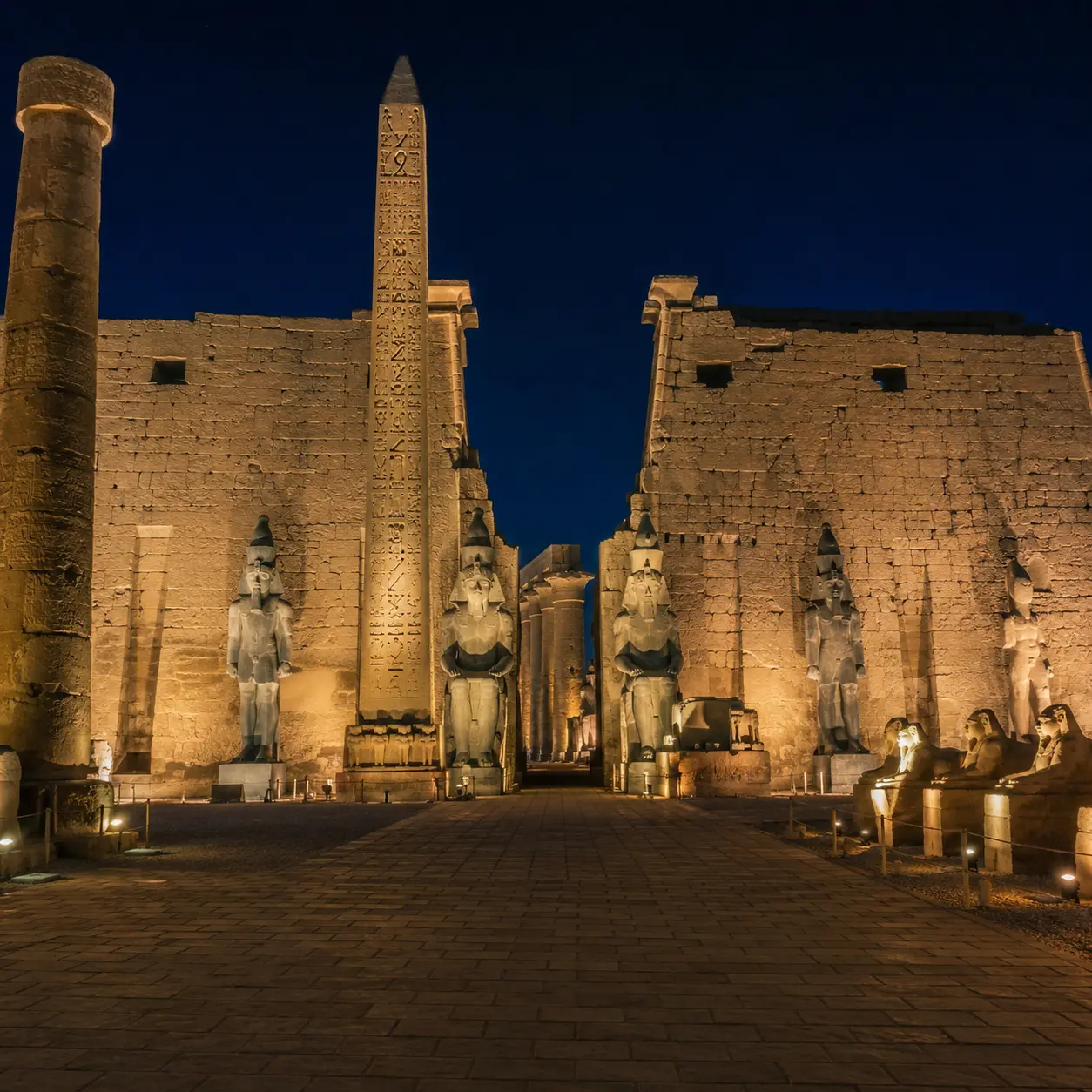
Luxor Temple is a graceful ancient Egyptian temple on the east bank of the Nile, known for its colossal statues, elegant colonnades, sphinx avenue, and striking evening atmosphere.


Plan your visit
- Opening hours
- Luxor Temple is generally open daily, with hours that may vary by season, holidays, and local regulations. Evening visits are commonly possible, but it is best to confirm current hours on the day through your hotel, guide, or local ticket office.
- Best time
- Late afternoon into evening is the best time to visit Luxor Temple. The heat is usually easier to manage, the stone takes on warm color near sunset, and the illuminated temple after dark is especially atmospheric. Mornings can also work well if you prefer softer crowds and clearer light for photography.
- Visit duration
- Plan around one to two hours for a standard visit. If you are visiting with a knowledgeable guide, photographing at sunset, or combining the temple with the sphinx avenue area, allow extra time so the visit does not feel rushed.
- Category
- History & Ancient Wonders
- Location
About
Luxor Temple is one of Egypt’s most atmospheric ancient sites: a long, processional temple on the east bank of the Nile, lit by low desert sun in the afternoon and by warm lamps after dark. Unlike many temples built for a single local god, Luxor Temple was closely tied to royal power and renewal. It formed a ceremonial partner to Karnak, linked by the Avenue of Sphinxes, and played a central role in festivals that moved through ancient Thebes.
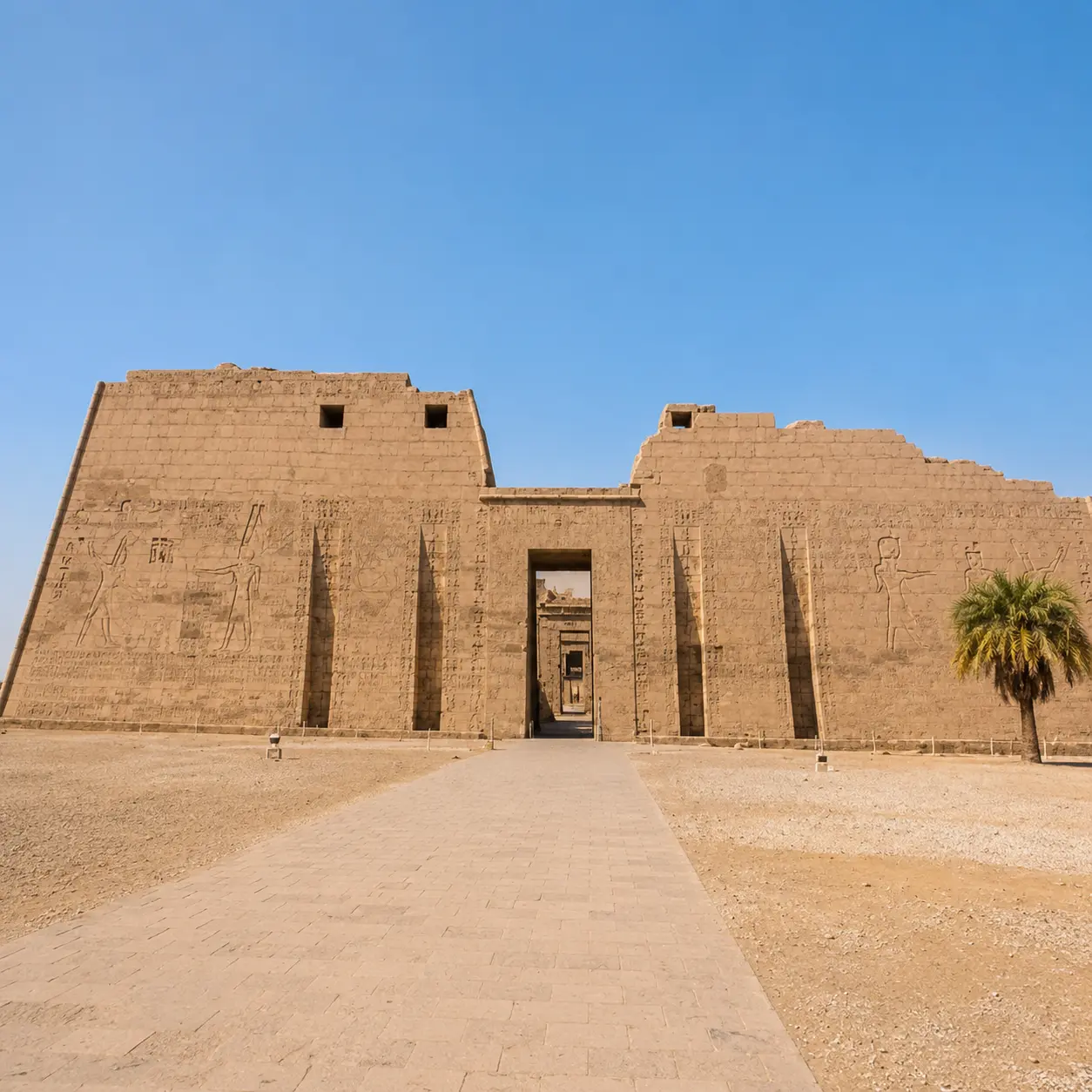
Most visitors first meet the temple at the grand pylon of Ramesses II, where colossal seated statues and carved battle scenes announce royal ambition before you even step inside. Pass through and the mood changes. Courtyards, columns, side chapels, Roman-era additions, and a mosque above the ancient stone all sit in one layered space. That is what makes Luxor Temple so rewarding: it is not frozen in one period. It shows how one sacred place was reused, adapted, and respected across pharaonic, Roman, Christian, and Islamic eras.
The temple’s scale is easier to absorb than Karnak’s. You can walk it slowly without feeling swallowed by a huge complex, which makes it ideal for a first evening in Luxor. The columns glow honey-gold at sunset, hieroglyphs sharpen in side light, and the statues cast long shadows across the paving. After dark, the lighting gives the colonnade and courtyard a theatrical feel without taking away the weight of the stone.
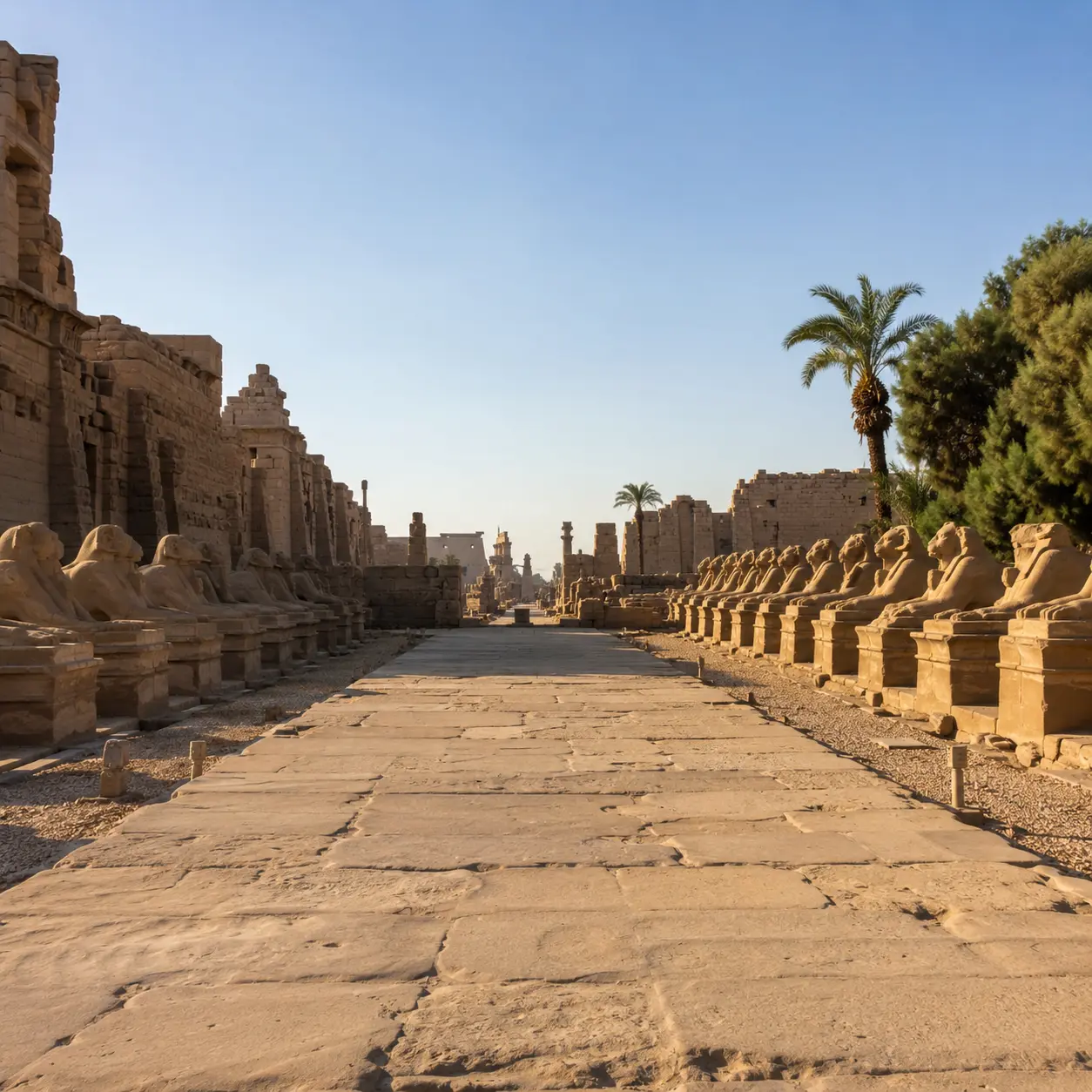
A good visit starts outside the entrance, looking toward the sphinx-lined avenue that once connected Luxor Temple with the great temple precinct at Karnak. Inside, follow the main axis rather than rushing from statue to statue. Notice how each ruler left a mark: Amenhotep III’s elegant colonnade, Ramesses II’s monumental court, later restorations and additions, and the mosque of Abu al-Haggag rising above the ancient walls. The result is a rare, visible timeline of Luxor’s living history.
If your trip includes several days in Upper Egypt, keep Luxor Temple for late afternoon or evening and save the broad daylight hours for larger archaeological sites. Many travellers pair it with Karnak on the same day, but they feel different. Karnak is vast and complex; Luxor Temple is more intimate, easier to read, and especially beautiful when the city lights begin to come on. For trip planning, browse Luxor-focused Egypt routes to see how it can fit with the West Bank tombs, Nile time, and nearby temples.
Bring curiosity rather than a checklist. The best moments are often small: a carved cartouche at eye level, a worn threshold underfoot, the contrast between modern city sounds and ancient stone, or the sight of a minaret rising from a temple court. Luxor Temple is not just a stop for photos; it is one of the clearest places in Egypt to feel how ancient Thebes became modern Luxor without ever fully letting go of its past.
Luxor Temple is one of Luxor's most-visited history & ancient wonders spots. Plan around Late afternoon into evening is the best time to visit Luxor Temple. The heat is usually easier to manage, the stone takes on warm color near sunset, and the illuminated temple after dark is especially atmospheric. Mornings can also work well if you prefer softer crowds and clearer light for photography. for the best conditions, and budget roughly Plan around one to two hours for a standard visit. If you are visiting with a knowledgeable guide, photographing at sunset, or combining the temple with the sphinx avenue area, allow extra time so the visit does not feel rushed. on-site. Visit early to avoid crowds and heat.

Why travelers visit
Visit Luxor Temple for one of the most readable and atmospheric ancient sites in Egypt. It combines monumental royal architecture, a strong ceremonial link to Karnak, beautiful evening light, and living layers of history in a compact site that is easy to explore.
Highlights
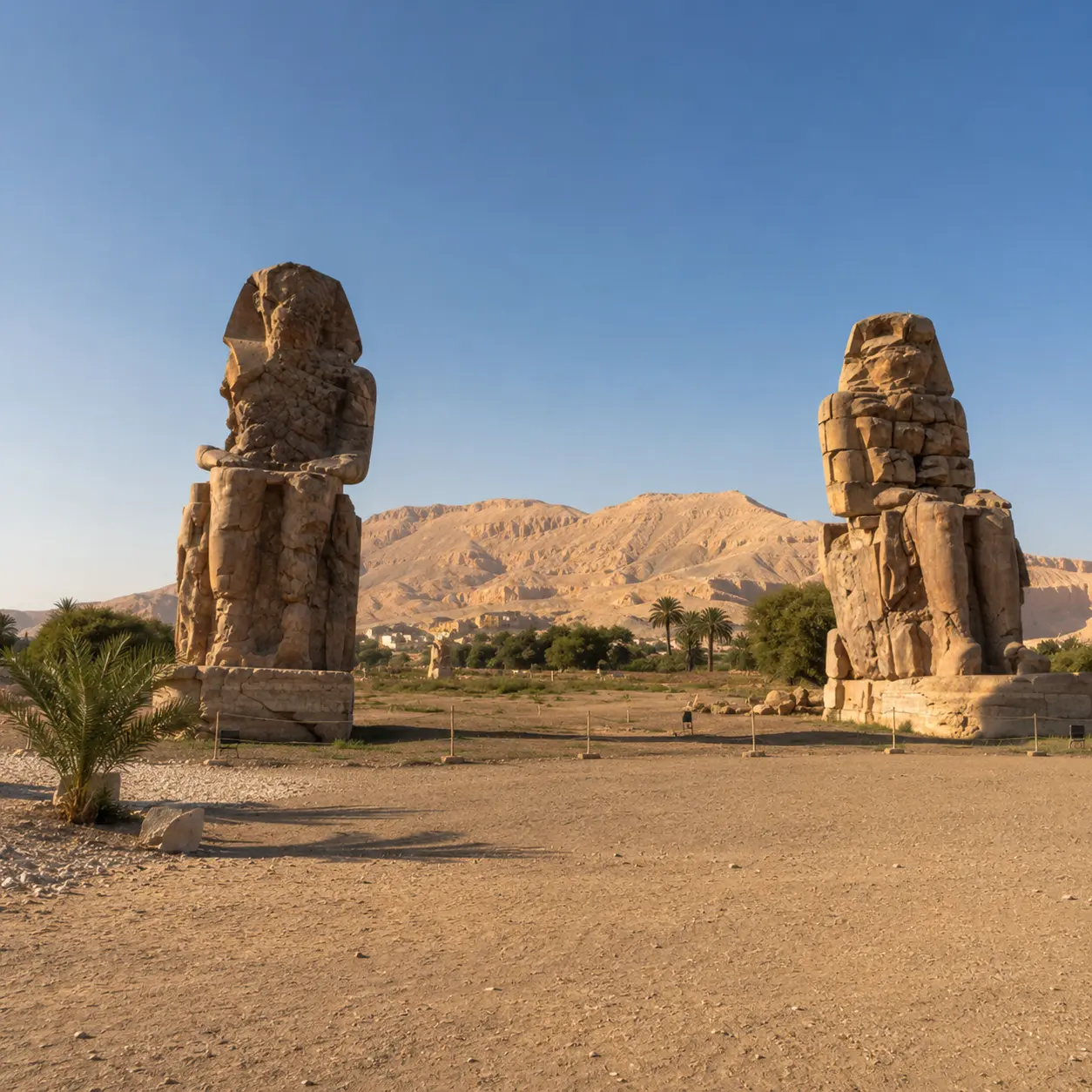
 Colossal statues and the grand pylon of Ramesses II
- Avenue of Sphinxes connection toward Karnak
- Elegant colonnade linked with Amenhotep III and later royal decoration
- Layered history visible in pharaonic, Roman, Christian, and Islamic elements
- Beautiful sunset and night lighting for photography
- Central Luxor location near the Nile and city promenade
Photos
1 photos
Know before you go
Practical tips to make the most of your visit.

What to wear
Wear light, breathable clothing, comfortable walking shoes, sunglasses, and sun protection for daytime visits. In the evening, modest casual clothing is still appropriate, and a light layer can be useful outside the hottest months. The ground is uneven in places, so avoid flimsy sandals.

Is a guide recommended?
Ask your guide to explain the temple as a ceremonial route, not just a collection of monuments. The story becomes clearer when you understand how processions moved between Karnak and Luxor, why royal renewal mattered, and how later communities reused the sacred space.

Common mistakes to avoid
- Visiting too quickly and treating Luxor Temple as a short photo stop rather than following its processional layout.
- Pairing Karnak and Luxor Temple back-to-back without a break during the hottest part of the day.
- Ignoring the later layers, including Roman-era remains and the mosque above the ancient temple fabric.
- Arriving with no small cash for optional guide services, tips, or nearby conveniences.
- Forgetting that the best photos often come from side angles, not only from the front of the statues.
Frequently asked questions
Is Luxor Temple worth visiting?
Luxor Temple is worth visiting because it is one of Egypt’s most atmospheric ancient temples and is especially beautiful at sunset and after dark. Its manageable size, layered history, and central location make it one of the easiest major monuments to enjoy in Luxor.
How long do you need at Luxor Temple?
Most visitors spend about one to two hours at Luxor Temple. Allow more time if you like detailed reliefs, photography, or a guided explanation of the temple’s different historical layers.
What is the best time of day to visit Luxor Temple?
The best time to visit Luxor Temple is late afternoon or evening. The temperature is usually more comfortable, the stone looks warmer in low light, and the illuminated columns create a strong sense of atmosphere after dark.
Is Luxor Temple the same as Karnak Temple?
Luxor Temple and Karnak are different sites connected historically by the Avenue of Sphinxes. Karnak is much larger, while Luxor Temple is more compact and easier to explore in a single relaxed visit.
Can I visit Luxor Temple and Karnak in one day?
Yes, many travellers visit Karnak and Luxor Temple on the same day. A comfortable plan is Karnak earlier in the day, a rest break, then Luxor Temple near sunset or in the evening.
Do I need a guide for Luxor Temple?
A guide is not required, but a good guide makes Luxor Temple far easier to understand. The site has many layers from different rulers and later periods, so context helps you see more than statues and columns.
Is Luxor Temple good for children?
Luxor Temple is generally suitable for families, especially because it is compact and visually impressive. Visit outside the hottest hours, bring water, and keep children close around uneven stone and busy walkways.
Visitor info
- Opening hours
- Luxor Temple is generally open daily, with hours that may vary by season, holidays, and local regulations. Evening visits are commonly possible, but it is best to confirm current hours on the day through your hotel, guide, or local ticket office.
- Recommended visit
- Plan around one to two hours for a standard visit. If you are visiting with a knowledgeable guide, photographing at sunset, or combining the temple with the sphinx avenue area, allow extra time so the visit does not feel rushed.
- Best time to visit
- Late afternoon into evening is the best time to visit Luxor Temple. The heat is usually easier to manage, the stone takes on warm color near sunset, and the illuminated temple after dark is especially atmospheric. Mornings can also work well if you prefer softer crowds and clearer light for photography.
- Category
- History & Ancient Wonders
How to get there
Open in Google Maps
Reviews

Find guided Egypt tours that include this attraction.