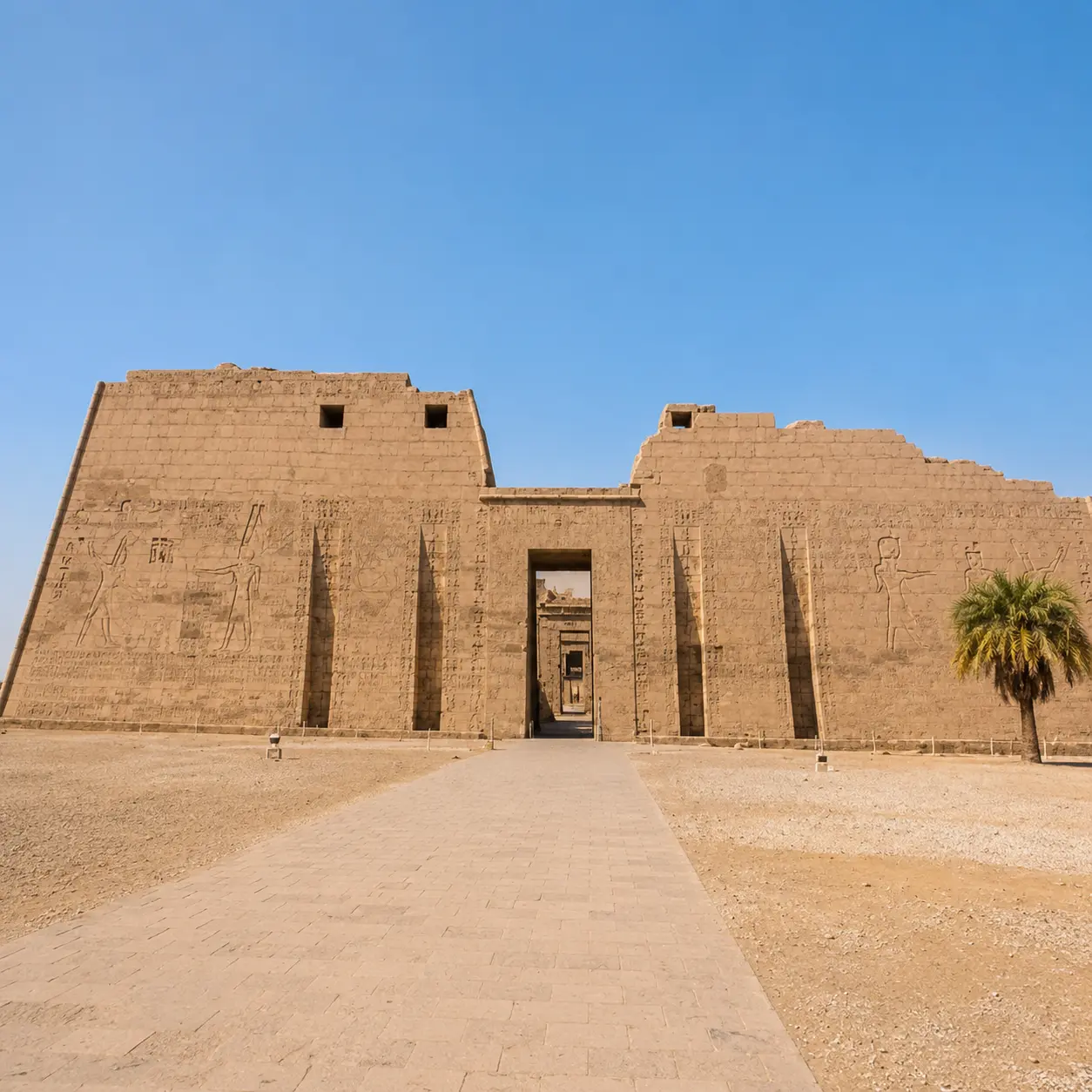
Habu Temple
Habu Temple in Luxor, also known as Medinet Habu, is the mortuary temple of Ramesses III on the West Bank. It is known for massive pylons, vivid reliefs, traces of ancient color, and a calmer atmosphere than many of Luxor’s busier sites.


Plan your visit
- Opening hours
- Habu Temple is generally open daily during daytime sightseeing hours, with last entry before closing. Exact times can vary by season, local regulations, and ticketing arrangements, so confirm the current schedule with your guide, hotel, or the official ticket office before travelling to the West Bank.
- Best time
- The best time to visit Habu Temple is early morning or late afternoon, when the light is softer and the stone reliefs are easier to read. Midday can be harsh on the open West Bank, especially in warmer months. If you are combining several Luxor sites, visit tombs first for cooler conditions, then allow unrushed time at Habu before returning to the East Bank.
- Visit duration
- Plan around 60 to 90 minutes for Habu Temple. A quick look can be shorter, but the site deserves time for the pylons, courtyards, reliefs, and color details. With a guide or serious photography, two hours is reasonable.
- Category
- History & Ancient Wonders
- Location
About
Habu Temple in Luxor, more accurately the Mortuary Temple of Ramesses III at Medinet Habu, is one of the West Bank’s most rewarding ancient sites. It has the scale of a royal temple, the atmosphere of a walled town, and the kind of carved detail that makes you slow down without being told to. The first view is dramatic: a fortified gateway, high mudbrick enclosure walls, and stone pylons covered with scenes of kingship, ritual, and battle.
Most visitors come to Luxor for the tombs, but Habu Temple shows a different side of ancient Thebes. Instead of descending into painted burial chambers, you walk through open courts, columned halls, side chapels, and sacred spaces built to honor Ramesses III and the gods. The temple’s reliefs are among its great strengths. On the outer walls and pylons, you can still read the visual language of power: the pharaoh larger than life, enemies shown in ordered rows, priests making offerings, and gods receiving the king in formal scenes.
What makes Habu especially memorable is its surviving color. Look up under covered areas and along protected reliefs and you may see traces of blue, red, yellow, and green clinging to the carvings. The light changes the experience. Early in the day, the walls feel crisp and pale; later, the sandstone warms and the shadows sharpen the carved figures. Bring a guide or a good guidebook if you can, because the temple rewards context. Without explanation, the walls are impressive; with a little help, they become a record of ritual, politics, and royal storytelling.
Habu Temple is often quieter than the headline sites on the West Bank. That is part of its appeal. You can usually find space to stand back and take in the pylons, then move close enough to study chisel marks, hieroglyphs, and paint fragments. The layout also makes the visit easy to follow: enter through the monumental gateway, pass into the first and second courts, then continue toward the inner halls where the atmosphere becomes more intimate and shaded.
A good West Bank route pairs Habu Temple with the royal tombs nearby and Hatshepsut’s cliff-side sanctuary. If you are staying on the East Bank, add Luxor’s riverside temple later in the day for a useful contrast: Habu feels enclosed and ceremonial, while Luxor Temple opens toward the Nile and the city.
The practical side is simple. Habu sits on the West Bank of Luxor, reached by road from the bridge or by crossing the Nile and continuing by car, taxi, or arranged transfer. The ground is mostly stone, sand, and uneven paving, so comfortable shoes matter. Shade is limited in the outer courts, and the West Bank can feel hot even outside peak summer. Carry water, wear a hat, and give yourself enough time to look rather than just photograph the entrance.
For travellers who like ancient Egypt but dislike rushing between crowds, Habu Temple is a strong choice. It delivers monumental architecture, detailed reliefs, traces of original paint, and a calmer rhythm than many of Luxor’s busiest stops. It is not a side note to the West Bank; it is one of the clearest places to understand how a New Kingdom pharaoh wanted to be remembered.
Habu Temple is one of Luxor's most-visited history & ancient wonders spots. Plan around The best time to visit Habu Temple is early morning or late afternoon, when the light is softer and the stone reliefs are easier to read. Midday can be harsh on the open West Bank, especially in warmer months. If you are combining several Luxor sites, visit tombs first for cooler conditions, then allow unrushed time at Habu before returning to the East Bank. for the best conditions, and budget roughly Plan around 60 to 90 minutes for Habu Temple. A quick look can be shorter, but the site deserves time for the pylons, courtyards, reliefs, and color details. With a guide or serious photography, two hours is reasonable. on-site. Visit early to avoid crowds and heat.

Why travelers visit
Visit Habu Temple for one of Luxor’s clearest combinations of scale, preservation, and atmosphere. The temple gives you monumental architecture without constant pressure to move on, and its reliefs offer a vivid look at how Ramesses III presented power, religion, and victory in stone.
Highlights
 The massive first pylon with dramatic royal and battle reliefs
- The fortified Medinet Habu gateway and mudbrick enclosure walls
- Well-preserved carved scenes showing Ramesses III, gods, priests, and defeated enemies
- Traces of original color in protected areas of the temple
- Columned courts that show the scale and ceremony of a New Kingdom royal temple
- A generally calmer West Bank atmosphere than many of Luxor’s most crowded sites
Photos
1 photos
Know before you go
Practical tips to make the most of your visit.

What to wear
Wear light, modest clothing, comfortable closed or supportive shoes, sunglasses, and a hat. The stone and sand can reflect heat, and shade is limited in parts of the site. A scarf or light layer is useful for sun protection, especially during warmer months.

Is a guide recommended?
Ask your guide to explain the difference between a mortuary temple and a tomb before you enter. It helps the whole site make sense: Habu was not where Ramesses III was buried, but where his cult, memory, and divine status were maintained through ritual.

Common mistakes to avoid
- Treating Habu Temple as a quick add-on and leaving before seeing the inner courts and surviving paintwork.
- Visiting at midday without water, a hat, or sun protection; shade is not consistent across the site.
- Focusing only on the first pylon and missing the detailed battle, offering, and ritual scenes deeper inside.
- Assuming the West Bank sites are all close enough to walk between comfortably; use a car, driver, or organized transfer.
- Not bringing small cash for local expenses such as tips, bathrooms, or short transfers where cards may not be accepted.
Frequently asked questions
Is Habu Temple worth visiting in Luxor?
Yes, Habu Temple is worth visiting because it has some of Luxor’s best-preserved temple reliefs, large-scale architecture, and visible traces of ancient paint. It is also often quieter than the most famous West Bank stops, which makes the experience more relaxed.
Where is Habu Temple located?
Habu Temple is on the West Bank of Luxor, in the Medinet Habu area near other ancient Theban sites. Most visitors reach it by car, taxi, private driver, or guided tour from either side of the Nile.
Who built Habu Temple?
Habu Temple was built mainly for Ramesses III as his mortuary temple. It was designed for royal commemoration, religious rituals, and the display of the king’s relationship with the gods.
How long do you need at Habu Temple?
Most travellers need about 60 to 90 minutes to visit Habu Temple properly. Allow more time if you enjoy photography, hieroglyphs, or guided explanations of the wall scenes.
What is the best time of day to visit Habu Temple?
The best time to visit is early morning or late afternoon for softer light and more comfortable temperatures. These times also help you see the carved reliefs with better shadows and less glare.
Do I need a guide for Habu Temple?
You do not need a guide, but a guide makes Habu Temple much more meaningful. The reliefs include ritual scenes, royal propaganda, and battle imagery that are easier to understand with expert context.
Can you take photos inside Habu Temple?
Photography is generally possible in outdoor areas, but rules can change and flash or tripod use may be restricted. Always follow posted signs and staff instructions at the site.
What can I combine with Habu Temple?
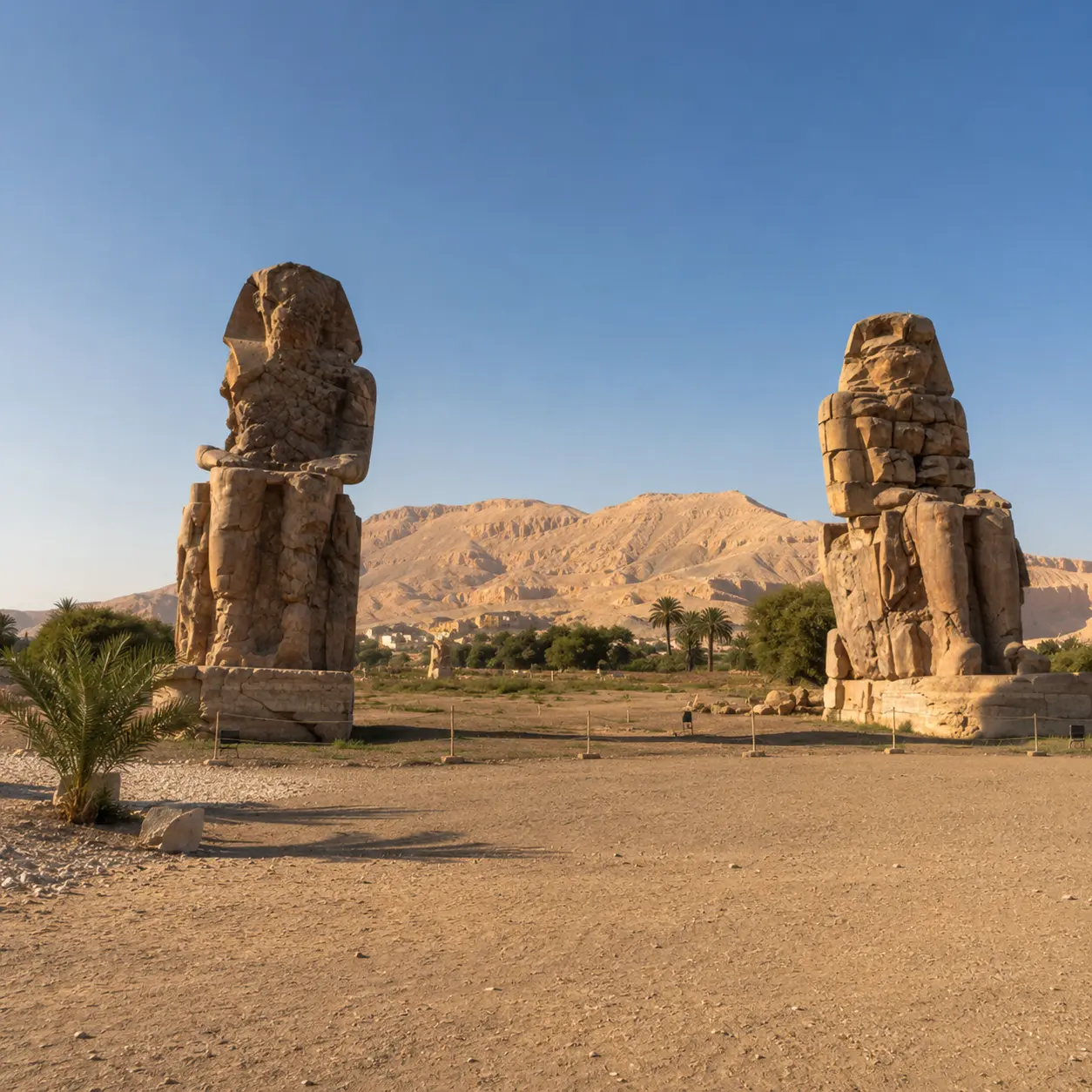
Habu Temple is near several major West Bank attractions, including the Valley of the Kings, the Temple of Hatshepsut, and the Colossi of Memnon. It fits well into a half-day or full-day West Bank itinerary.
Visitor info
- Opening hours
- Habu Temple is generally open daily during daytime sightseeing hours, with last entry before closing. Exact times can vary by season, local regulations, and ticketing arrangements, so confirm the current schedule with your guide, hotel, or the official ticket office before travelling to the West Bank.
- Recommended visit
- Plan around 60 to 90 minutes for Habu Temple. A quick look can be shorter, but the site deserves time for the pylons, courtyards, reliefs, and color details. With a guide or serious photography, two hours is reasonable.
- Best time to visit
- The best time to visit Habu Temple is early morning or late afternoon, when the light is softer and the stone reliefs are easier to read. Midday can be harsh on the open West Bank, especially in warmer months. If you are combining several Luxor sites, visit tombs first for cooler conditions, then allow unrushed time at Habu before returning to the East Bank.
- Category
- History & Ancient Wonders
How to get there
Open in Google Maps
Reviews

Find guided Egypt tours that include this attraction.