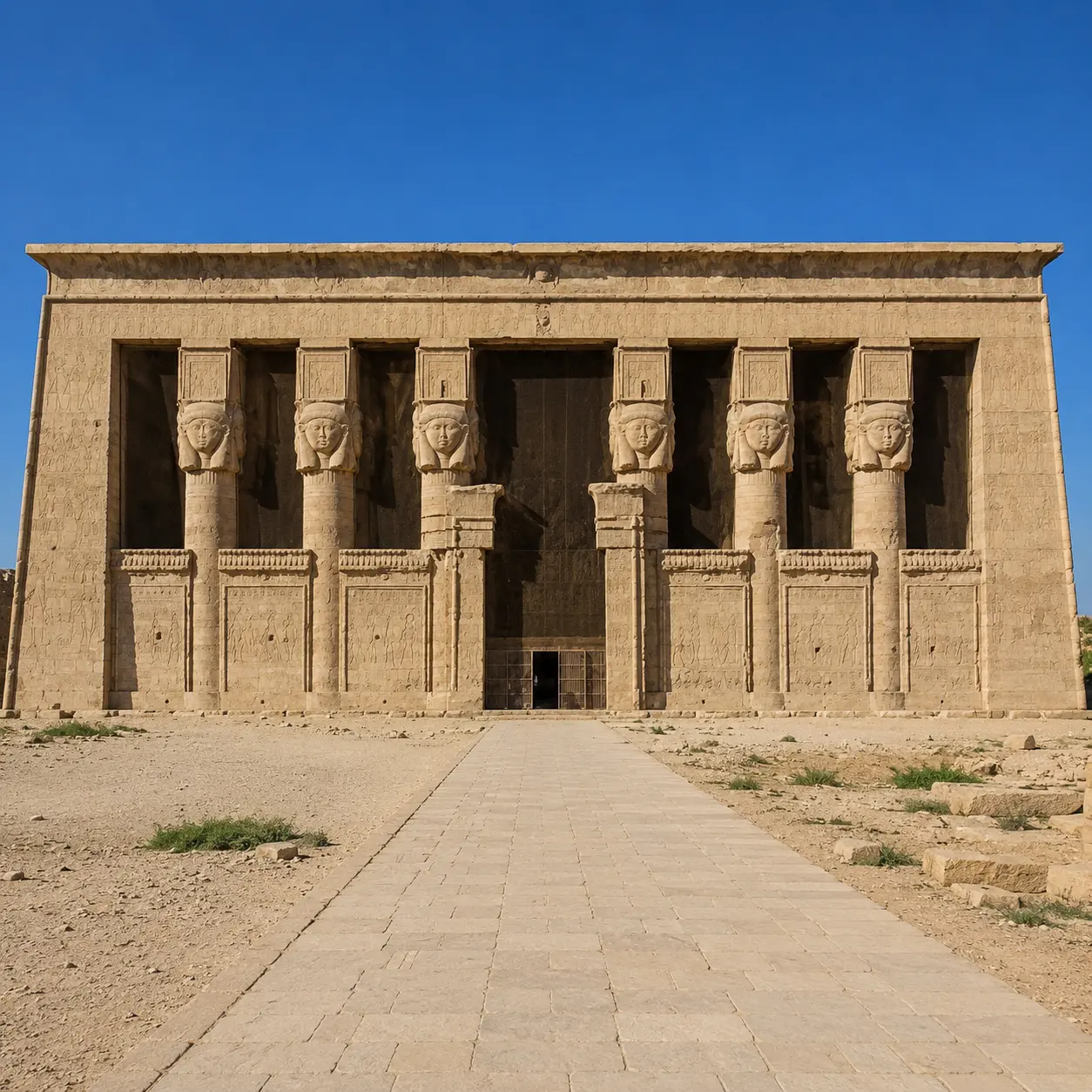
Dendera Temple Complex: Temple of Hathor in Egypt
Dendera Temple Complex near Luxor is famed for the Temple of Hathor, painted astronomical ceilings, rooftop chapels, crypts and beautifully preserved reliefs from Egypt’s later ancient periods.


Plan your visit
- Opening hours
- Dendera Temple Complex generally opens daily during daytime visitor hours, but exact opening times can change by season, holiday or local regulation. Check current hours before setting out from Luxor, especially if you plan to arrive very early or late in the day.
- Best time
- The best time to visit Dendera Temple Complex is early in the day or later in the afternoon, when the light is softer and the heat is easier to manage. Cooler months are generally more comfortable for exploring temple interiors and exterior reliefs. If visiting from Luxor, leave enough time for the road journey and avoid planning a tight connection immediately afterward.
- Visit duration
- Plan about one to two hours on site for a meaningful visit, plus travel time from Luxor. Add extra time if you are combining Dendera with Abydos or want a slower guided explanation of the ceilings, crypts and roof chapels.
- Category
- History & Ancient Wonders
- Location
About
What is the Dendera Temple Complex?
The Dendera Temple Complex is one of Egypt’s best-preserved ancient sanctuary sites, best known for the Temple of Hathor, goddess of music, joy, beauty, motherhood and the sky. It sits near the modern city of Qena, north of Luxor, so most travelers visit it as a half-day or full-day trip from Luxor rather than as a quick stop between major sights.
What makes Dendera special is not sheer size, but condition and atmosphere. The stone walls still carry sharp carvings. Painted ceilings show blues, golds and reds that survived for centuries under soot and sand. Inside the temple, the light drops quickly; columns rise overhead with Hathor’s face carved into their capitals, and the air feels cooler than the open desert outside.
Why the Temple of Hathor is worth the drive
Dendera is a strong choice if you have already seen the headline Luxor monuments and want a site that feels detailed rather than crowded. The temple’s reliefs reward slow looking: processions of priests, ceremonial offerings, astronomical scenes, Roman emperors shown in pharaonic style, and the famous exterior relief often associated with Cleopatra VII and Caesarion.
The ceiling of the main hypostyle hall is one of the highlights. Look up for winged sky figures, zodiac-like imagery and astronomical scenes connected with time, ritual and the heavens. The original circular Dendera Zodiac was removed in the 19th century and is now in Paris; the version seen on site is a replacement, but the surrounding temple decoration remains powerful and highly photogenic.
What to see inside the complex
Start with the monumental gateway and open court before entering the Temple of Hathor. Inside, move slowly through the columned hall and side chambers. Some areas are dim, so a small phone light can help you notice carvings without touching the walls. The crypts, where access is sometimes managed on site, are known for narrow passages and unusual reliefs; ask your guide or the local staff what is open during your visit.
If rooftop access is available, take it. The stairs lead past worn ritual scenes to roof chapels connected with the myth of Osiris and temple ceremonies. From the top, you get a clear sense of the temple layout and the flat agricultural land beyond the enclosure walls.
The wider complex may include remains such as the mammisi, or birth house, and other sacred structures. Even if you are not reading every inscription, the mix of Egyptian, Greek and Roman-era layers is easy to feel here. Dendera is especially useful for travellers comparing temple design with Edfu’s well-preserved sanctuary, Kom Ombo’s riverside temple or the great ritual spaces of Karnak’s vast temple precinct.
How to visit from Luxor
Dendera is commonly visited by road from Luxor. The drive can feel longer than the map suggests because of traffic, checkpoints and local road conditions, so plan with a little slack rather than squeezing it between tight bookings. Many travellers combine Dendera with Abydos on a longer day, while others keep Dendera as a focused half-day trip to avoid temple fatigue.
A guide adds real value here. Dendera’s best details are above head height, tucked into side rooms or explained through temple ritual rather than obvious captions. If you prefer independent travel, read a little before you go and walk the temple in layers: exterior reliefs first, then the main hall, then side rooms, crypts or roof access if open.
For a Luxor-based itinerary, Dendera pairs well with a slower day after the west bank. If you have spent a morning in the royal tombs of Luxor or at Hatshepsut’s terraced temple, Dendera gives a different kind of ancient Egyptian experience: later in date, more enclosed, and rich in colour and symbolic detail. Travellers building a wider plan can also browse Luxor trip ideas to place Dendera sensibly among the city’s major sites.
Practical tips before you go
Bring water, sun protection and comfortable shoes. Much of the visit is on stone and compact ground, with bright sun outside and dim interiors inside. Photography rules can change, especially around flash, tripods or restricted areas, so check the current policy at the gate and follow staff instructions.
Avoid rushing the ceiling. Many visitors photograph the main hall and move on too fast. Stand still for a minute, let your eyes adjust, and scan the ceiling panel by panel. Dendera is at its best when treated less like a checklist stop and more like a carved ancient textbook.
Dendera Temple Complex: Temple of Hathor in Egypt is one of Luxor's most-visited history & ancient wonders spots. Plan around The best time to visit Dendera Temple Complex is early in the day or later in the afternoon, when the light is softer and the heat is easier to manage. Cooler months are generally more comfortable for exploring temple interiors and exterior reliefs. If visiting from Luxor, leave enough time for the road journey and avoid planning a tight connection immediately afterward. for the best conditions, and budget roughly Plan about one to two hours on site for a meaningful visit, plus travel time from Luxor. Add extra time if you are combining Dendera with Abydos or want a slower guided explanation of the ceilings, crypts and roof chapels. on-site. Visit early to avoid crowds and heat.

Why travelers visit
Visit Dendera Temple Complex for one of the clearest looks at a preserved ancient Egyptian temple interior: vivid ceilings, Hathor imagery, ritual chambers and later pharaonic-style reliefs in a site that is usually calmer than Luxor’s most famous monuments.
Highlights
 Temple of Hathor, one of Egypt’s best-preserved ancient temple interiors
- Painted astronomical ceiling scenes in the main hypostyle hall
- Hathor-headed column capitals with strong visual detail
- Rooftop chapels linked with temple ritual and Osiris traditions
- Exterior reliefs including the well-known Cleopatra VII and Caesarion scene
- Crypts and side chambers with intricate carvings, when access is available
Photos
1 photos
Know before you go
Practical tips to make the most of your visit.

What to wear
Wear light, breathable clothing, comfortable walking shoes and a hat for the outdoor sections. Modest clothing is sensible for cultural comfort, and sunglasses are useful outside. A light layer can help if you are sensitive to the cooler feel of shaded temple interiors.

Is a guide recommended?
Ask your guide to point out the ceiling scenes before you start photographing. Once you understand the sky goddess imagery, ritual processions and astronomical panels, the whole temple becomes easier to read. Also check on arrival whether rooftop access and crypt access are available that day.

Common mistakes to avoid
- Treating Dendera as a quick photo stop instead of allowing time to study the ceilings, side chambers and exterior reliefs.
- Forgetting that the site is north of Luxor, so the drive can take longer than expected with traffic and checkpoints.
- Skipping a guide or basic preparation; many of Dendera’s best scenes are symbolic and easy to miss without context.
- Arriving without water, sun protection or comfortable footwear, especially in warmer months.
- Assuming every crypt, stairway or rooftop area will be open; access can vary, so check locally on arrival.
Frequently asked questions
Where is Dendera Temple Complex located?
Dendera Temple Complex is north of Luxor near Qena, and most visitors reach it by private car, guided transfer or organized day trip. It is not usually treated as a walk-up Luxor attraction because the road journey needs planning.
Is Dendera Temple Complex worth visiting from Luxor?
Yes, Dendera Temple Complex is worth visiting if you enjoy detailed carvings, preserved color and quieter temple spaces. The Temple of Hathor offers a different experience from Luxor’s larger and busier monuments.
How long do you need at the Temple of Hathor?
Most travellers spend around one to two hours at the site, not including the drive from Luxor. Allow more time if you are visiting with a guide, accessing the roof or combining Dendera with Abydos.
What is the Temple of Hathor at Dendera famous for?
The Temple of Hathor is famous for its decorated ceilings, Hathor-headed columns, astronomical scenes, crypts, rooftop chapels and detailed reliefs from the Ptolemaic and Roman periods. It is one of the best-preserved temple interiors in Egypt.
Do I need a guide for Dendera Temple Complex?
Dendera can be visited independently, but a guide makes the experience much better. Many important details are symbolic, high on the walls or located in less obvious parts of the temple.
Can I visit Dendera Temple Complex without a tour?
Dendera is generally easier to manage with a private vehicle or guided transfer from Luxor. Public transport may involve extra changes, local knowledge and more time than many travellers want to spend.
Visitor info
- Opening hours
- Dendera Temple Complex generally opens daily during daytime visitor hours, but exact opening times can change by season, holiday or local regulation. Check current hours before setting out from Luxor, especially if you plan to arrive very early or late in the day.
- Recommended visit
- Plan about one to two hours on site for a meaningful visit, plus travel time from Luxor. Add extra time if you are combining Dendera with Abydos or want a slower guided explanation of the ceilings, crypts and roof chapels.
- Best time to visit
- The best time to visit Dendera Temple Complex is early in the day or later in the afternoon, when the light is softer and the heat is easier to manage. Cooler months are generally more comfortable for exploring temple interiors and exterior reliefs. If visiting from Luxor, leave enough time for the road journey and avoid planning a tight connection immediately afterward.
- Category
- History & Ancient Wonders
How to get there
Open in Google Maps
Reviews

Find guided Egypt tours that include this attraction.