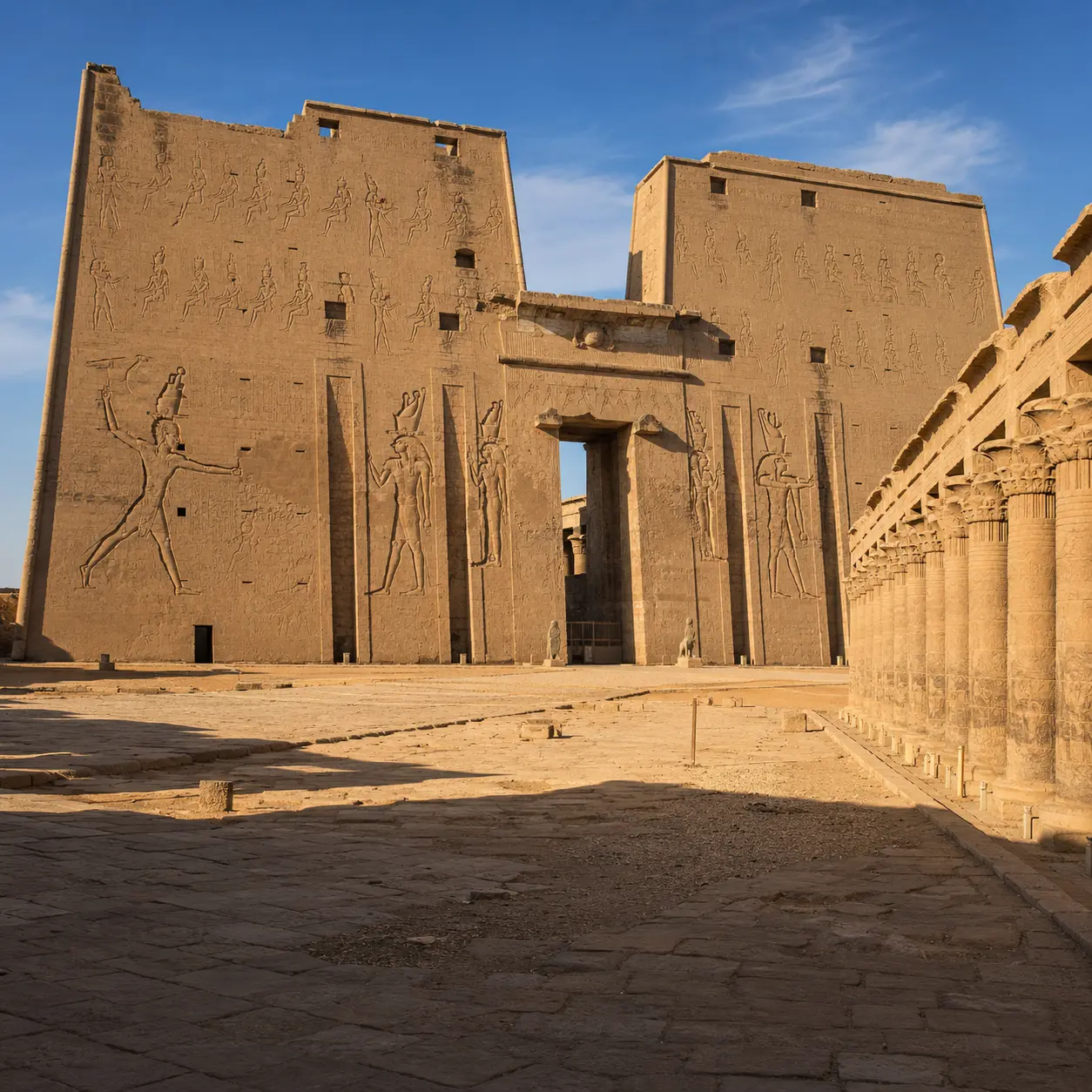
Edfu Temple
Edfu Temple is a beautifully preserved ancient Egyptian temple dedicated to Horus, located between Luxor and Aswan. Its towering pylon, carved halls, and atmospheric sanctuary make it one of the clearest places to understand how Egyptian temple spaces were designed and used.

Plan your visit
- Opening hours
- Edfu Temple is generally open daily, with visiting hours that can vary by season, local conditions, and official guidance. Check the latest schedule with your guide, cruise manager, hotel, or the local ticket office before setting out, particularly if you plan to arrive very early or late in the day.
- Best time
- The best time to visit Edfu Temple is early in the day or later in the afternoon when temperatures are gentler and the stone reliefs photograph well. Winter and shoulder-season months are generally more comfortable for Upper Egypt sightseeing, while summer visits require extra water, sun protection, and a realistic pace. Cruise schedules can affect crowd levels, so flexible travellers should ask their guide to avoid peak group arrival times when possible.
- Visit duration
- Plan around 60 to 90 minutes for Edfu Temple. This gives enough time to enter through the pylon, explore the courtyard and halls, pause in the sanctuary area, and study key reliefs without rushing. Travellers with a specialist guide or strong interest in ancient religion may want longer.
- Category
- History & Ancient Wonders
- Location
About
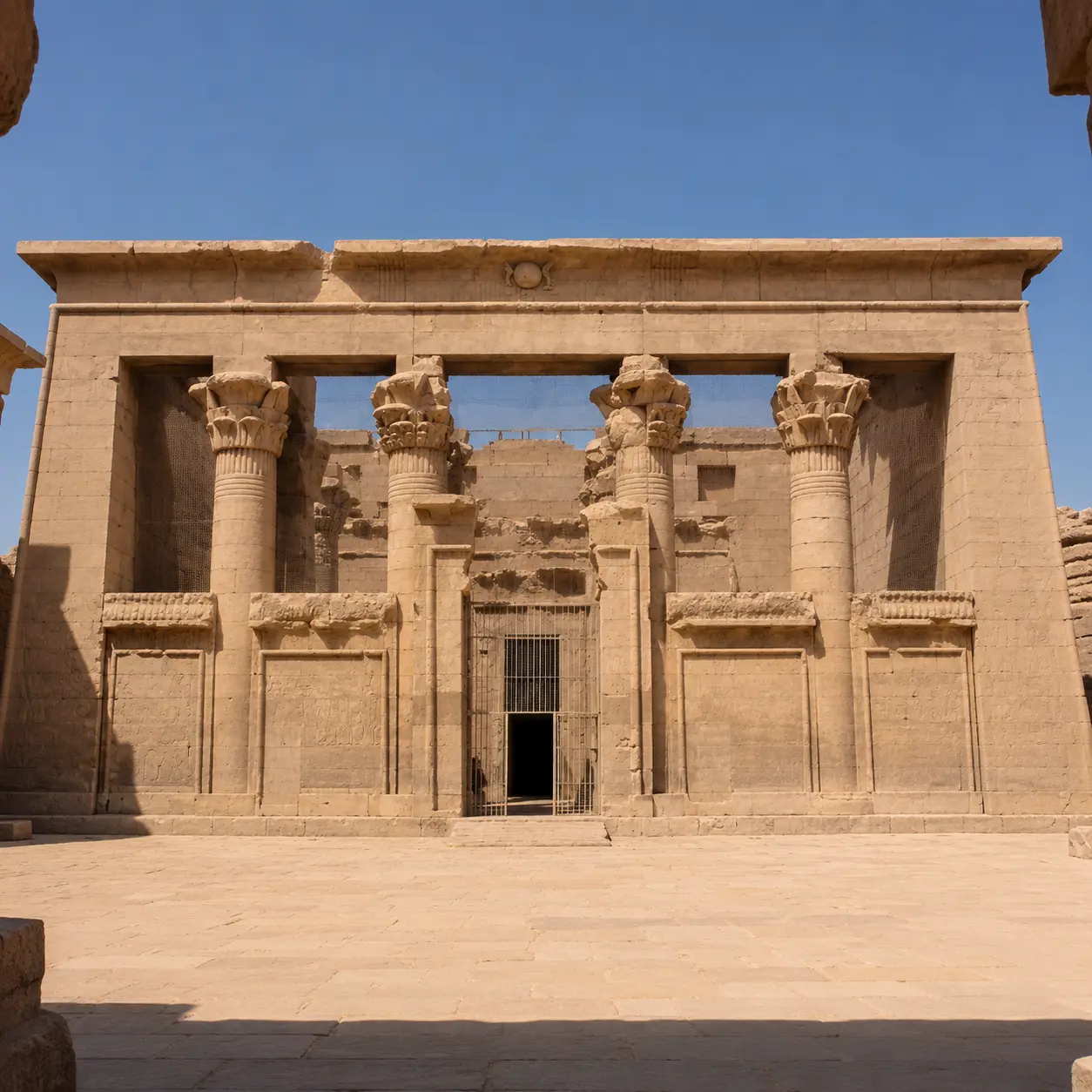
Edfu Temple is one of the most complete ancient temples you can visit in Egypt. Dedicated to Horus, the falcon-headed god, it gives travellers a rare feeling of walking through an ancient sacred building that still has its roofed halls, towering gateways, side chambers, and carved walls in place. The scale is impressive, but the real pleasure is in the details: deep-cut reliefs, dark stone corridors, polished floors worn by centuries of footsteps, and shafts of light falling through high openings onto sandstone walls.
The temple sits in Edfu, a Nile-side city between Luxor and Aswan. Many travellers visit it as part of the classic river route, often between Luxor’s west-bank sites and the temples of southern Egypt. If you are planning a slower journey through Upper Egypt, Edfu pairs naturally with the Nile cruise route, the crocodile-god sanctuary at Kom Ombo, and Aswan’s island temples and Nubian culture.
What makes Edfu different from many open-air ruins is how enclosed it feels. You enter through a massive pylon decorated with scenes of kingship and divine protection, then move into a broad courtyard framed by columns. Beyond that, the temple becomes progressively darker and more intimate. The hypostyle halls lead toward the sanctuary, where the sacred barque shrine once formed the ritual centre of the building. Even without knowing every symbol, you can sense the journey from public space to holy interior.
Edfu is especially valuable for visitors who want to understand how an Egyptian temple functioned. The walls do not only show gods and pharaohs; they also record ritual sequences, processions, offerings, and mythological stories connected to Horus. Look for the falcon figures, the ceremonial boats, and repeated offering scenes where the king presents food, flowers, incense, or small statues to the gods. A guide can make this site far richer because many carvings are layered with religious meaning that is easy to miss at first glance.
The temple was built during the Ptolemaic period, when Egypt was ruled by a Greek-speaking dynasty that adopted traditional Egyptian religious forms. That blend is part of the fascination: the monument feels deeply Egyptian in its design and decoration, while belonging to a later chapter of ancient history. For travellers who have already seen Luxor’s riverside temple or the vast sacred precincts near Luxor, Edfu offers a more contained, readable plan.
Arrive with time to pause rather than simply photograph the main gate and move on. The courtyard columns are worth studying from different angles, especially where the light sharpens the carving. Inside, give your eyes a moment to adjust. The darker chambers reveal carved ceilings, side rooms, and small architectural details that are easy to pass by in a group. The sanctuary area is often the emotional high point: quieter, cooler, and more solemn than the sunlit forecourt.
Because Edfu is a popular Nile itinerary stop, the busiest periods tend to follow cruise schedules. If your plan is flexible, ask your guide or operator to time the visit away from the largest arrivals. Early or later in the day usually feels more comfortable for walking, photography, and listening without being swept along by a crowd.
Edfu also works well as part of a wider Aswan-area itinerary. After its enclosed grandeur, the water approach and open island atmosphere of Philae’s temple complex feel completely different. Travellers with more time in the south often continue toward Aswan-based exploring or the great rock-cut temples at Abu Simbel. Together, these sites show how varied temple experiences can be across Upper Egypt: river sanctuaries, desert-fronted monuments, island shrines, and urban temples shaped by centuries of devotion.
Edfu Temple is one of Aswan's most-visited history & ancient wonders spots. Plan around The best time to visit Edfu Temple is early in the day or later in the afternoon when temperatures are gentler and the stone reliefs photograph well. Winter and shoulder-season months are generally more comfortable for Upper Egypt sightseeing, while summer visits require extra water, sun protection, and a realistic pace. Cruise schedules can affect crowd levels, so flexible travellers should ask their guide to avoid peak group arrival times when possible. for the best conditions, and budget roughly Plan around 60 to 90 minutes for Edfu Temple. This gives enough time to enter through the pylon, explore the courtyard and halls, pause in the sanctuary area, and study key reliefs without rushing. Travellers with a specialist guide or strong interest in ancient religion may want longer. on-site. Visit early to avoid crowds and heat.

Why travelers visit
Visit Edfu Temple to experience one of Egypt’s most complete ancient temple layouts. Unlike fragmentary ruins, Edfu still lets you follow the intended progression from monumental gate to courtyard, halls, and sanctuary. It is atmospheric, highly photogenic, and especially useful for understanding Egyptian religious architecture.
Highlights
 Massive entrance pylon with deeply carved royal and divine scenes
- Open courtyard framed by columns and strong Upper Egypt sunlight
- Roofed hypostyle halls that create a dramatic shift from brightness to shadow
- Sanctuary area that shows the temple’s ritual focus
- Extensive reliefs connected to Horus, offerings, processions, and temple ceremonies
- A practical stop between Luxor and Aswan, especially on Nile itineraries
Photos
1 photos
Know before you go
Practical tips to make the most of your visit.

What to wear
Wear breathable clothing, a hat, sunglasses, and comfortable closed or secure shoes. The courtyard can be sunny and reflective, while the inner rooms are dim and uneven underfoot. Modest clothing is practical for general travel in Upper Egypt, and a light scarf can help with sun or dust.

Is a guide recommended?
At Edfu, do not spend all your attention on the giant entrance pylon. The story becomes more interesting as you move inward. Ask your guide to explain how the temple changes from open courtyard to sacred sanctuary, and look for repeated Horus symbols, ceremonial barques, and offering scenes along the way.

Common mistakes to avoid
- Rushing straight to the sanctuary without studying the courtyard reliefs and column details.
- Visiting without a guide or guidebook and missing the meaning behind the Horus imagery, ritual scenes, and temple layout.
- Underestimating the heat and glare around the exterior courtyard, especially outside the cooler months.
- Wearing smooth-soled shoes on old stone surfaces that can feel uneven or dusty.
- Assuming the temple is a quick photo stop; Edfu rewards slow looking, especially inside the darker halls.
Frequently asked questions
What is Edfu Temple famous for?
Edfu Temple is best known for its exceptional preservation and its dedication to Horus, the falcon-headed god. Visitors can still see the pylon, courtyard, roofed halls, sanctuary, and extensive wall carvings in a clear temple sequence.
Is Edfu Temple worth visiting?
Yes, Edfu Temple is worth visiting because it is one of Egypt’s easiest temples to understand in terms of layout, ritual movement, and ancient decoration. It is especially rewarding for travellers moving between Luxor and Aswan.
How long do you need at Edfu Temple?
Most visitors spend about 60 to 90 minutes at Edfu Temple. Allow more time if you enjoy photography, detailed reliefs, or a guided explanation of the mythology and rituals shown on the walls.
Where is Edfu Temple located?
Edfu Temple is located in Edfu, on the Nile route between Luxor and Aswan in Upper Egypt. Many travellers visit it as a stop during a Nile cruise or a road transfer through the region.
Do I need a guide for Edfu Temple?
A guide is strongly recommended at Edfu Temple because the wall scenes, ritual spaces, and Horus mythology are not always obvious without explanation. You can visit independently, but a good guide helps the site feel much more alive.
What should I wear to Edfu Temple?
You should wear light, breathable clothing, comfortable walking shoes, sunglasses, and a hat for Edfu Temple. The exterior areas can be bright and hot, while the inner halls are cooler and dimmer.
Visitor info
- Opening hours
- Edfu Temple is generally open daily, with visiting hours that can vary by season, local conditions, and official guidance. Check the latest schedule with your guide, cruise manager, hotel, or the local ticket office before setting out, particularly if you plan to arrive very early or late in the day.
- Recommended visit
- Plan around 60 to 90 minutes for Edfu Temple. This gives enough time to enter through the pylon, explore the courtyard and halls, pause in the sanctuary area, and study key reliefs without rushing. Travellers with a specialist guide or strong interest in ancient religion may want longer.
- Best time to visit
- The best time to visit Edfu Temple is early in the day or later in the afternoon when temperatures are gentler and the stone reliefs photograph well. Winter and shoulder-season months are generally more comfortable for Upper Egypt sightseeing, while summer visits require extra water, sun protection, and a realistic pace. Cruise schedules can affect crowd levels, so flexible travellers should ask their guide to avoid peak group arrival times when possible.
- Category
- History & Ancient Wonders
How to get there
Open in Google Maps
Reviews

Find guided Egypt tours that include this attraction.