Colossi of Memnon
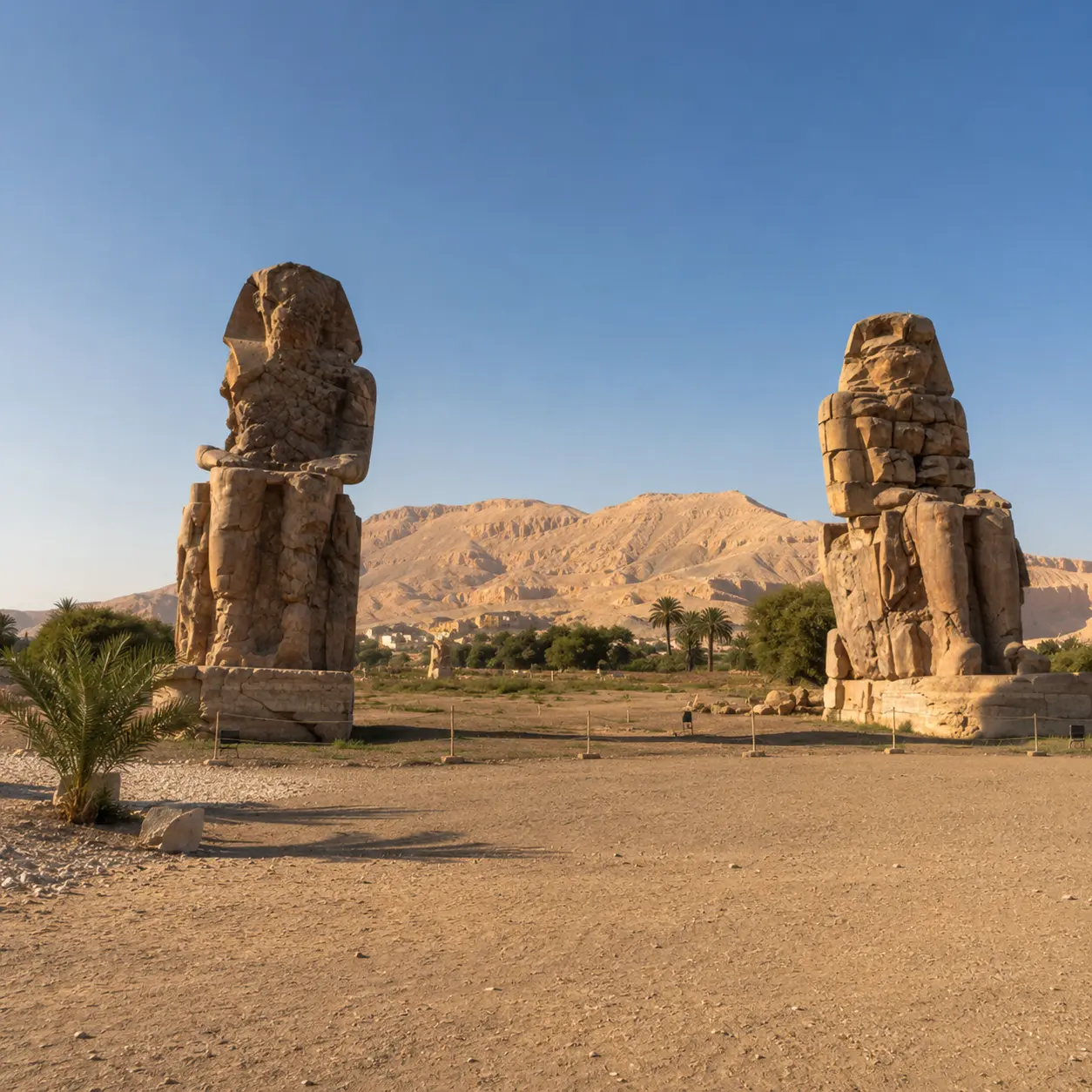
The Colossi of Memnon are two monumental seated statues of Amenhotep III on Luxor’s West Bank. Once guarding a vast mortuary temple, they are now one of the area’s easiest and most atmospheric ancient stops.


Plan your visit
- Opening hours
- The Colossi are an outdoor West Bank sight and are generally visited during daylight as part of Luxor sightseeing. Access arrangements and local controls can vary, so check current conditions before setting out, especially during holidays, security changes, or restoration work.
- Best time
- The best time to visit the Colossi of Memnon is early morning or late afternoon, when the light is softer and the open West Bank feels cooler. Morning also works well if you are combining the stop with the Valley of the Kings or a sunrise activity such as a [balloon ride over Luxor](/attractions/egypt/luxor-hot-air-balloon).
- Visit duration
- Plan around 10 to 20 minutes for a simple visit, or 30 minutes if you want guided context and time for photography. The stop is usually combined with other Luxor West Bank sites rather than visited as a standalone half-day attraction.
- Category
- History & Ancient Wonders
- Location
About
The Colossi of Memnon are two enormous seated statues on Luxor’s West Bank, facing the Nile plain with the Theban mountains behind them. They once guarded the entrance to the mortuary temple of Pharaoh Amenhotep III, one of the most ambitious building projects of ancient Egypt. The temple has largely disappeared, but the statues remain: weathered, fractured, and still commanding from the edge of the fields.
Most travellers see the Colossi as a short stop between major West Bank sights, but they deserve a few quiet minutes. Stand back first. From a distance, the figures read as a pair: broad shoulders, hands resting on knees, legs planted with ceremonial calm. Move closer and the surface tells a different story — ancient repair lines, damaged faces, carved throne panels, and smaller figures beside the royal legs.
The site is also famous for an ancient sound. After an earthquake damaged one of the statues in antiquity, visitors reported hearing a strange tone at sunrise, likely caused by temperature changes moving through cracked stone. Greek and Roman travellers associated the sound with Memnon, a hero from mythology, which is why the statues carry the name Colossi of Memnon today. The sound stopped after later restoration, but the story still adds a human layer: these statues were already tourist curiosities nearly two thousand years ago.
The Colossi fit naturally into a Luxor West Bank route. Many visitors stop here before continuing to the royal tombs in the western necropolis, the terraced temple of Hatshepsut at Deir el-Bahari, or the quieter queens’ burial valley. If you are planning a broader stay, Ozes can help shape the day around a Luxor-focused itinerary rather than rushing from site to site.
Early morning gives the statues a softer presence, especially when the fields are still cool and the light catches the damaged stone from the side. Late afternoon can be just as atmospheric, with warm tones across the West Bank. Midday is less comfortable in the open sun, and the stop can feel brief if you arrive with several buses at once.
A guide is useful here because the current site is only a fragment of what once stood behind it. Without context, the Colossi may look like two isolated statues by the road. With the story of Amenhotep III’s vanished temple, the ancient acoustic legend, and the later inscriptions left by travellers, the stop becomes a compact lesson in how Egyptian monuments lived many lives after their original purpose faded.
Colossi of Memnon is one of Luxor's most-visited history & ancient wonders spots. Plan around The best time to visit the Colossi of Memnon is early morning or late afternoon, when the light is softer and the open West Bank feels cooler. Morning also works well if you are combining the stop with the Valley of the Kings or a sunrise activity such as a [balloon ride over Luxor](/attractions/egypt/luxor-hot-air-balloon). for the best conditions, and budget roughly Plan around 10 to 20 minutes for a simple visit, or 30 minutes if you want guided context and time for photography. The stop is usually combined with other Luxor West Bank sites rather than visited as a standalone half-day attraction. on-site. Visit early to avoid crowds and heat.

Why travelers visit
Visit the Colossi of Memnon to see one of Luxor’s most recognisable ancient silhouettes and to understand the scale of Amenhotep III’s lost mortuary temple. It is a brief stop, but the combination of monumental stone, West Bank landscape, and long traveller history gives it real weight.
Highlights
 Two colossal seated statues of Amenhotep III facing the Nile plain
- A quick, accessible West Bank stop with strong photo angles
- Connection to one of ancient Egypt’s largest mortuary temples
- The famous ancient ‘singing statue’ story recorded by Greek and Roman travellers
- Useful pairing with the Valley of the Kings, Temple of Hatshepsut, and Valley of the Queens
Photos
1 photos
Know before you go
Practical tips to make the most of your visit.

What to wear
Wear light, breathable clothing, comfortable walking shoes, sunglasses, and a hat. The site is exposed, with little shade, so bring water and sun protection even if you only plan a short stop. Modest clothing is practical for a full day of temple and tomb visits around Luxor.

Is a guide recommended?
Ask your guide to point out the smaller royal family figures beside the legs, the throne carvings, and the ancient repair history. The Colossi make far more sense when you imagine the missing temple stretching behind them across what is now a mix of fields, archaeological zones, and modern roads.

Common mistakes to avoid
- Treating the Colossi as a drive-by photo stop only; spend a few minutes looking at the carved throne details and smaller figures at the legs.
- Visiting at the hottest part of the day without water, a hat, or sun protection.
- Expecting a large standing temple complex; the surviving highlight is the pair of statues, while much of Amenhotep III’s temple is gone or archaeological in character.
- Standing too close for every photo; the statues are easier to appreciate when framed from farther back.
- Skipping historical context; the Memnon legend, earthquake damage, and ancient visitor inscriptions make the site more interesting.
Frequently asked questions
What are the Colossi of Memnon?
The Colossi of Memnon are two giant seated statues of Pharaoh Amenhotep III on Luxor’s West Bank. They once stood at the entrance to his mortuary temple, much of which has not survived in visible form.
Are the Colossi of Memnon worth visiting?
Yes, the Colossi of Memnon are worth visiting as a short, easy stop on a Luxor West Bank itinerary. They are especially rewarding with a guide who can explain the vanished temple and the ancient sound legend.
How long do you need at the Colossi of Memnon?
Most visitors spend about 10 to 20 minutes at the Colossi of Memnon. Allow longer if you enjoy photography, inscriptions, or guided historical explanation.
Where are the Colossi of Memnon located?
The statues are on Luxor’s West Bank, near the route to the Valley of the Kings and other Theban necropolis sites. They are usually reached by private car, guided tour vehicle, taxi, or as part of a West Bank day route.
Why are they called the Colossi of Memnon?
The name comes from Greek and Roman tradition, which linked one of the statues to Memnon, a mythological hero. The statues actually depict Amenhotep III, not Memnon.
Do the Colossi of Memnon still make a sound?
The famous ‘singing’ sound is no longer heard. Ancient visitors reported a tone at sunrise after earthquake damage, but later repairs changed the statue and the sound stopped.
What can I visit near the Colossi of Memnon?
The best nearby sites are the Valley of the Kings, Temple of Hatshepsut, Valley of the Queens, and other West Bank tombs and temples. Many travellers later cross back to the East Bank for [Luxor’s riverside temple](/attractions/egypt/luxor-temple) or the vast [Karnak sanctuary](/attractions/egypt/karnak-temple-complex).
Visitor info
- Opening hours
- The Colossi are an outdoor West Bank sight and are generally visited during daylight as part of Luxor sightseeing. Access arrangements and local controls can vary, so check current conditions before setting out, especially during holidays, security changes, or restoration work.
- Recommended visit
- Plan around 10 to 20 minutes for a simple visit, or 30 minutes if you want guided context and time for photography. The stop is usually combined with other Luxor West Bank sites rather than visited as a standalone half-day attraction.
- Best time to visit
- The best time to visit the Colossi of Memnon is early morning or late afternoon, when the light is softer and the open West Bank feels cooler. Morning also works well if you are combining the stop with the Valley of the Kings or a sunrise activity such as a [balloon ride over Luxor](/attractions/egypt/luxor-hot-air-balloon).
- Category
- History & Ancient Wonders
How to get there
Open in Google Maps
Reviews

Find guided Egypt tours that include this attraction.