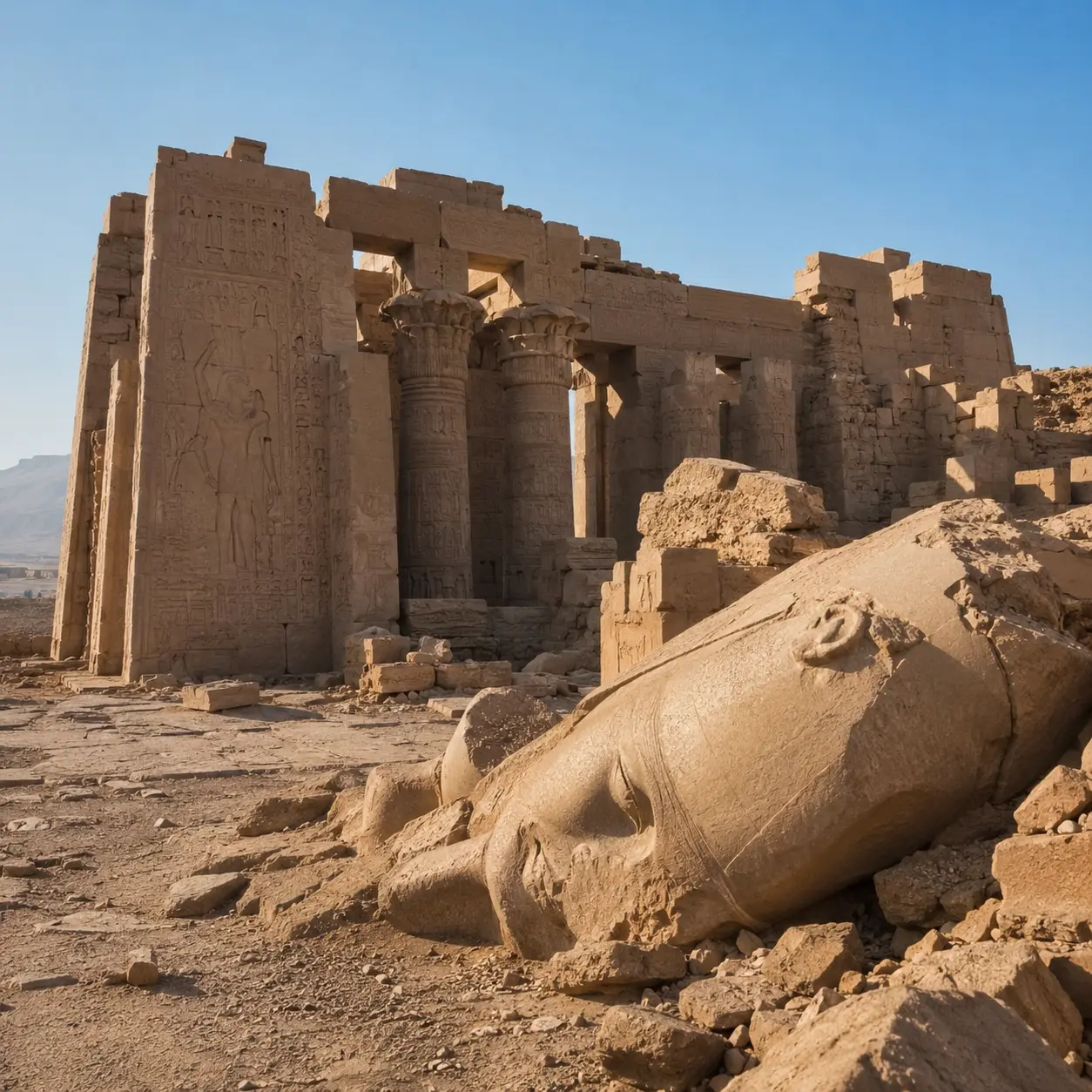
The Ramesseum Temple
Ramesseum Temple in Luxor is the mortuary temple of Ramesses II, known for its vast courts, carved battle scenes, fallen royal colossus, and quiet West Bank setting.


Plan your visit
- Opening hours
- Ramesseum Temple generally operates during standard daytime archaeological-site hours in Luxor. Hours can vary by season, security arrangements, and local ticketing rules, so confirm the current schedule with your hotel, guide, or the official ticket office before travelling across the West Bank.
- Best time
- The most comfortable times to visit are early morning or late afternoon, when the West Bank is cooler and the reliefs show better in angled light. Winter and shoulder-season months are easier for walking, while summer visits should be planned early with water, sun protection, and minimal standing in exposed areas.
- Visit duration
- Plan around 45 minutes to 1 hour for a focused visit. History lovers, photographers, and travellers with a guide may want 90 minutes to explore the reliefs, courts, and rear storage areas at a slower pace.
- Category
- History & Ancient Wonders
- Location
About
Ramesseum Temple is the mortuary temple of Ramesses II, the pharaoh whose building projects still shape the way travellers imagine ancient Egypt. It sits on Luxor’s West Bank, on the edge of cultivated fields and desert cliffs, with the Theban mountains rising behind it. Compared with the busier royal tomb sites nearby, the Ramesseum feels quieter and more open; you can hear birds in the fields, footsteps on sandstone, and the occasional call from a passing guide.
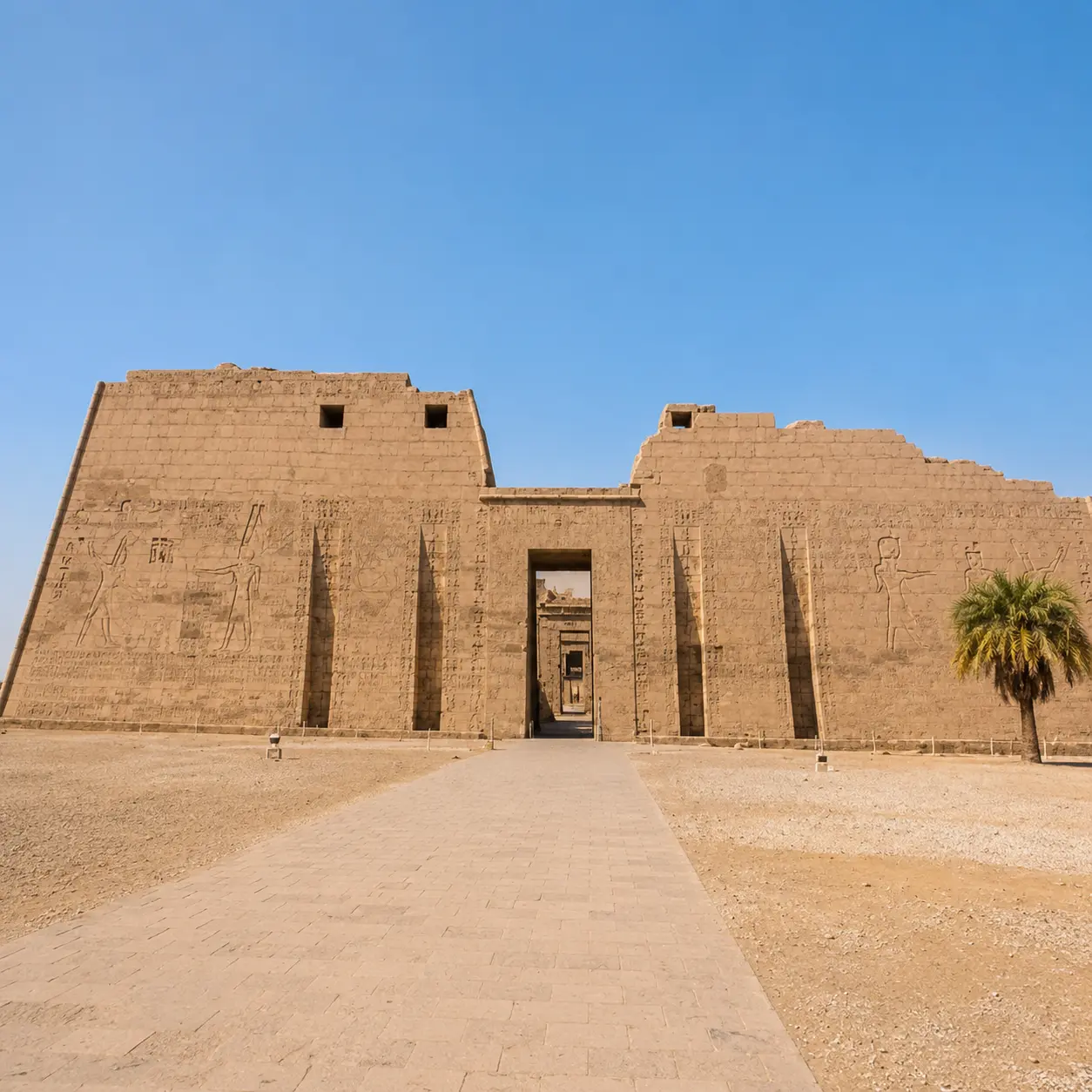
The ancient name of this temple was connected with the “House of Millions of Years,” a type of royal temple built to honour a pharaoh’s divine status and support his cult after death. Here, Ramesses II presented himself as warrior, builder, and eternal ruler. The walls still carry scenes of military triumph, ritual offerings, and royal power, with the Battle of Kadesh among the most discussed reliefs.
One of the most memorable sights is the fallen colossal statue of Ramesses II. Its broken granite pieces lie across the court with a scale that is hard to grasp until you stand beside them. This shattered colossus is often linked with the Ozymandias image in modern imagination: a reminder that even Egypt’s most ambitious rulers eventually met stone, sand, and time.
The temple rewards slow looking. Walk past the remains of the pylons and you start to notice details that are easy to miss from a distance: carved prisoners beneath the king’s feet, rows of offering bearers, traces of column capitals, and mudbrick storage rooms behind the stone ceremonial spaces. Those brick magazines are especially useful for understanding how a royal temple worked. It was not only a place of worship; it was also an economic institution with food stores, workshops, and staff.
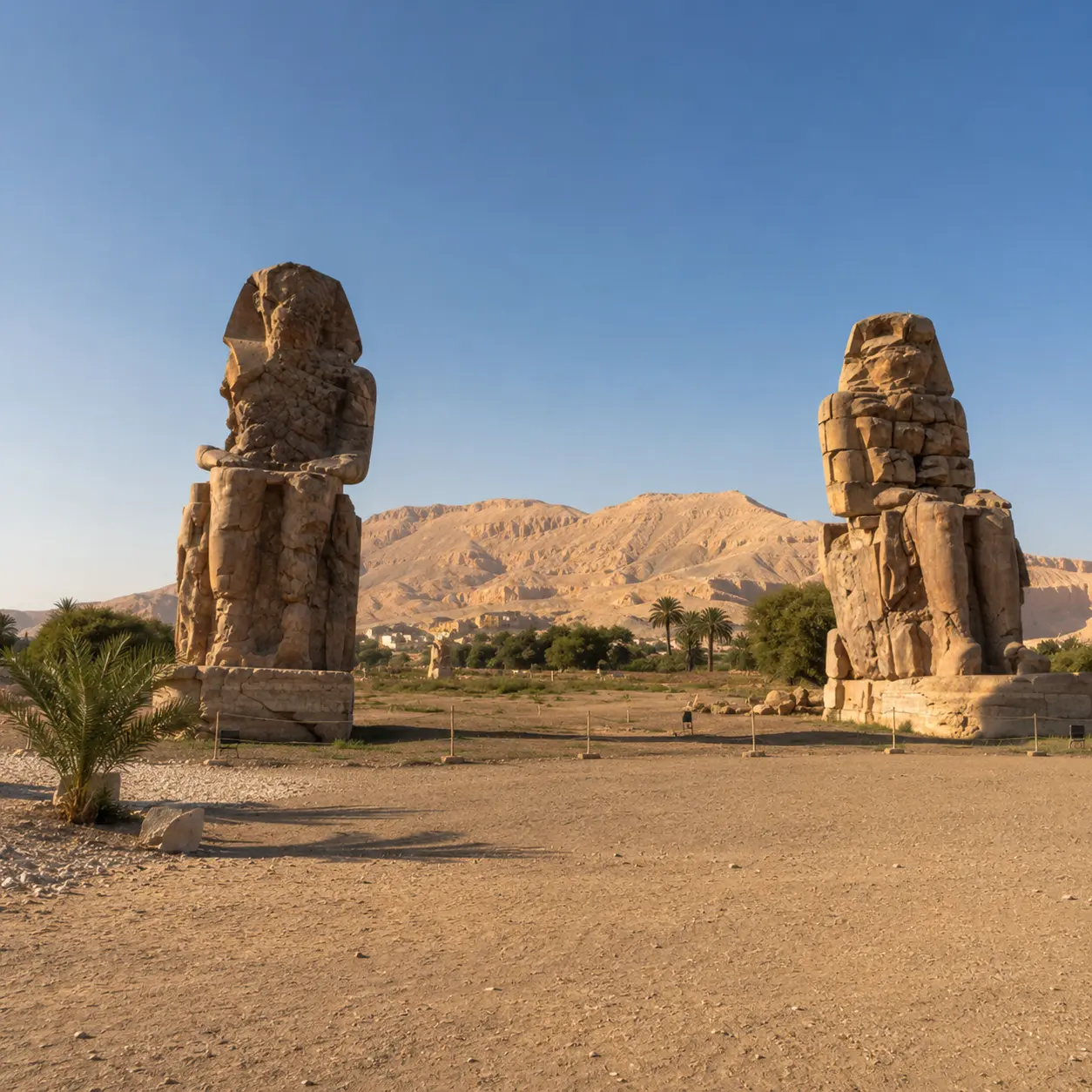
Ramesseum Temple fits naturally into a West Bank day. Many travellers pair it with the royal tombs in the Valley of the Kings, the terraces of the Temple of Hatshepsut, and a quick stop at the Colossi of Memnon. If you enjoy temple reliefs, compare the Ramesseum’s royal propaganda with nearby Habu Temple, which is often better preserved but has a different atmosphere.
For the best visit, do not rush it as “just another temple.” Give yourself time to stand in the first court, trace the line of the collapsed colossus, and then move into the columned areas where the carvings catch the light at an angle. A local guide can help decode the battle scenes and temple layout, but even independent travellers can appreciate the scale, silence, and fragmentary beauty of the site.
The Ramesseum Temple is one of Luxor's most-visited history & ancient wonders spots. Plan around The most comfortable times to visit are early morning or late afternoon, when the West Bank is cooler and the reliefs show better in angled light. Winter and shoulder-season months are easier for walking, while summer visits should be planned early with water, sun protection, and minimal standing in exposed areas. for the best conditions, and budget roughly Plan around 45 minutes to 1 hour for a focused visit. History lovers, photographers, and travellers with a guide may want 90 minutes to explore the reliefs, courts, and rear storage areas at a slower pace. on-site. Visit early to avoid crowds and heat.

Why travelers visit
Visit Ramesseum Temple for a quieter, more reflective encounter with the world of Ramesses II. The site combines grand royal propaganda, broken colossal sculpture, working-temple remains, and a powerful West Bank landscape without the constant pressure of the busiest Luxor stops.
Highlights
 The fallen colossal statue of Ramesses II, one of the site’s defining features
- Reliefs connected with royal warfare and the Battle of Kadesh tradition
- Columned halls with carved scenes of ritual and kingship
- Mudbrick magazines that show the temple’s practical and economic role
- A quieter West Bank atmosphere with wide views toward the Theban cliffs
Photos
1 photos
Know before you go
Practical tips to make the most of your visit.

What to wear
Wear breathable clothing, a hat, sunglasses, and comfortable closed or well-gripping shoes. The site is exposed and dusty, so bring water and sun protection. Modest, lightweight clothing works well for both comfort and local expectations.

Is a guide recommended?
Ask your guide to explain the difference between a mortuary temple and a tomb. Ramesses II was buried in the Valley of the Kings, while the Ramesseum functioned as a temple for ritual, memory, and the royal cult. That distinction helps the whole West Bank make more sense.

Common mistakes to avoid
- Treating the Ramesseum as a quick photo stop instead of allowing time to read the reliefs and explore the mudbrick magazines.
- Visiting at midday in hot months, when the open courts can feel harsh and shade is limited.
- Skipping a guide or guidebook if you are interested in the Battle of Kadesh scenes and royal symbolism.
- Wearing smooth sandals; the site has sand, loose grit, and uneven stone surfaces.
- Trying to combine too many West Bank monuments in one rushed morning, which makes the temples blur together.
Frequently asked questions
What is Ramesseum Temple famous for?
Ramesseum Temple is famous for being the mortuary temple of Ramesses II, with major reliefs, a fallen colossal statue, and remains of ancient storage magazines. It is one of the best places in Luxor to understand how a royal memorial temple worked beyond its ceremonial façade.
Where is Ramesseum Temple located?
Ramesseum Temple is on the West Bank of Luxor, near other Theban monuments and not far from the cultivated fields below the desert cliffs. It is commonly visited as part of a West Bank itinerary with nearby temples and tombs.
How long do you need at Ramesseum Temple?
Most travellers need about 45 minutes to 1 hour at Ramesseum Temple. Allow longer if you want to study the reliefs, photograph details, or visit with an Egyptologist guide.
Is Ramesseum Temple worth visiting?
Yes, Ramesseum Temple is worth visiting if you enjoy ancient history, quieter sites, and monumental ruins with atmosphere. It is less crowded than some Luxor highlights and gives a strong sense of Ramesses II’s ambition.
What can I visit near Ramesseum Temple?
Ramesseum Temple can be combined with the Valley of the Kings, Temple of Hatshepsut, Colossi of Memnon, Habu Temple, and Valley of the Queens. A private driver or guided West Bank route makes the day easier because the sites are spread out.
Do I need a guide for Ramesseum Temple?
A guide is not required, but a good guide makes Ramesseum Temple more meaningful. The battle scenes, royal imagery, and temple layout are much easier to understand with expert explanation.
Visitor info
- Opening hours
- Ramesseum Temple generally operates during standard daytime archaeological-site hours in Luxor. Hours can vary by season, security arrangements, and local ticketing rules, so confirm the current schedule with your hotel, guide, or the official ticket office before travelling across the West Bank.
- Recommended visit
- Plan around 45 minutes to 1 hour for a focused visit. History lovers, photographers, and travellers with a guide may want 90 minutes to explore the reliefs, courts, and rear storage areas at a slower pace.
- Best time to visit
- The most comfortable times to visit are early morning or late afternoon, when the West Bank is cooler and the reliefs show better in angled light. Winter and shoulder-season months are easier for walking, while summer visits should be planned early with water, sun protection, and minimal standing in exposed areas.
- Category
- History & Ancient Wonders
How to get there
Open in Google Maps
Reviews

Find guided Egypt tours that include this attraction.