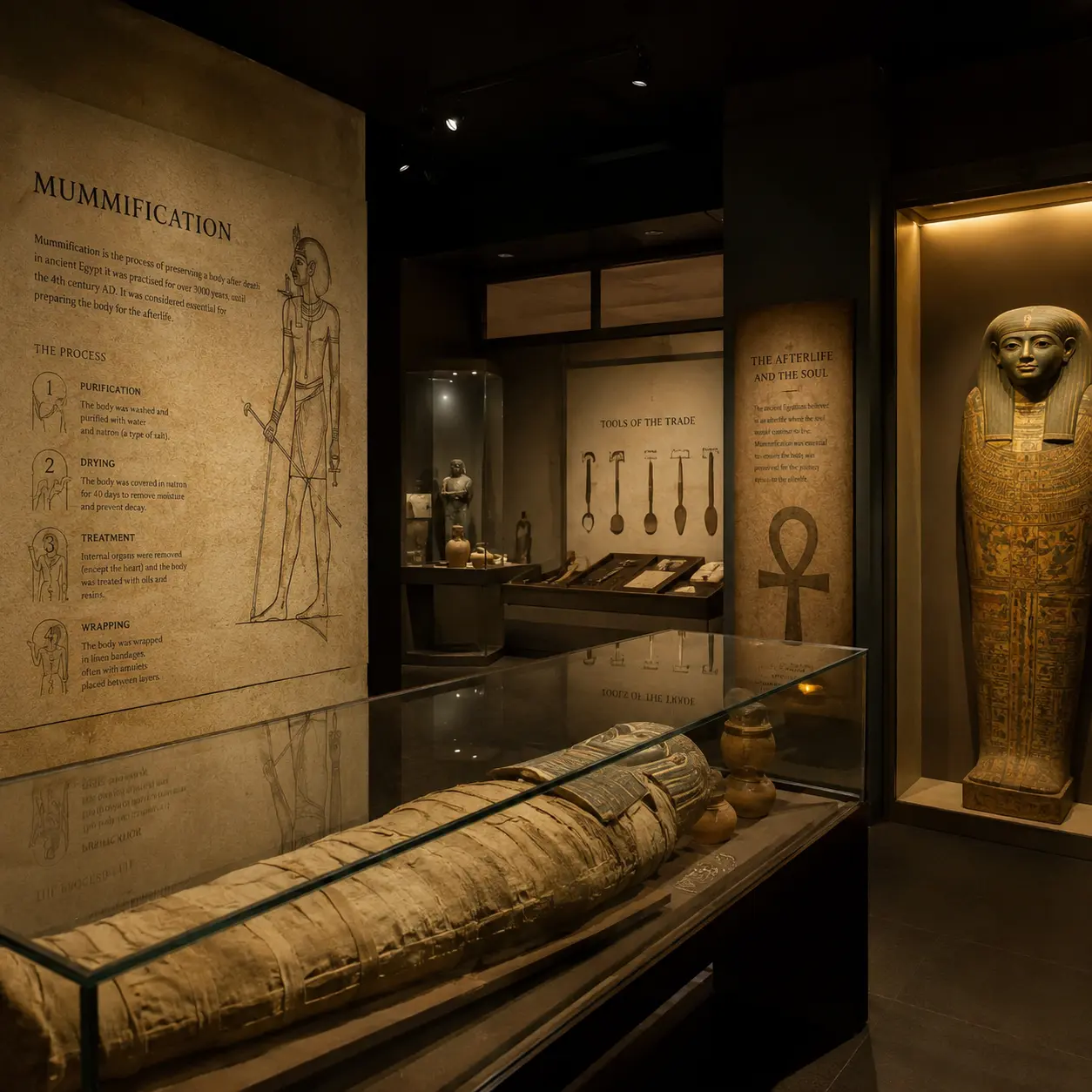
Mummification Museum
The Mummification Museum in Luxor explains ancient Egyptian embalming through tools, funerary objects, amulets, canopic jars, and displays linked to the afterlife.


Plan your visit
- Opening hours
- Opening hours can change by season, holidays, and local museum policy. Check the current schedule before visiting, and try not to arrive close to closing time because the museum is best enjoyed slowly.
- Best time
- The best time to visit the Mummification Museum is during Luxor’s hotter midday or late-afternoon hours, when an indoor stop is welcome between outdoor sites. If you are visiting in a busy travel season, go earlier in the day or near the end of your sightseeing route for a calmer experience.
- Visit duration
- Plan around 30 to 60 minutes for the Mummification Museum. It is a short visit, but reading the labels and taking time with the cases makes the experience far more rewarding.
- Category
- History & Ancient Wonders
- Location
About
The Mummification Museum in Luxor is a small, sharply focused museum devoted to one of ancient Egypt’s most misunderstood subjects: how the dead were prepared for eternity. Rather than trying to cover all of Egyptian history, it slows the story down to the practical details — drying the body with natron, treating it with oils and resins, wrapping it in linen, and placing protective objects with the deceased.
This is the kind of museum that rewards close looking. Expect display cases with embalming tools, canopic jars, amulets, funerary objects, coffins, and examples connected to both human and animal mummification. The lighting is usually subdued, which suits the material. Labels explain the logic behind the process: the body was not preserved for display, but so the person could continue into the afterlife with identity, protection, and ritual care intact.
For many travellers, the museum makes Luxor’s tombs easier to understand. After seeing painted burial chambers in the royal tombs on the West Bank, the objects here help explain what those tombs were built to protect. The canopic jars are no longer just “museum pieces”; they become part of a careful sequence of preparation, belief, and burial.
The Mummification Museum also pairs well with the nearby riverside temple and the city’s archaeology collection. Luxor can be intense in the middle of the day, so this indoor visit is a useful, quieter pause between larger sites. It does not take long, but it adds depth — especially if your Egypt trip includes tombs, funerary temples, or museum galleries in Cairo.
Go in expecting a compact specialist museum, not a grand hall full of statues. Its value is in focus. A good guide can turn the cases into a clear story of ancient Egyptian belief: the body, the soul, the gods, the journey after death, and the practical work of the embalmers who stood between the living world and the next one.
Mummification Museum is one of Luxor's most-visited history & ancient wonders spots. Plan around The best time to visit the Mummification Museum is during Luxor’s hotter midday or late-afternoon hours, when an indoor stop is welcome between outdoor sites. If you are visiting in a busy travel season, go earlier in the day or near the end of your sightseeing route for a calmer experience. for the best conditions, and budget roughly Plan around 30 to 60 minutes for the Mummification Museum. It is a short visit, but reading the labels and taking time with the cases makes the experience far more rewarding. on-site. Visit early to avoid crowds and heat.

Why travelers visit
Visit the Mummification Museum to understand the practical and spiritual work behind ancient Egyptian burial. It turns tombs, canopic jars, amulets, and coffins into a clear story about preservation, protection, and the journey to the afterlife.
Highlights
 A focused introduction to ancient Egyptian mummification and afterlife beliefs
- Displays of embalming tools, canopic jars, amulets, coffins, and funerary objects
- Useful context for Luxor’s tombs, especially the Valley of the Kings and West Bank sites
- Compact indoor visit that fits easily into a Luxor sightseeing day
- A quieter alternative to the city’s larger temples and archaeological sites
Photos
1 photos
Know before you go
Practical tips to make the most of your visit.

What to wear
Wear comfortable clothes and walking shoes suitable for Luxor sightseeing. The museum is indoors, but you may walk along sunny streets before or after your visit, so bring a hat, sunglasses, and water for the rest of the day.

Is a guide recommended?
Visit the museum after at least one tomb or funerary temple if possible. The displays make more sense once you have seen the burial chambers and wall scenes that show why preservation, protection, and the afterlife mattered so deeply.

Common mistakes to avoid
- Expecting a large museum like the Grand Egyptian Museum or Cairo’s major collections; this is a compact, specialist museum.
- Rushing through without reading the labels, which are essential for understanding the embalming sequence and funerary beliefs.
- Visiting before seeing any tombs and missing the connection between the objects here and burial sites such as the Valley of the Kings.
- Assuming photography rules are always the same; check the current policy before taking photos inside.
- Skipping a guide or audio-style explanation if you are new to mummification, because the objects make more sense when the ritual steps are explained.
Frequently asked questions
Is the Mummification Museum in Luxor worth visiting?
Yes, the Mummification Museum is worth visiting if you want to understand the burial beliefs behind Luxor’s tombs. It is small, but its focused displays explain the mummification process better than many larger museums.
How long do you need at the Mummification Museum?
Most travellers spend about 30 to 60 minutes at the Mummification Museum. Allow longer if you read every label carefully or visit with a guide who explains the religious background.
What can you see inside the Mummification Museum?
You can expect embalming-related objects such as tools, natron, amulets, canopic jars, coffins, funerary items, and displays connected to human and animal mummification. The collection focuses on the process and meaning of preserving the dead in ancient Egypt.
Where is the Mummification Museum located?
The Mummification Museum is in Luxor on the East Bank, close to the Nile Corniche and convenient for visitors staying near central Luxor. It is often easy to combine with Luxor Temple or Luxor Museum.
Is the Mummification Museum suitable for children?
The Mummification Museum is suitable for families with older children who are curious about ancient Egypt, but the subject matter involves death and preserved bodies. Parents of younger children should judge based on sensitivity and attention span.
Do you need a guide for the Mummification Museum?
You can visit independently, but a guide helps a lot if you want the displays to feel connected rather than isolated. The museum’s value comes from understanding the steps, symbols, and beliefs behind mummification.
Visitor info
- Opening hours
- Opening hours can change by season, holidays, and local museum policy. Check the current schedule before visiting, and try not to arrive close to closing time because the museum is best enjoyed slowly.
- Recommended visit
- Plan around 30 to 60 minutes for the Mummification Museum. It is a short visit, but reading the labels and taking time with the cases makes the experience far more rewarding.
- Best time to visit
- The best time to visit the Mummification Museum is during Luxor’s hotter midday or late-afternoon hours, when an indoor stop is welcome between outdoor sites. If you are visiting in a busy travel season, go earlier in the day or near the end of your sightseeing route for a calmer experience.
- Category
- History & Ancient Wonders
How to get there
Open in Google Maps
Reviews

Find guided Egypt tours that include this attraction.